💥 SHOCKWAVE ERUPTS: THE SUPREME COURT DROPS A SURPRISE BOMB ON TRUMP — A HIGH-STAKES POWER PLAY WITH GAVIN NEWSOM TAKES A DRAMATIC TURN ⚡
In a decision that could shape the political landscape heading into the midterm elections, the U.S. Supreme Court has allowed Texas to implement its newly redrawn congressional map, a plan expected to strengthen Republican control and potentially add as many as five seats to the party’s House delegation. The ruling, issued as an unsigned order on the Court’s emergency docket, immediately prompted celebration among Texas Republicans and alarm among civil rights groups, who argue the map weakens the voting power of minority communities.
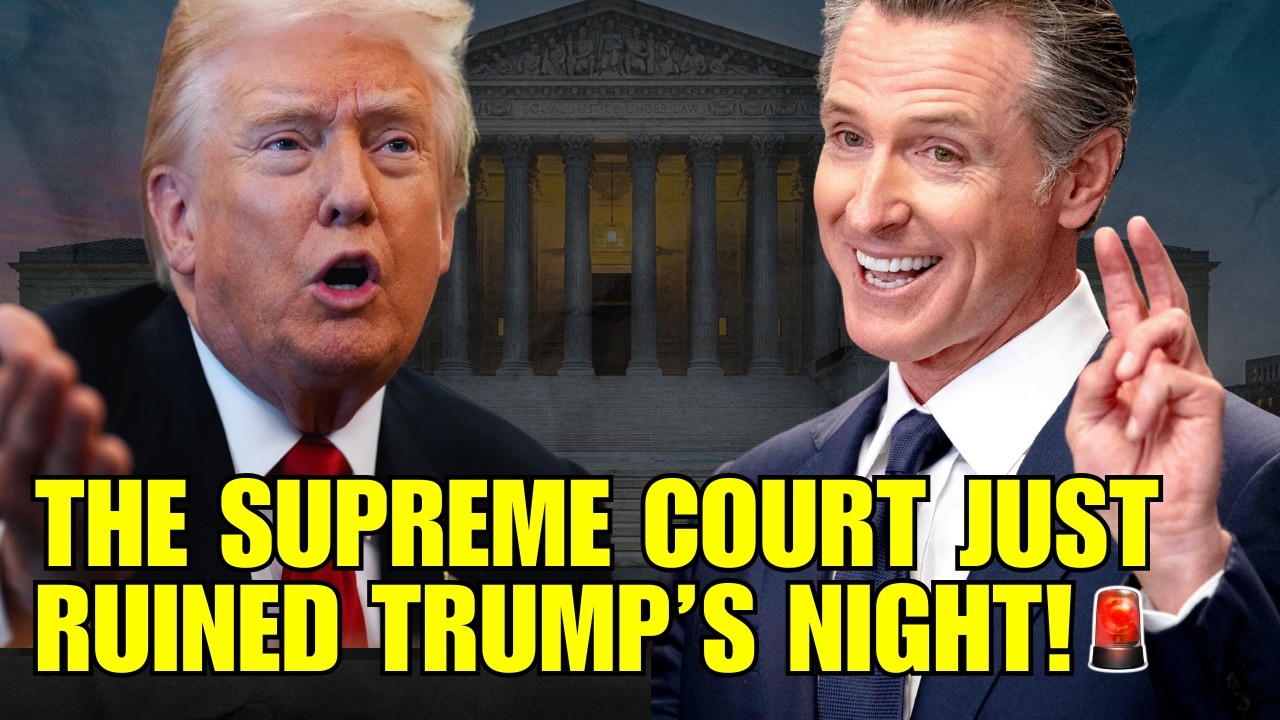
The order comes despite a lower federal court’s earlier decision finding that Texas had engaged in unconstitutional racial gerrymandering. By permitting the map to remain in place for now, the Supreme Court signaled that it was unwilling to intervene in an ongoing redistricting dispute amid an active primary season.
Governor Greg Abbott quickly praised the ruling, calling it “a victory” and asserting that the new districts “better align our representation in Washington with the values of our state.” Republican strategists viewed the order as a significant political boost for the party’s efforts to maintain its narrow House majority.
Election analysts say the ruling could influence redistricting litigation beyond Texas. “This is a major win for Republicans,” said Finn Gomez, a political analyst and Washington correspondent, noting that the Court’s approach may encourage other Republican-led states to pursue aggressive mid-cycle redistricting.
Civil rights organizations reacted sharply, warning that the decision undermines long-standing protections for voters of color. “This order disregards the extensive factual findings of the lower court,” said one attorney involved in the Texas litigation. “It opens the door to maps that dilute minority voting strength under the guise of partisan redistricting.”
A Divided Court Signals a Broader Debate
Though the majority did not issue a detailed explanation, Justice Elena Kagan authored a forceful dissent on behalf of the Court’s three liberal justices. She criticized the majority for overriding the lower court’s 160-page opinion “based on its perusal over a holiday weekend of a cold paper record” and argued that the ruling “disserves the millions of Texans” whose district assignments may have been influenced by race.
Her dissent underscored ongoing tensions over the Court’s shadow-docket decisions, which have increasingly shaped major political disputes without the full briefing and argument typically associated with Supreme Court cases.
In a separate concurring opinion, Justice Samuel Alito—joined by Justices Clarence Thomas and Neil Gorsuch—emphasized that the Texas map appeared to be motivated by partisan interests, not racial ones. That distinction is crucial: while the Court has long held that racial gerrymandering is unconstitutional, it has also ruled that partisan gerrymandering, however aggressive, is a political question beyond the reach of federal courts.
Justice Alito’s concurrence may have broader implications. While defending Texas’s ability to draw a map that favors Republicans, he noted that partisan motivations are likewise at work in other states, including California, where voters recently approved Proposition 50, a ballot measure that allows the state to redraw its congressional districts mid-decade.
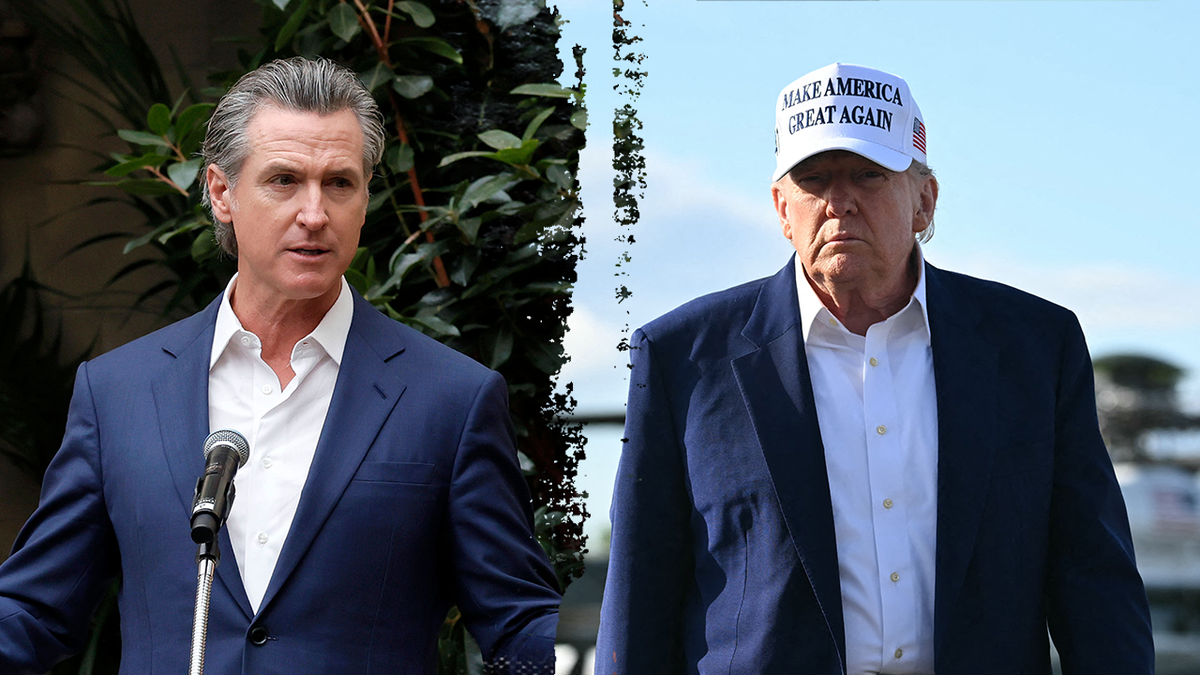
California’s Countermove and the Legal Questions Ahead
California’s new map, which eliminates five Republican-held districts and creates five Democratic-leaning ones, is already facing legal challenges from Republican leaders, including former President Donald J. Trump. Plaintiffs argue that the map uses race improperly as a factor in redistricting.
But Justice Alito’s concurrence—in which he described both states’ motivations as “partisan advantage, pure and simple”—has been interpreted by legal analysts as an indication that the Court may view California’s redistricting in a similar light to Texas’s: as constitutionally permissible so long as race is not the primary factor.
“If the Court accepts that these maps are driven by partisanship rather than racial considerations, it could undermine the GOP’s challenge to California’s plan,” said Lisa Remlard, an independent journalist who has analyzed both cases. “The same logic that protects Texas may end up protecting California.”
The potential symmetry has not gone unnoticed among observers. While Republicans in Texas welcomed the Court’s decision, the same reasoning could complicate Republican efforts to challenge California’s map, especially if the Court ultimately seeks to treat partisan gerrymandering consistently across states.
A National Landscape Defined by Partisan Maps
The Texas decision comes at a moment when redistricting battles are unfolding nationwide, with both parties attempting to maximize their congressional influence ahead of the next election cycle. In states where one party controls the legislature, redistricting maps have increasingly reflected aggressive partisan designs—tactics enabled by the Supreme Court’s 2019 decision in Rucho v. Common Cause, which held that federal courts cannot adjudicate claims of partisan gerrymandering.
What remains subject to judicial oversight are claims that maps intentionally dilute the voting power of racial groups—an issue that continues to drive litigation in multiple states.
For now, the Court’s Texas ruling provides clarity only in the short term. By allowing the map to remain in place for the upcoming elections, the justices have effectively shaped the House landscape for at least one cycle. But the deeper legal questions over how to distinguish partisan from racial motivations in redistricting remain unresolved.
As states continue to test the boundaries of redistricting authority, the Supreme Court’s decisions—whether issued in full opinions or through brief emergency orders—will play an increasingly central role in defining the parameters of American electoral politics.