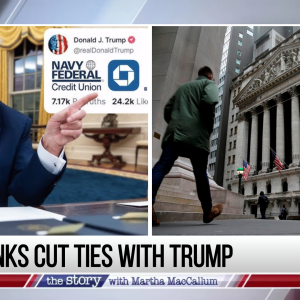
PARIS — What began as a carefully choreographed display of diplomacy — a state visit by President Emmanuel Macron of France to China — has quickly turned into a moment of acute anxiety in European capitals, as a series of drone incidents and policy shifts in Washington sharpen fears that the United States is drifting away from its traditional allies and toward accommodation with Moscow.
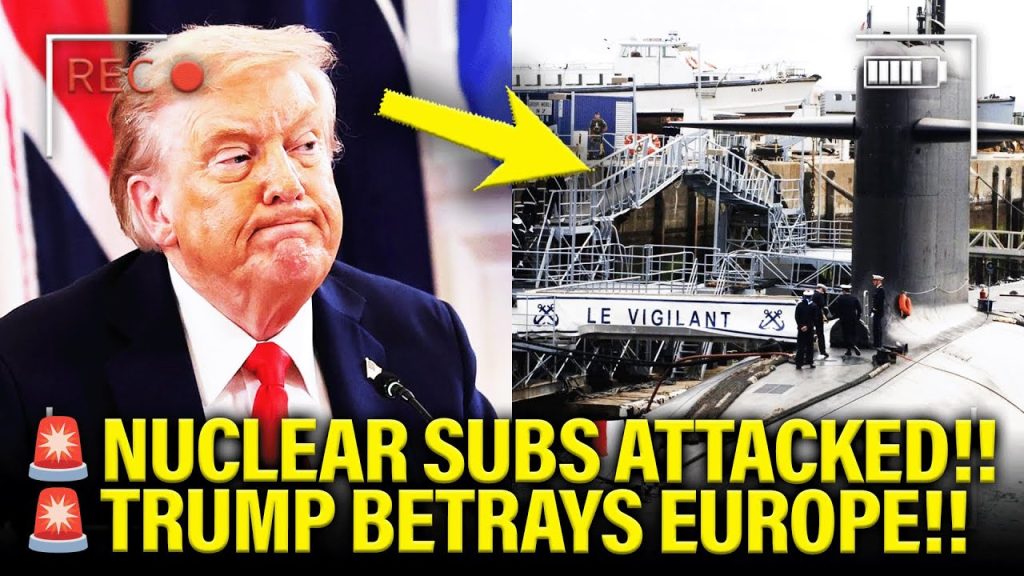
While Mr. Macron was receiving a warm welcome at Sichuan University, the French military detected unidentified drones over one of the country’s most sensitive sites: a top nuclear submarine base on the Atlantic coast. French forces engaged the aircraft, officials said, though it remains unclear whether any were brought down or who was behind the operation.
Coming days after an alleged assassination attempt on President Volodymyr Zelenskyy of Ukraine during his arrival in Ireland, the French incident has intensified suspicions among European security officials that Russia is probing NATO defenses — and doing so at a moment when, in their view, the Trump administration is stepping back from the alliance’s core commitments.
According to reporting cited by the Midas Touch Network, four large military-style drones entered restricted airspace above Dublin Airport shortly after Mr. Zelenskyy’s plane landed on an unannounced early schedule. Irish and European Union officials have reportedly described the episode as a form of “hybrid warfare” and are examining whether Russian actors were involved.
There has been little public comment from Washington on either episode, a silence that has not gone unnoticed in Europe.
Instead, much of the attention here has focused on recent decisions by the Trump administration that critics say amount to a strategic tilt toward Moscow. The U.S. Treasury Department has extended a waiver allowing Lukoil-branded gas stations and operations outside Russia to continue largely unhindered until at least April 2026, softening sanctions first imposed after Russia’s full-scale invasion of Ukraine.
At the same time, American officials have reportedly lobbied European governments to slow or block plans to use frozen Russian sovereign assets to finance Ukraine’s reconstruction — a proposal that many in Brussels and national capitals see as central to Kyiv’s long-term survival.
“The U.S. position now appears to be to bleed Ukraine dry,” one European summary of the situation said, reflecting growing disquiet that Washington could push for a rapid cease-fire or territorial concessions that leave Kyiv exposed.
Those concerns have been fueled by two documents that have circulated widely in diplomatic circles: a newly released U.S. National Security Strategy and leaked notes from a high-level call among European leaders and Mr. Zelenskyy, said to have been obtained by the German publication Der Spiegel.
In the security strategy, dated November 2025, the United States lists as a priority “cultivating resistance to Europe’s current trajectory within European nations,” language many in Europe interpret as a direct challenge to the European Union itself. The document also praises the rising influence of “patriotic European parties,” a phrase widely taken to refer to far-right, nationalist movements aligned with Russia on issues such as sanctions and migration.
Elsewhere, the strategy underscores the need to restore “strategic stability with Russia” and calls for an “expeditious cessation of hostilities in Ukraine” to stabilize European economies and prevent escalation, while giving few details about security guarantees for Kyiv.
In the leaked call notes, which have not been publicly confirmed by any government but are being treated seriously by several European officials, Mr. Macron is said to have warned Mr. Zelenskyy that Washington might seek to intervene on territorial questions “without offering real security guarantees,” reportedly using the word “betrayal” to describe such a course. Germany’s chancellor — referred to in the summary as Mr. “Merz,” though Berlin has not commented — is said to have cautioned that “the United States is playing games with you and with us.”
Finland’s president, Alexander Stubb, and NATO’s secretary general, Mark Rutte, reportedly urged that Mr. Zelenskyy not be “left alone in any room” with Jared Kushner or Stephen Witkoff, described in the notes as unofficial envoys promoting President Trump’s preferred peace terms.
Taken together, the strategy paper and the leaked call notes have hardened a view in some European capitals that the United States under Mr. Trump is no longer a fully reliable partner on Ukraine or on the broader project of European integration.
Those tensions have been mirrored in public exchanges. Senator J.D. Vance of Ohio and Senator Marco Rubio of Florida recently accused the European Commission of “attacking American tech platforms” after it fined the social media platform X, owned by Elon Musk, under digital safety rules. Their comments were read by many in Brussels as another sign that key figures in Washington now see Europe as an adversary rather than an ally.
European Union officials, for their part, have pressed ahead with discussions on using the windfall profits generated by frozen Russian assets. In a statement posted online, Ursula von der Leyen, president of the European Commission, said she had held a “constructive exchange” with Germany’s leader and Belgium’s prime minister on how to ensure that “all European states bear the same risk” from any such measure, while stressing that “financial support for Ukraine is of central importance for European security.”
Mr. Zelenskyy himself has adopted a more cautious tone toward Washington in recent days. In a written statement, he said Ukrainian representatives would continue talks with Mr. Trump’s team in the United States, but emphasized that Kyiv’s goal was to obtain “full information” about what had been discussed in Moscow between Russian officials and American intermediaries.
“Ukraine is prepared for any possible developments,” he wrote, adding that only a “dignified peace” — one that provides real security guarantees — would be acceptable.
For now, the incidents over France and Ireland remain under investigation, and the full contours of any emerging peace initiative are unclear. But across Europe, there is a growing sense that the strategic landscape is shifting rapidly, and not necessarily in ways that favor the continent’s long-held assumptions about American power and purpose.
As one senior European diplomat put it, speaking on condition of anonymity to discuss confidential deliberations, “We are watching in real time as our closest ally flirts with our greatest adversary. That is a new world, and we are only beginning to understand what it means.”