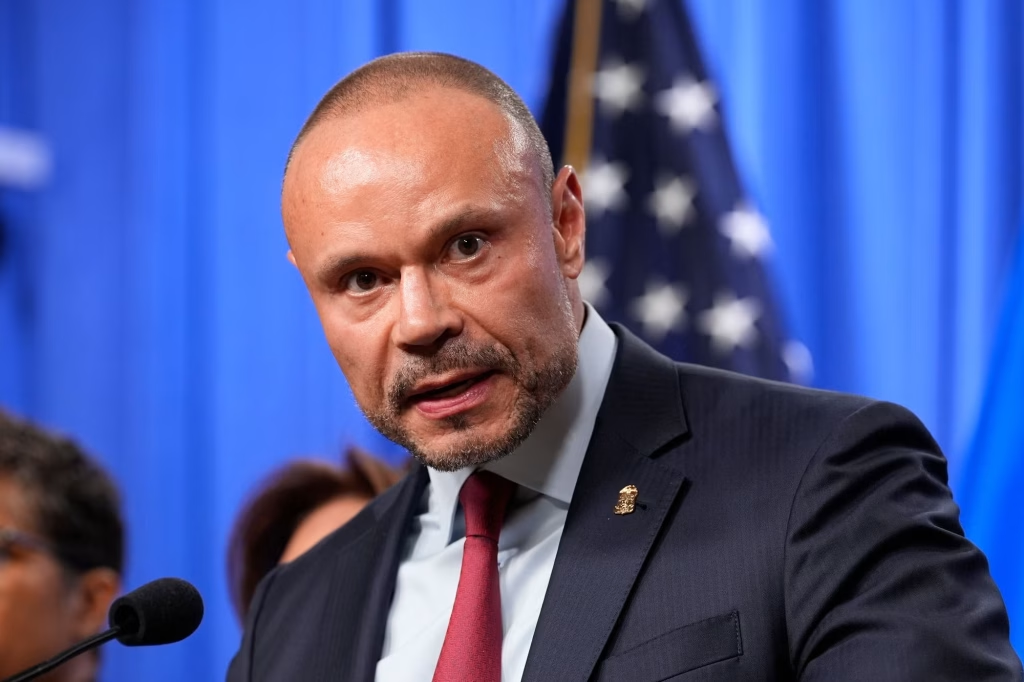
It began as a routine discussion on MSNBC—a news panel dissecting the slow-moving investigation into the 2020 pipe bombs planted near the Democratic and Republican national headquarters in Washington. But within minutes, the segment took a surprising turn. A burst of unscripted laughter rippled across the studio, triggered not by a joke but by the stunning contradiction embedded in a resurfaced video of Dan Bonino, the FBI’s deputy director and one of former President Donald J. Trump’s most vocal allies.
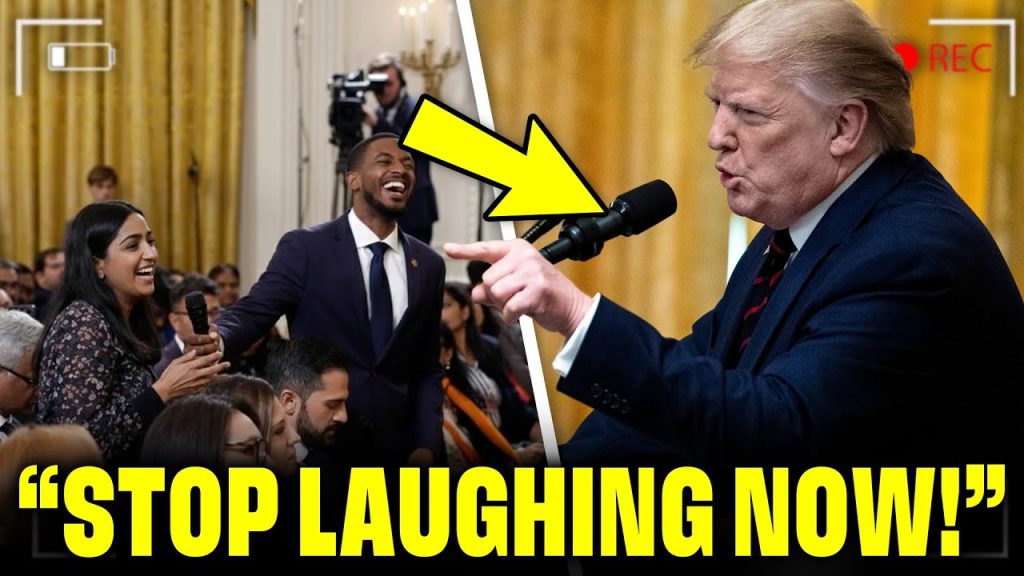
The moment, while light on the surface, underscored a larger anxiety simmering beneath the country’s law-enforcement institutions: the uneasy collision between political loyalty, conspiracy-driven rhetoric, and the sober responsibilities of federal leadership. And it raised a question that lingered long after the laughter subsided: what happens when individuals elevated for their media presence find themselves constrained by the factual demands of public office?
This week’s developments centered around the arrest of Brian Cole Jr., a 30-year-old Virginia man accused of planting pipe bombs outside the DNC and RNC on the eve of January 6, 2021. Cole reportedly confessed to the FBI after four hours of questioning, expressing support for Mr. Trump and repeating false beliefs about the 2020 election being stolen. Investigators also uncovered posts hinting at anarchist leanings, complicating attempts to determine his motive.
But the arrest also revived scrutiny of the Bureau itself—specifically, why it took nearly five years to connect the dots in a case that investigators now describe as substantially clearer in hindsight. It was in that context that MSNBC’s panel invoked Bonino, who before joining the FBI had been a conservative commentator known for his frequent claims of cover-ups and inside jobs.
A mashup aired during the segment juxtaposed Bonino’s earlier declarations—asserting with “zero doubt” that the pipe bombs were part of an anti-Trump conspiracy—with his more restrained, official demeanor today. In the present-day clip, Bonino defended his prior commentary by saying he had been “paid for [his] opinions” as a podcaster, adding, “That’s not what I’m paid for now… We base investigations on facts.”
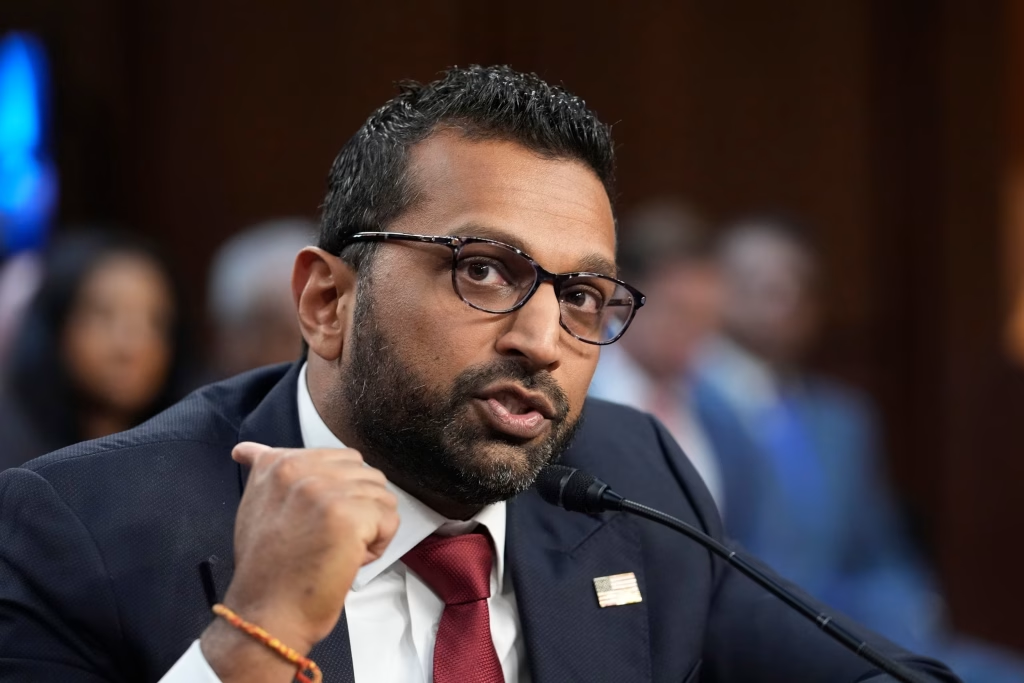
The tension between the two personas was enough to set off the panel. Glenn Thrush, a Justice Department correspondent for The New York Times, attempted to analyze the contradiction but struggled to maintain composure as the hosts laughed. “Basically what he said,” Thrush finally remarked, “is that everything he said prior to becoming deputy director of the FBI was for money and popularity.”
Behind the laughter, however, was a serious critique. Thrush noted that Bonino has reportedly clashed with multiple senior officials within the administration and that internal frustrations have left him increasingly isolated. According to reporting referenced in the segment, Bonino may be one of the most vulnerable members of the current leadership team—his future uncertain, his credibility challenged from within and without.
The MSNBC panelists framed Bonino’s dilemma as emblematic of a broader pattern within Trump-aligned institutions: the elevation of personalities who previously built influence on speculation and commentary into positions that require evidence-based judgment. Individuals such as Kash Patel and Pete Hegseth, the hosts argued, now face the difficult task of reconciling prior public narratives with the realities of federal investigative work.
“Real investigations don’t match the conspiracies,” one analyst observed. “And when the evidence contradicts the public persona, the entire system becomes unstable.”
The laughter, in this interpretation, was less about ridicule and more a visceral reaction to institutional dissonance—an acknowledgement that the boundaries between entertainment, politics, and governance have blurred to the point of dysfunction. The juxtaposition of Bonino’s confident, conspiracy-inflected past remarks with his present insistence on fact-based professionalism crystallized that tension in a single moment.
As for the pipe bomb case, the arrest of Cole brings new clarity but also new scrutiny. Why the investigation stalled for years remains unclear. Whether earlier inquiries were hindered by resource shifts, political pressures, or bureaucratic stagnation remains an open question—not one answered by the segment’s sometimes-chaotic tone.
By the end of the discussion, the panelists returned to a more sober register. The laughter faded, replaced by concerns about leadership stability inside the Bureau and the implications for ongoing investigations. One host remarked that Bonino’s old podcast chair might “need to be kept warm,” a line delivered half in jest, half in resignation.
The moment captured something oddly reflective about the current political environment: a blend of comedy and tragedy, contradiction and clarity, uncertainty and inevitability. And it left viewers with the unsettling sense that the most revealing commentary may come not from scripted analysis but from what professionals can no longer keep from laughing at.