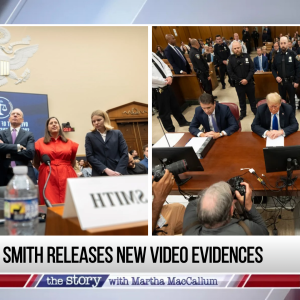
What began as a routine oversight hearing quickly escalated into one of the most contentious exchanges of the session, as Representative Madeleine Dean pressed Attorney General Pam Bondi on ethics, transparency, and the limits of executive power. The confrontation, unfolding live on camera, exposed not only sharp partisan divisions but also deeper anxieties about conflicts of interest at the highest levels of the Justice Department.
Ms. Dean, a Pennsylvania Democrat and former prosecutor, framed her questioning around what she described as two forms of corruption: personal and governmental. Her opening line was pointed and deliberate. Rather than leading with rhetoric, she turned immediately to a factual inquiry — whether Ms. Bondi had ever registered as an agent of a foreign principal under federal law.

Bondi acknowledged that she had briefly represented the government of Qatar, characterizing the work as focused on combating human trafficking tied to the World Cup. The clarification did little to slow the exchange. Dean cut in, insisting that representation of a foreign government is, by definition, a matter of foreign influence, regardless of the stated purpose. The disagreement set the tone for what followed: a rapid series of yes-or-no questions met by expansive, defensive responses.
The hearing grew more charged when Dean turned to January 6. She questioned how Bondi could claim to support law enforcement while serving in an administration that issued blanket pardons to individuals convicted in connection with the Capitol attack. Her remarks were personal and emotional, referencing Capitol Police officers who died in the aftermath and others who continue to live with trauma. Bondi did not dispute the gravity of the events but declined to discuss any advice she may or may not have given the president regarding the pardons.
That refusal became a focal point of the exchange. Dean repeatedly asked whether Bondi had advised the president ahead of the decision, pressing for a simple confirmation or denial. Bondi invoked long-standing norms about confidentiality between the attorney general and the president, declining to answer and bristling at what she described as discourteous conduct.
The tension peaked as Dean reclaimed her time and accused Bondi of evasion. When the conversation returned to Qatar, the questions became sharper. Dean asserted that Bondi had failed to properly disclose her foreign lobbying work during her confirmation process. Bondi countered that the matter had been discussed, though not formally documented in the way Dean described. The disagreement was less about a single form than about credibility — whether omissions, intentional or not, undermine public trust in an official tasked with enforcing ethics laws.
The exchange then turned to a more specific and politically explosive issue: President Trump’s reported willingness to accept a luxury aircraft from Qatar. Dean asked whether Bondi had advised that such a gift was legally permissible and whether she had recused herself from any related deliberations, given her past relationship with the Qatari government. Bondi declined to answer, citing the confidentiality of legal advice provided to the president.

At that point, the hearing was no longer a search for information but a referendum on transparency. Dean accused Bondi of attacking the questioner rather than addressing the substance of the questions, calling the conduct unprofessional. Bondi pushed back, objecting to what she described as mischaracterizations and inflammatory language.
To observers, the moment illustrated a familiar dynamic in modern oversight hearings. Lawmakers seek clarity through direct questioning; executive officials respond by emphasizing institutional norms, executive privilege, and procedural boundaries. Each side claims the moral high ground. The result is often heat rather than illumination.
Yet the substance of the exchange carried broader implications. Foreign representation, even when legal, raises questions about influence and recusal when former clients intersect with presidential interests. Blanket pardons, even when constitutionally valid, challenge claims of equal justice under the law. And repeated refusals to answer straightforward questions can reinforce public suspicion, regardless of legal justification.
Bondi’s defenders argue that she acted appropriately, protecting the confidentiality essential to an independent Justice Department and refusing to politicize internal deliberations. Her critics see something else: a pattern of avoidance that shields decisions from scrutiny and erodes confidence in ethical safeguards.
The confrontation underscored a central tension of American governance. Oversight depends not only on the power to ask questions but on a shared commitment to answer them in good faith. When that commitment frays, hearings become theater — revealing less about facts than about the boundaries of accountability.
By the end of the session, neither side appeared persuaded. But the exchange left a clear imprint. It demonstrated how questions of ethics, foreign influence, and executive power converge in moments of public scrutiny — and how quickly those moments can spiral into open conflict.
What remains unresolved is not simply whether any rules were broken, but whether the standards meant to prevent conflicts of interest are being honored in spirit as well as letter. For a Justice Department charged with enforcing the law impartially, that question may prove more consequential than any single answer given — or withheld — under oath.