For years, Donald Trump framed tariffs as a shield — a blunt but effective tool to protect American industry from foreign competition. Few sectors symbolized that promise more clearly than aerospace. Boeing, the nation’s largest exporter and a pillar of U.S. manufacturing, was held up as proof that aggressive trade policy could secure domestic jobs and restore industrial dominance.
That narrative now faces a serious test.
Boeing’s decision to shift billions of dollars in high-value aerospace work to Canada has ignited a political firestorm in Washington and anxiety across U.S. manufacturing hubs. The move, which includes advanced assembly, avionics integration, and long-term maintenance operations, represents not a symbolic adjustment but a structural shift in North America’s aerospace landscape.
The timing could hardly be worse for Trump. As he campaigns on the claim that “America First” has delivered for workers, one of the most iconic American manufacturers is quietly expanding its footprint beyond U.S. borders — not because of foreign pressure, but because of domestic policy.
At the heart of the dispute lies a paradox. Tariffs were designed to make offshore production more expensive and force companies to build at home. But Boeing’s supply chain, like much of modern manufacturing, is deeply integrated across borders. Aircraft components routinely cross between the United States, Canada, and Mexico multiple times before final assembly. When tariffs were imposed on imported components, they did not isolate Boeing within the U.S. economy. Instead, they injected uncertainty into a system built on predictability.
Executives faced a choice: absorb rising costs and disruptions, or reconfigure operations to regain stability. Canada offered an answer.
Unlike Washington’s volatile trade environment, Ottawa presented a consistent policy framework, skilled aerospace labor, and long-term government support for advanced manufacturing. Facilities in Quebec and Ontario were already equipped to absorb additional work, and Canada’s aerospace ecosystem had spent years quietly expanding capacity. For Boeing, the appeal was not ideological. It was practical.
From the company’s perspective, shifting work north allowed it to avoid tariff exposure while maintaining production within North America. From Trump’s perspective, the move looked like betrayal.
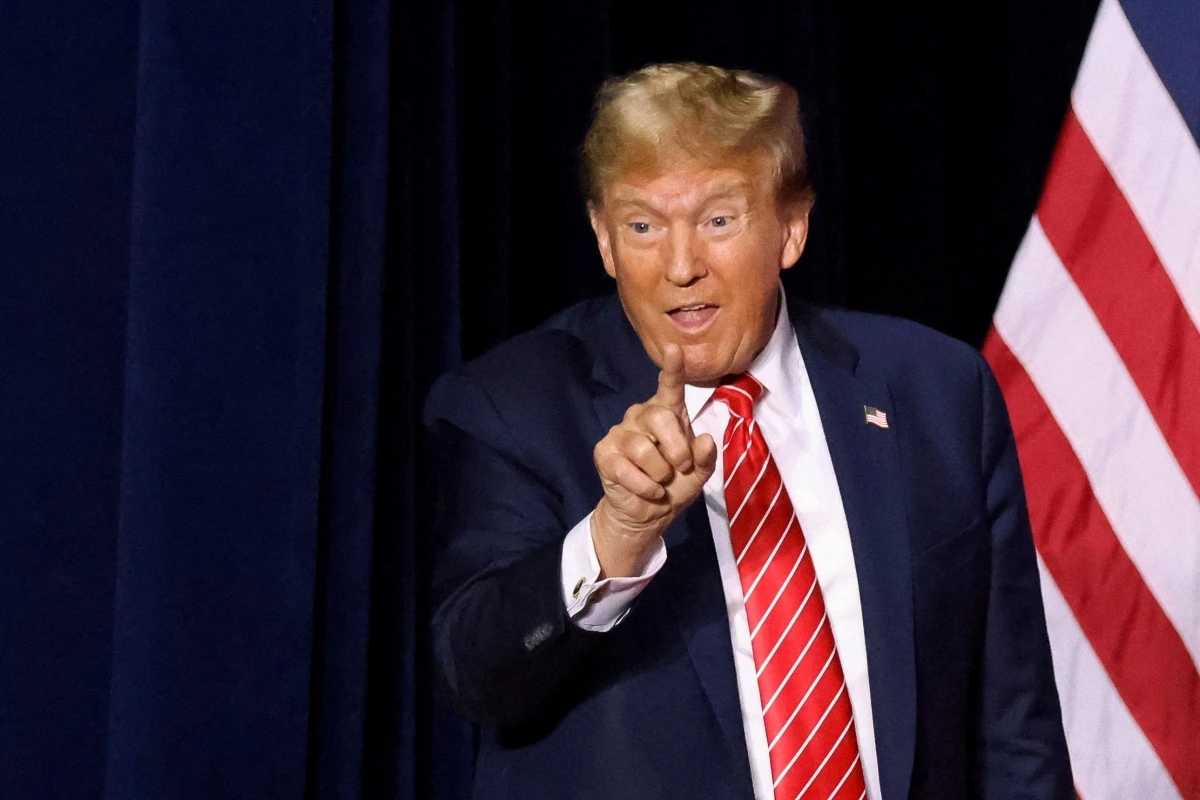
The president reacted swiftly and angrily, accusing Canada of undermining American workers and warning of retaliation. But the backlash revealed a deeper vulnerability in the America First approach. Tariffs can raise costs, but they cannot compel loyalty in industries where supply chains are global and margins are thin. In complex sectors like aerospace, pressure does not always pull companies inward. Sometimes it pushes them outward.
The consequences are already being felt. Aerospace workers in states such as Washington, Missouri, and South Carolina see Boeing’s move as a warning sign — not just of immediate job losses, but of a slow erosion of industrial gravity. Once high-value work relocates, innovation tends to follow. Training pipelines adjust. Investment patterns shift. These changes are difficult to reverse, even if policies change later.
Labor unions have voiced frustration, arguing that workers are paying the price for trade strategies that sound tough but create instability. Economists echo that concern, noting that companies prioritize predictability over rhetoric. When policy becomes erratic, businesses seek environments where long-term planning is possible.
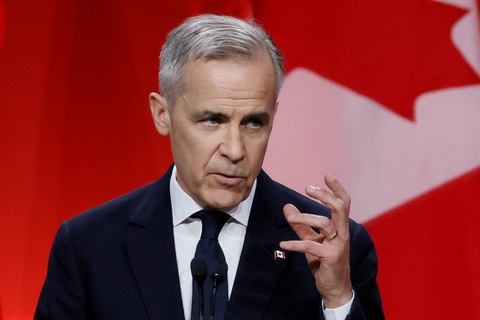
Canada, meanwhile, has been careful not to gloat too loudly. Still, officials have framed the Boeing agreements as validation of the country’s industrial strategy. Standing alongside engineers and executives in Montreal, the prime minister emphasized Canada’s ability to compete for — and win — work once considered untouchably American. The message was understated but clear: reliability matters.
Globally, the implications extend beyond Boeing. Executives across industries are watching closely. If a company as deeply tied to U.S. defense, exports, and national prestige is willing to move core operations to avoid policy risk, others may follow — not as protest, but as insurance. Boardrooms are increasingly asking whether exposure to U.S. trade volatility is a manageable risk or a structural liability.
Trump’s defenders argue that no trade strategy is painless and that confronting decades of outsourcing requires disruption. They maintain that Boeing’s decision reflects corporate opportunism, not policy failure. But even some Republicans privately acknowledge the political danger. Manufacturing states critical to upcoming elections are sensitive to any signal that jobs are slipping away.
What makes this moment particularly damaging is the symbolism. Boeing was not supposed to be vulnerable to these forces. It was supposed to be protected by them.
The deeper lesson may be that economic power in the modern era depends less on coercion than on trust. Companies invest where rules are clear, policies are stable, and shocks are rare. Once that trust erodes, restoring it takes more than threats or tariffs.
Boeing’s move to Canada may ultimately prove manageable for the U.S. economy. But as a signal, it carries weight. It suggests that in an interconnected industrial world, nationalism alone cannot anchor supply chains. Stability can.
For Trump, the challenge is not merely political optics. It is whether an economic strategy built on pressure can deliver lasting results in industries where cooperation, coordination, and predictability are just as essential as strength.
For now, Canada is celebrating a strategic win. The United States is debating the cost. And the world is watching to see whether Boeing’s decision is an outlier — or the first sign that America’s industrial center of gravity is beginning to drift.