Booker Unleashes Scathing Attack on FBI Director Patel in Explosive Oversight Hearing
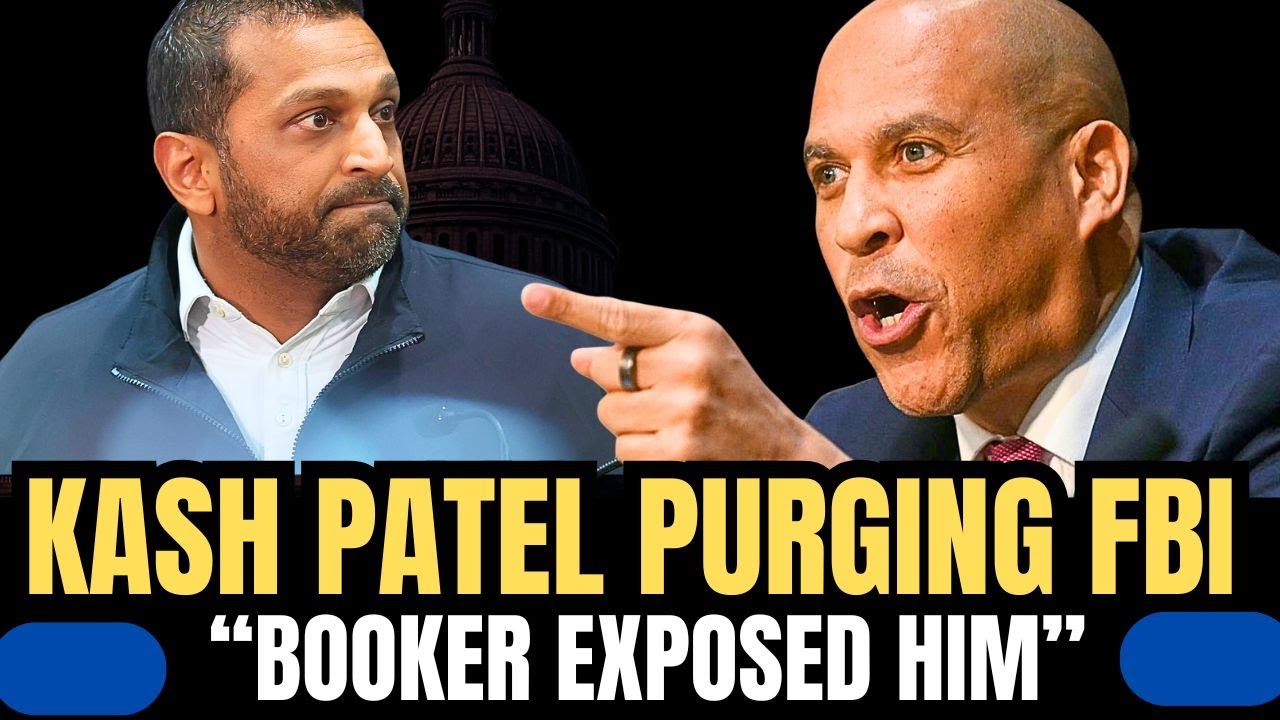
A Senate oversight hearing erupted into chaos after Senator Cory Booker directly accused FBI Director Kash Patel of misleading Congress, purging experienced agents, and placing political loyalty above national security. What began as pointed questioning quickly escalated into one of the most confrontational exchanges seen in recent hearings.
Booker opened by challenging Patel’s sworn testimony from his nomination hearing, reminding the room that Patel had promised to protect FBI employees from political retribution. Booker flatly stated he did not believe Patel had been truthful, citing firings and disciplinary actions against agents involved in investigations related to Donald Trump.
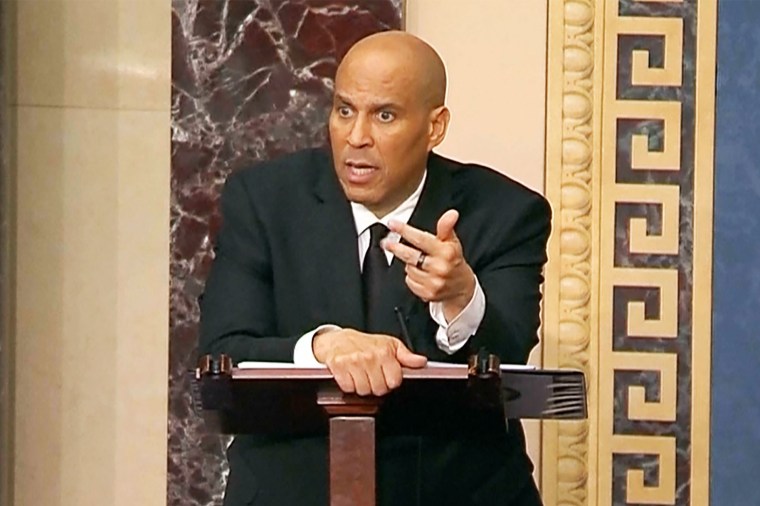
The confrontation intensified when Booker highlighted a lawsuit filed by senior FBI officials alleging retaliatory firings based on political loyalty. He focused on the termination of Brian Driscoll, a decorated FBI leader with two decades of service, questioning Patel’s authority to fire him under “Article II of the Constitution,” a power reserved for the president.
Booker then pressed Patel about his frequent communications with White House figures, including Stephen Miller and Attorney General Pam Bondi. While Patel downplayed the conversations as interagency coordination, Booker argued they revealed dangerous political entanglement that threatens the FBI’s independence.
National security took center stage as Booker accused Patel of diverting roughly 20 percent of FBI agents to immigration enforcement, pulling resources from counterterrorism, child exploitation, public corruption, and foreign influence investigations. Booker warned that shifting priorities this dramatically weakens long-term safety, even if short-term arrest numbers rise.

Patel responded by citing statistics: tens of thousands of violent felons arrested, thousands of weapons seized, major drug interdictions, and increased counterintelligence arrests involving China, Russia, and Iran. He framed these metrics as proof that the FBI is stronger, not weaker, under his leadership.
But Booker rejected the numbers as insufficient, arguing that institutional damage is not measured solely by arrests. He warned that purging seasoned leaders erodes institutional memory, chills internal dissent, and discourages agents from pursuing politically sensitive cases, effects that only surface after irreversible harm is done.
The hearing ended in disorder, with senators talking over one another and accusations flying. Yet beneath the chaos lay a stark warning: the clash was not about personalities, but about whether the FBI remains a neutral, professional institution—or becomes reshaped by political loyalty. For many watching, the exchange raised a sobering question about the future integrity of American law enforcement.