Sen. Tammy Baldwin Presses Pentagon on Marine Deployment—And Exposes a Dangerous Silence on Presidential Power
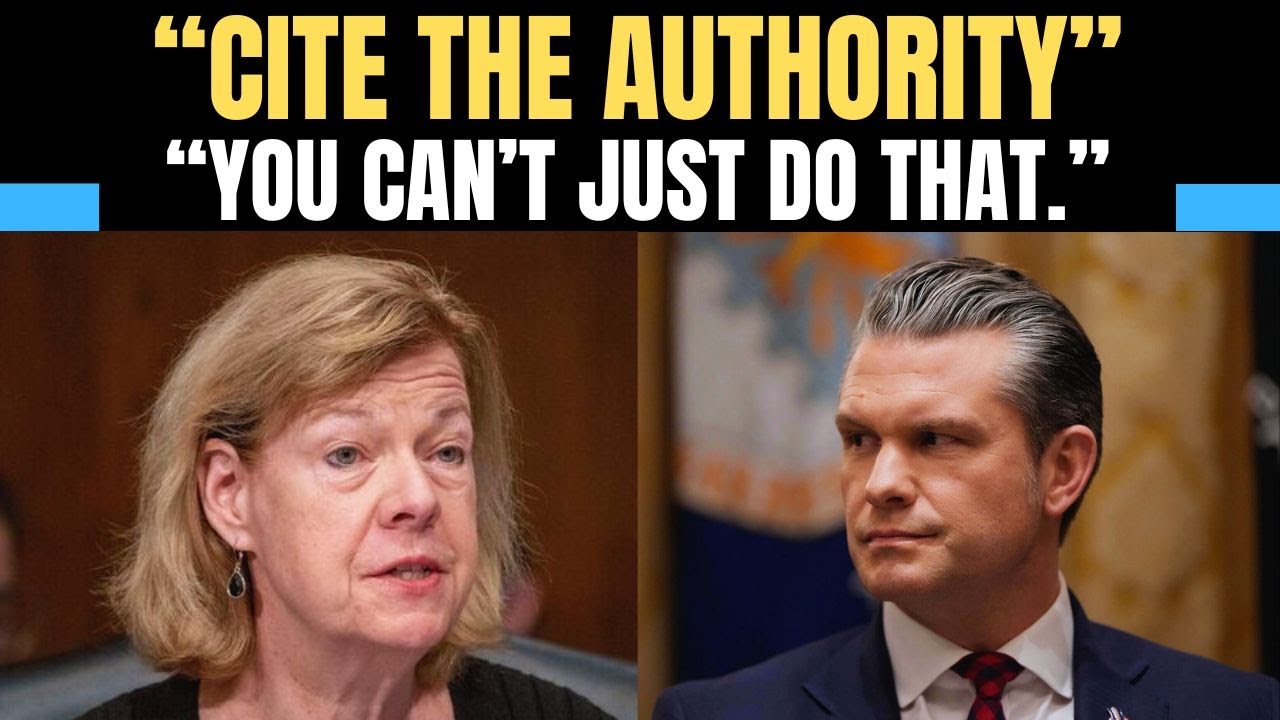
Senator Tammy Baldwin asked a question that should have had a clear, immediate answer: what legal authority allows the president to deploy active-duty Marines into American neighborhoods? It wasn’t rhetorical. It was constitutional. And the Secretary of Defense couldn’t answer it.
In a tense Senate hearing, Baldwin repeatedly asked the Pentagon to cite the specific constitutional or statutory provision justifying the domestic deployment of active-duty Marines in California. The secretary offered assurances, references to internal legal review, and vague claims of precedent—but never named the law.

That silence matters. Baldwin explicitly distinguished the National Guard, acknowledging Title 10 authority, and narrowed the issue to active-duty combat troops operating domestically. When pressed to cite the Constitution or a statute, the response was deflection, not law.
In a constitutional democracy, precedent is not authority. Confidence is not legality. The framers placed strict limits on military involvement in civilian life for a reason, reinforced by laws like the Posse Comitatus Act and narrowly defined exceptions such as the Insurrection Act. When those limits aren’t clearly invoked, oversight becomes urgent.
The hearing then exposed a second fault line: defense budgeting. Baldwin highlighted missing procurement details—no clarity on frigate or destroyer funding just months before the fiscal year. For Congress, this isn’t a paperwork issue. It undermines the power of the purse and leaves workers, including Wisconsin shipbuilders, in the dark.
The pattern repeated on personnel policy. Baldwin demanded the analysis behind plans to separate thousands of transgender service members. She asked about readiness, cost, and national security impact. The secretary cited agreement with a White House order—but again failed to provide the requested analysis.
At a moment of escalating global threats from China and Iran, Baldwin questioned why the Pentagon was focused on culture-war symbolism, including renaming ships during Pride Month, instead of delivering transparency on readiness and force structure.
Taken together, the exchange revealed more than tension—it revealed a governing posture that asserts extraordinary power without clearly stating its legal basis. Baldwin’s questioning wasn’t partisan theater. It was oversight as the Constitution intended.
The most unsettling takeaway is simple: when asked to justify the use of military force at home, the administration didn’t explain the authority. It asked for time. In matters of constitutional power, that delay is the warning.