YOU LIED TO AMERICA”: Delia Ramirez TORCHES Kristi Noem Over Illegal Detentions & Court Defiance
WASHINGTON — A tense exchange at a House oversight hearing this week exposed a deepening conflict between Congress and the Department of Homeland Security, as Delia Ramirez accused Kristi Noem of misleading lawmakers, detaining United States citizens and disregarding federal court orders.
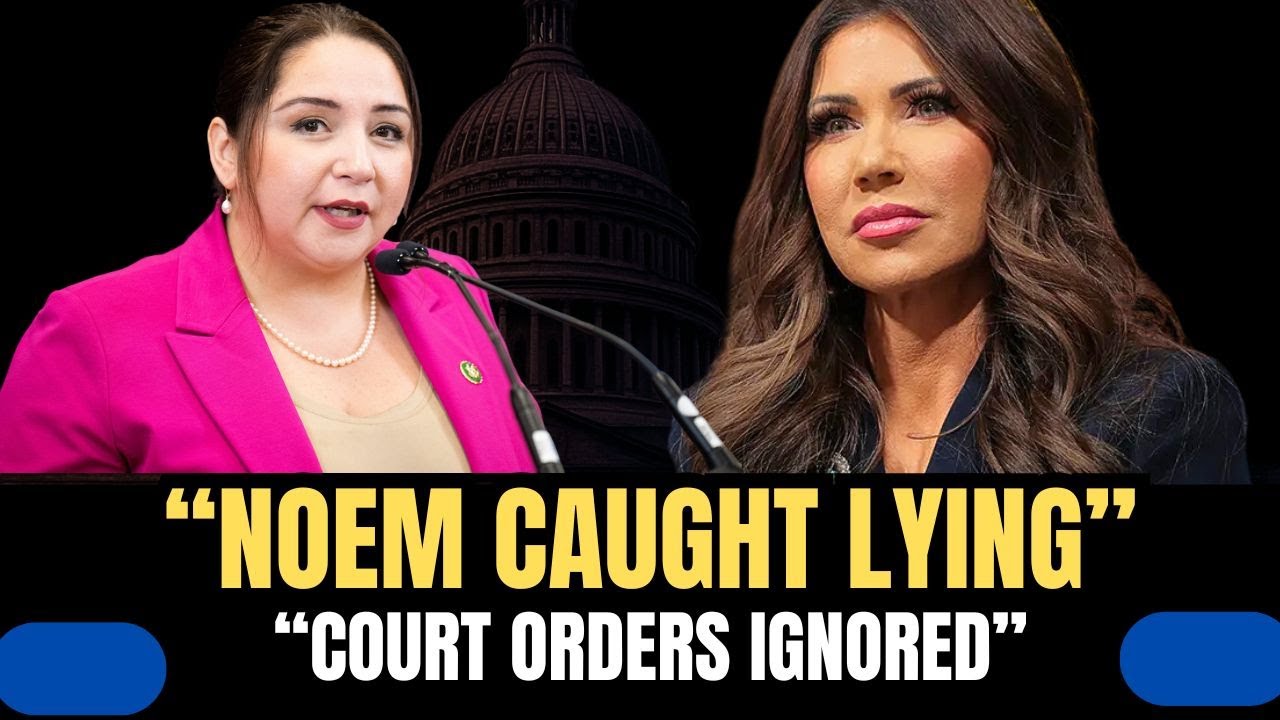
“You lied to the American people,” Ms. Ramirez said bluntly, citing court rulings, arrest data and investigative reporting that she said contradicted repeated claims by the administration that immigration enforcement efforts were narrowly focused on violent criminals.
The confrontation unfolded during a hearing intended to review border security and immigration enforcement. While some lawmakers praised the administration’s aggressive posture, Ms. Ramirez used her time to assemble what she described as a documented pattern of misconduct — not a disagreement over policy, but a challenge to constitutional limits on executive power.
At the center of her argument was evidence that immigration enforcement has swept far more broadly than publicly acknowledged. Ms. Ramirez entered into the record reporting by ProPublica, which found that more than 170 U.S. citizens had been detained by immigration agents, sometimes for days. She also cited data reported by NBC News showing that nearly 75,000 people arrested by Immigration and Customs Enforcement had no criminal record.
Those findings, she said, directly contradict official statements that the department targets only “the worst of the worst.”
Ms. Noem rejected the accusation, insisting that the department was complying with the law and following judicial rulings. But when pressed about deportation flights that continued after a federal court ordered them halted — including transfers to a large prison complex in El Salvador — she acknowledged that the final decisions rested with her department.
“We’ll continue to do the right thing,” Ms. Noem said, adding that the administration would protect Americans regardless of what she described as overreach by “radical judges.”
That response drew the sharpest rebuke of the hearing. Ms. Ramirez accused the secretary of openly defying court orders, a charge that elevates the dispute beyond administrative discretion into a constitutional confrontation. Federal judges, she noted, are not advisory bodies; their rulings are binding on the executive branch.
“When executive officials decide which orders they will follow and which they will ignore,” Ms. Ramirez said, “that is not enforcement. That is lawlessness.”
Legal scholars say the distinction matters. The American system of government depends on compliance with judicial authority, particularly in areas like detention and deportation, where individuals can lose liberty without criminal conviction. Ignoring court orders, they note, risks collapsing the separation of powers that constrains executive action.
Ms. Ramirez also focused on the human consequences of enforcement practices. She accused federal agents of using chemical irritants in Chicago despite court prohibitions, conducting warrantless arrests and engaging in aggressive tactics that traumatized communities. The congresswoman described residents being surveilled, detained and, in some cases, mistakenly swept up despite their citizenship.

The secretary denied systemic wrongdoing, and other lawmakers sought to redirect the discussion, praising the administration’s border policies and crediting them with improved public safety. But the exchange underscored the sharply divided views in Congress — not only over immigration policy, but over the limits of executive authority itself.
The hearing concluded with a warning that was procedural rather than rhetorical. Ms. Ramirez said she had already called for Ms. Noem’s resignation and had urged the House Judiciary Committee to investigate what she described as impeachable offenses, including lying to Congress and misusing funds appropriated by lawmakers.
“Your options are limited,” she said. “Resign, be removed, or be held accountable.”
Impeachment remains unlikely in a divided Congress, but the confrontation highlighted why oversight hearings matter beyond political theater. When executive officials are accused of misleading lawmakers or disregarding courts, Congress’s response becomes a test of whether constitutional checks retain force.
For now, the dispute remains unresolved. Ms. Noem agreed to meet privately with Ms. Ramirez, and additional documents were entered into the record. Whether the allegations lead to formal investigations or fade into partisan stalemate may depend less on the hearing itself than on whether Congress chooses to enforce its own authority.
As Ms. Ramirez put it, accountability is not automatic. It must be exercised — or it erodes.