Trump Gets DEVASTATING NEWS from INTERNATIONAL COURT
Washington — A sweeping tariff regime imposed by Donald Trump is nearing a decisive legal reckoning, as federal courts weigh whether the former president exceeded his constitutional authority by unilaterally reshaping U.S. trade policy under the guise of national emergency.
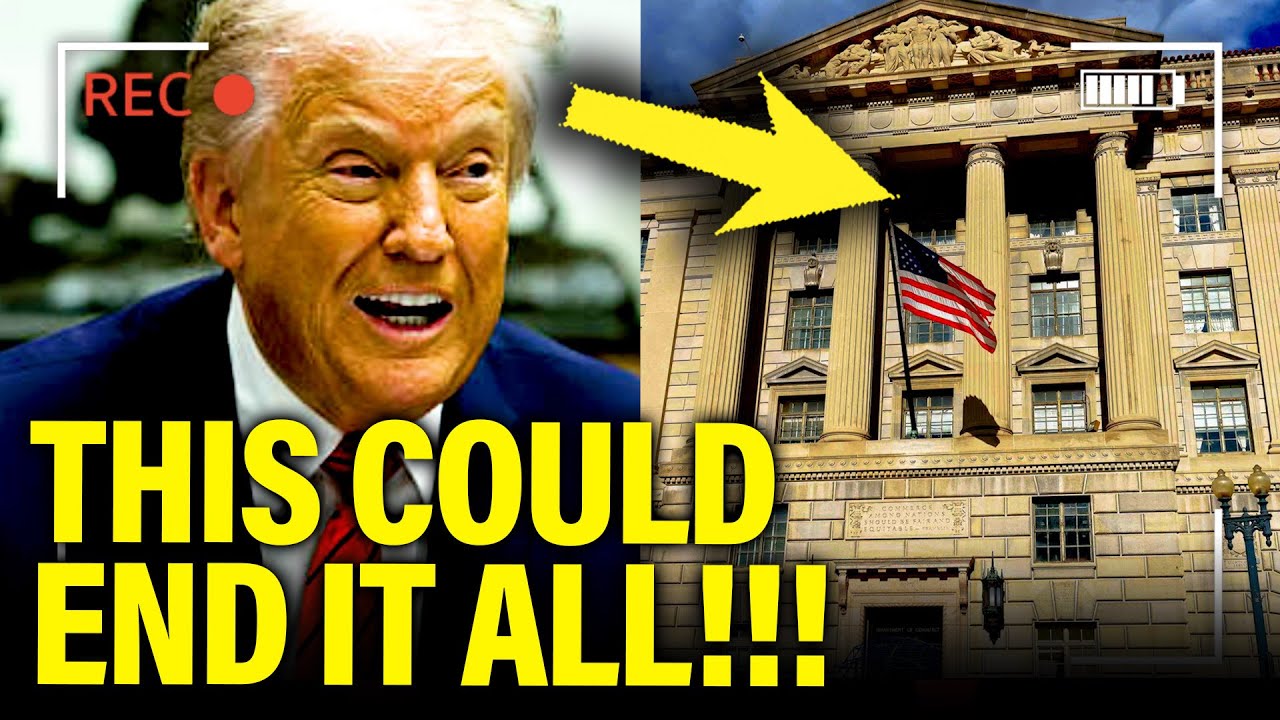
At the center of the dispute is a case now awaiting a ruling from the Supreme Court of the United States, following an earlier decision by the United States Court of International Trade, which sided with small businesses challenging the legality of the tariffs. The trade court ruled that if the Supreme Court ultimately strikes the tariffs down, affected companies would be entitled to refunds — potentially totaling as much as $165 billion paid by American households this year alone, according to nonprofit estimates cited in the case.
The tariffs originated from executive orders issued early this year, initially targeting Canada and Mexico. Mr. Trump justified the measures by declaring fentanyl trafficking and trade deficits national emergencies, invoking the International Emergency Economic Powers Act (IEEPA), a statute enacted in the 1970s to constrain, not expand, presidential authority over trade.
That history has proven pivotal. During Supreme Court oral arguments, several justices questioned whether Congress ever intended the IEEPA to authorize tariffs at all. Justice Ketanji Brown Jackson noted that the word “tariff” does not appear in the statute, suggesting lawmakers deliberately withheld such power. Justice Sonia Sotomayor raised additional concerns, pointing to the instability created when a single individual can impose or suspend tariffs in response to political irritation — even foreign advertising campaigns.
Those concerns were sharpened by recent events. After a Canadian advertisement aired during the World Series featuring former President Ronald Reagan warning against protectionism, Mr. Trump abruptly announced he was halting trade negotiations with Canada. The incident was cited during oral arguments as an example of how tariff authority, if unchecked, could be exercised impulsively rather than systematically.
The administration’s rationale has extended well beyond North America. Mr. Trump has increasingly linked tariffs to broader geopolitical claims, including assertions that fentanyl trafficking justified military action and economic pressure against Venezuela, despite the country not being named in the original executive order. Legal analysts say this expansion weakens the emergency justification by exposing its elasticity.
The Supreme Court appears acutely aware of the stakes. A ruling against Mr. Trump would not only invalidate the current tariffs but also trigger a complex refund process. While the trade court confirmed that companies would be owed repayments, reclaiming those funds would require years of litigation, with each business obligated to document the precise tariffs paid. Whether those refunds would ultimately translate into lower consumer prices remains uncertain.
Administration officials have mounted a vigorous defense. Treasury Secretary Scott Bessent has argued publicly that tariffs are a national security tool, crediting them with reducing fentanyl deaths and compelling foreign cooperation. He warned that a ruling against the administration would undermine economic security and constrain future presidents in moments of crisis.
But the legal vulnerability of that argument has become increasingly apparent. Even conservative justices — traditionally sympathetic to executive power — have signaled discomfort with granting unilateral tariff authority that bypasses Congress, particularly given the court’s longstanding pro-business orientation.
Small businesses that brought the original lawsuit have emphasized that their primary objective is stability rather than compensation. Several plaintiffs indicated they would accept foregoing refunds if it meant preventing future tariffs imposed at presidential whim. Their argument rests on predictability: trade policy set by Congress changes slowly, while executive orders can shift overnight, unsettling supply chains and long-term planning.
Mr. Trump himself appears to recognize the risk. Following the oral arguments, he briefly floated the idea of refund checks for Americans — an acknowledgment that consumers, not foreign governments, bear the cost of tariffs. The proposal was quickly abandoned.
In recent days, Mr. Trump has appealed directly to his supporters, urging them to pray for the Supreme Court’s intervention. The plea underscored the unusual position he now occupies: a former president seeking divine and judicial relief from a policy he once championed as decisive leadership.
The forthcoming decision is expected to have lasting implications. If the court rules against Mr. Trump, it would reaffirm Congress’s constitutional authority over trade and sharply limit the ability of future presidents to invoke emergencies as a pretext for economic intervention. For businesses and consumers alike, the ruling may determine whether trade policy returns to institutional governance — or remains vulnerable to abrupt, unilateral disruption.