By XAMXAM
WASHINGTON — The exchange began with a narrow, almost procedural question. Had the attorney general been consulted before National Guard troops were deployed to American cities? It ended as something much larger: a portrait of an oversight process straining under evasion, counterattack, and an unmistakable refusal to engage.

During a tense Senate hearing, Attorney General Pam Bondi repeatedly declined to say whether she had any conversations with the White House ahead of recent National Guard deployments, including plans to move Texas Guard units into Illinois. Her refusal was categorical. She would not discuss internal conversations. She would not confirm whether any consultation occurred at all.
For the senator questioning her, the response was not merely unsatisfying. It was alarming.
“I’ve been on this committee for more than 20 years,” he said afterward, visibly frustrated. “That’s the kind of testimony you expect from this administration.” A basic inquiry about legal rationale, he argued, had been transformed into a personal confrontation — and the public was left without an answer.
That pattern would repeat throughout the hearing.
When pressed on the constitutional authority underlying the deployments, Bondi pivoted sharply, criticizing local crime rates and accusing the senator of failing to protect his constituents. She framed the federal intervention as a necessity forced by local mismanagement, asserting that if state leaders would not act, the administration would.
The deflection was notable not just for its tone, but for what it avoided. The question was not whether crime exists. It was whether the attorney general had been consulted and what legal analysis justified the deployments. On that, Bondi remained silent.
The hearing then moved to a second issue, one with constitutional implications of its own: President Trump’s acceptance of a $400 million luxury jet from the government of Qatar for temporary use as Air Force One, before its eventual transfer to the Trump Presidential Library. The Constitution grants Congress authority over gifts from foreign states to U.S. officials, a safeguard meant to prevent foreign influence.
Bondi had previously disclosed that she had done legal work connected to Qatar in private practice, though she emphasized it involved anti–human trafficking efforts around the World Cup. The senator asked whether she had consulted the Justice Department’s ethics office before advising on the jet. Bondi again declined to answer directly, citing the confidentiality of advice from the Office of Legal Counsel and insisting she had not “gifted a jet to anyone.”

Instead, she returned to familiar ground: accusing the senator of obstructing DOJ operations and suggesting that unanswered letters were the result of political delays beyond her control.
What made the exchange striking was not disagreement — hearings are built for that — but the consistent substitution of explanation with accusation. Oversight depends on the ability of lawmakers to ask how decisions were made, even if the answers are inconvenient. In this case, the questions were met with attacks on crime statistics, budget votes, and the senator’s political motives.
The most heated moment came when the discussion turned to Jeffrey Epstein.
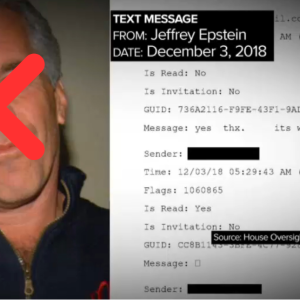
Earlier this year, Bondi had publicly stated that the Epstein “client list” was “sitting on my desk.” When the Justice Department later released a memo asserting that no such list existed, lawmakers demanded clarification. Why claim possession of a list that would later be disavowed?
Bondi’s answer was narrowly framed. She said the comment had been taken out of context, that she had not yet reviewed the material at the time, and that the documents on her desk included other historical files. The July memo, she added, made clear there was no client list.
But the senator pressed further, citing whistleblower disclosures alleging that the FBI had been rushed to review tens of thousands of Epstein-related records and instructed to flag references to President Trump. Who gave that order?
Bondi refused to answer.
“I’m not going to discuss anything about that with you,” she said.
At that point, the hearing shifted from inquiry to standoff. The senator warned that she would eventually have to account for her conduct, even if she declined to do so that day. Bondi countered by accusing Democrats of hypocrisy, claiming they had blocked the release of Epstein-related documents in previous years and questioning the senator’s political donors.
The back-and-forth devolved into disputes over committee procedure and past requests, a familiar Washington coda that obscured the original issue: the absence of clear answers from the nation’s top law enforcement official.
What lingered after the gavel fell was not a single unresolved policy question, but a broader unease. Oversight is not meant to be comfortable. It is meant to clarify how power is exercised and where responsibility lies. When an attorney general declines to say whether she was consulted on domestic troop deployments, refuses to explain the legal basis for accepting a massive foreign gift, and will not address contradictory public statements about one of the most sensitive criminal cases in modern history, the concern is not partisan.
It is institutional.
The senator put it plainly in his closing remarks. Others before her, he noted, had endured tough hearings and answered difficult questions with restraint and respect. The refusal to do so now, he suggested, signaled something deeper about the political moment.
The hearing offered no final answers. But it left behind a sharper question than any posed that day: if oversight cannot compel explanation at the highest levels of government, what, exactly, is left of accountability?