By XAMXAM
What began as a politically charged document release intended to embarrass a former president took an unexpected turn this week, when Bill Clinton responded not with evasion or counterattack, but with a direct and unusually sweeping demand: release everything.
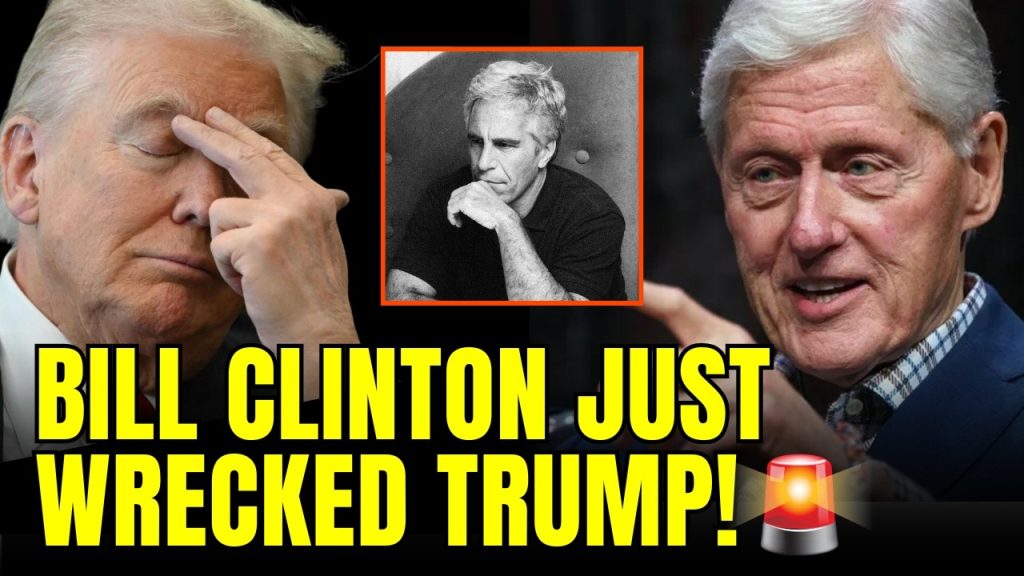
In a statement issued through a spokesperson, Clinton called on the Justice Department to immediately disclose all remaining materials related to the Jeffrey Epstein investigation that reference or involve him in any way. The demand went further than a general appeal for transparency. Clinton explicitly urged the release of photographs, interview notes, grand jury transcripts, and prosecutorial findings, arguing that selective disclosure had created a misleading public narrative and raised serious questions about who, exactly, was being protected.
The statement landed like a political inversion. For days, conservative media outlets and Republican lawmakers had celebrated newly released photographs of Clinton appearing alongside Epstein, framing them as long-awaited proof that attention should shift away from Donald T.r.u.m.p. The rollout appeared carefully calibrated: grainy images, limited context, and heavy redactions, all released in batches that ensured maximum visibility with minimal explanation.
Clinton’s response disrupted that strategy. “We need no protection,” the statement said, asserting that full disclosure would put an end to insinuation rather than intensify it. More pointedly, it accused the Justice Department of failing to meet its legal obligation under the Epstein Files Transparency Act, suggesting that the staggered and selective release of materials was less about safeguarding victims and more about shaping perception.
That accusation cut to the heart of the controversy surrounding the Epstein files. The issue has never been solely about who appears in them. It has been about how power decides what the public is allowed to see, when, and in what form. By demanding the release of everything that pertains to him, Clinton flipped the usual defensive posture of political figures implicated by association. Instead of narrowing the frame, he widened it.
The contrast with T.r.u.m.p.’s position was immediate and unavoidable. While allies of the former president have repeatedly insisted that the files be released, critics note that the disclosures so far have conspicuously excluded materials that reference him, despite years of documented social and professional proximity between T.r.u.m.p. and Epstein. Clinton’s statement did not accuse T.r.u.m.p. of criminal conduct, but it did place responsibility squarely on the current administration to explain the logic behind its editorial choices.
The Justice Department has defended its approach by citing the need to protect victim identities and avoid releasing unsubstantiated allegations. Those concerns are real and necessary. But they are increasingly difficult to reconcile with a process in which some names appear prominently while others are absent entirely, and in which documents briefly surface online only to be removed and reposted with altered identifiers. Transparency, critics argue, cannot be partial without becoming political.
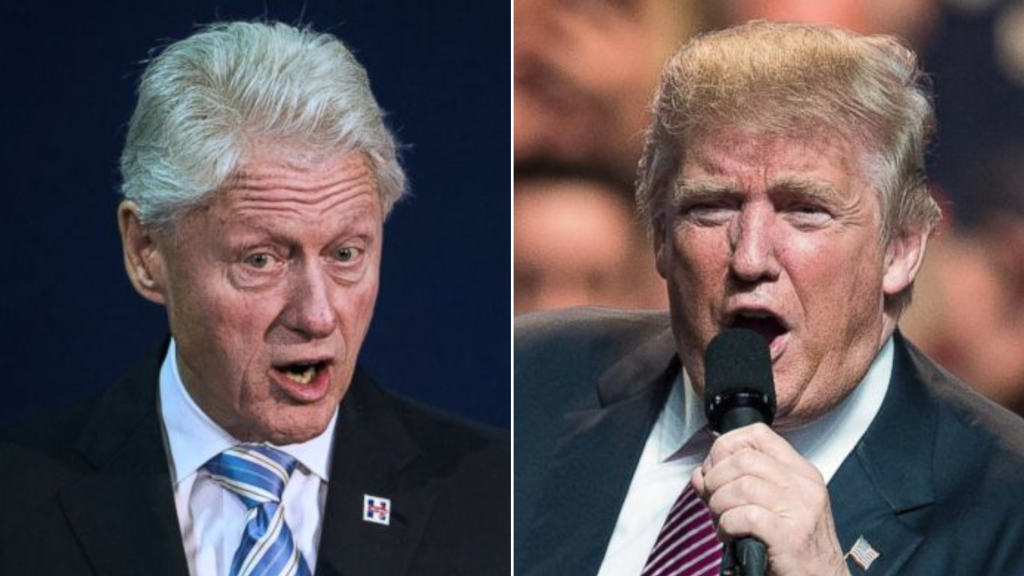
What made Clinton’s intervention especially striking was its tone. It did not read like crisis management. It read like a challenge to institutional credibility. By invoking the department’s legal duty and referencing prior testimony under oath by federal prosecutors, the statement reframed the debate from personality to process. The question became not whether Clinton should be scrutinized, but whether scrutiny itself was being applied evenly.
This moment underscores a broader tension in American governance: the erosion of trust when justice appears curated rather than comprehensive. High-profile investigations involving powerful figures test not only the law, but the norms that sustain it. When disclosures appear timed, selective, or asymmetrical, public confidence suffers, regardless of the underlying facts.
There is also a political irony at play. For years, demands to “release the files” have functioned as rhetorical weapons, often deployed with the assumption that transparency would damage opponents while sparing allies. Clinton’s statement neutralized that asymmetry. By calling for the release of all materials involving him, he removed himself as a shield or distraction and redirected attention to the mechanics of disclosure itself.
Whether the Justice Department will respond remains unclear. So far, officials have offered no detailed explanation for the sequencing of releases or the apparent gaps that remain. Silence, in this context, is not neutral. It invites speculation and reinforces the very distrust the department claims it is trying to avoid.
The Epstein case has always been about more than one man’s crimes. It is about how institutions handle truth when it threatens reputations, alliances, and political power. Full transparency is not a guarantee of justice, but selective transparency is almost always a guarantee of suspicion.
Clinton’s demand has changed the terrain. It has made it harder to argue that disclosure should proceed cautiously for some and aggressively for others. If the files are to be released, the logic now goes, they must be released completely, with consistent standards and clear explanations.
In that sense, the most consequential question raised this week is not who appears in the documents, but who decides how the story is told. And whether the public is finally allowed to see the whole record, rather than a version edited to serve someone else’s interest.
