The reaction to President Trump’s rapid, tightly executed removal of Nicolás Maduro has split the political landscape in a way few foreign-policy decisions do—drawing a stark line between the jubilant response of Venezuelans and the angry backlash among segments of the American left. The result is a moment defined by competing narratives, each claiming moral authority while operating from entirely different lived realities.
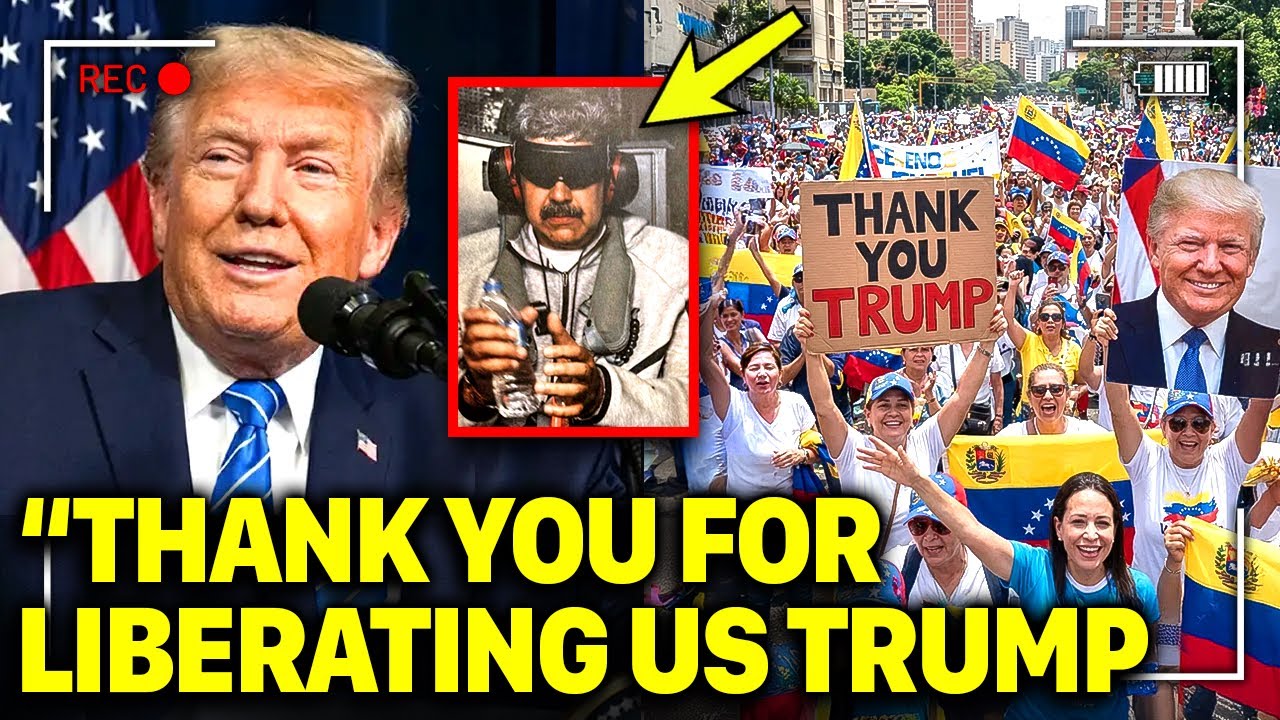
Across cities in Venezuela, and within diaspora communities throughout the United States and the Caribbean, scenes of open celebration erupted within hours of the operation. Crowds chanted in the streets, waving both Venezuelan and American flags, thanking Trump and calling the moment an overdue end to decades of repression, economic collapse, and mass displacement. For many who fled the country’s crises, the footage of Maduro’s capture represented something they believed they would never see: the collapse of a system that had defined nearly a generation of authoritarian rule.
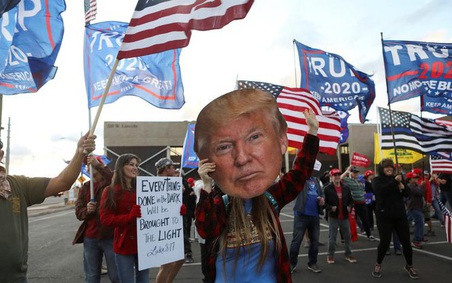
But that sense of relief and vindication clashed sharply with protests that formed almost immediately in the United States. Left-wing activists in cities such as New York rallied with communist symbols and “Hands Off Venezuela” banners, arguing the operation amounted to imperial overreach and a dangerous precedent for U.S. involvement in Latin America. Their message echoed statements from politicians like Alexandria Ocasio-Cortez and other progressive lawmakers who condemned the intervention, questioned its legality, and warned it could destabilize the region.
The tension grew more pronounced as Venezuelans confronted American demonstrators directly. Viral videos captured exiles challenging protesters, insisting that those who had never lived under Maduro’s system were misreading the situation—and defending a dictator responsible for widespread privation and political persecution. Several Venezuelan journalists and activists spoke out publicly, urging U.S. progressives not to let their opposition to Trump override the lived experience of those who endured two decades of hardship under Maduro and Hugo Chávez.
Trump’s subsequent announcement intensified the debate. Declaring that the United States would administer Venezuela temporarily until a “safe, proper, and judicious transition” could occur, he opened a new chapter that even many on the political right found unsettling. Skeptics warned that such language risked entangling the United States in a prolonged nation-building project, invoking memories of Iraq and Afghanistan. Others called attention to the operation’s strategic context, including Trump’s repeated statements about securing the region’s oil and countering increasing ties between Caracas, Tehran, and Moscow.
At the same time, figures such as Senator Marco Rubio framed the intervention as both a counter-narcotics action and a necessary response to a regime they argue functions as a criminal enterprise rather than a legitimate government. Rubio’s comments underscored Washington’s longstanding concerns over Venezuela’s role in regional drug trafficking and its alliances with U.S. adversaries.
The larger question—what comes next—remains unresolved. Venezuelan communities abroad express hope that the fall of the Maduro regime will allow millions of refugees to eventually return home, reducing the humanitarian strain that has transformed migration patterns across the hemisphere. Yet uncertainty looms over whether the transition will lead to stability or fuel further geopolitical confrontation, particularly given regional anxieties and warnings from critics about unintended consequences.
For now, the divide is undeniable. On one side stand Venezuelans who see the moment as a rare breakthrough after years of despair and displacement. On the other, American activists and lawmakers who view the intervention as a dangerous misuse of power, regardless of the outcome. Between these two poles sits a rapidly shifting political landscape—one where questions of legitimacy, sovereignty, and U.S. global influence converge in a volatile and deeply emotional clash.
In the coming days, the world will watch how the situation unfolds inside Venezuela, how Washington manages its self-appointed transitional role, and whether the competing narratives surrounding this operation will widen into a broader national debate.