In a moment that has already prompted days of political turbulence, former President Donald Trump’s latest remarks on U.S. policy toward Venezuela have ignited a clash between competing factions in Washington, Venezuela’s democratic opposition, and foreign policy analysts who warn the implications could be far more consequential than initially understood. What began as a routine discussion about hemispheric strategy has escalated into a deepening controversy that exposes fractures both inside the United States and across the broader international landscape.
The catalyst came from a video circulating widely on social media, in which Trump appeared to signal a willingness to sidestep the traditional U.S. policy of backing Venezuela’s democratic opposition. Instead, he alluded to working with figures more closely aligned with Nicolás Maduro’s authoritarian government. Although the remarks were delivered in Trump’s typically improvisational style, the implications have been interpreted with unusual seriousness. Several excerpts have already been replayed repeatedly on broadcast news and dissected across online platforms, fueling the sense that something significant may be shifting.
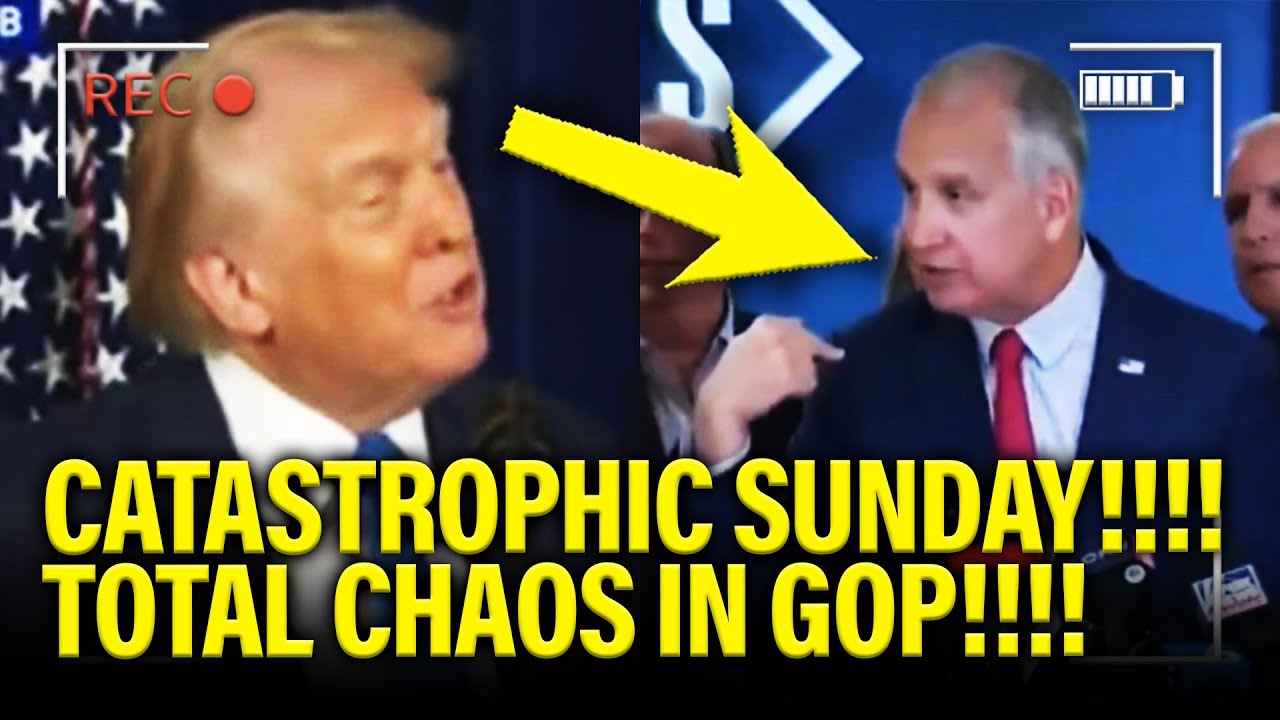
The reaction from Venezuelan diaspora communities, particularly in Florida, was both swift and intense. Many expressed disbelief that a former U.S. president—one who previously championed aggressive sanctions against the Maduro regime—might now be signaling an openness to alternative alignments. For many Venezuelan Americans who have spent years seeking political refuge in the United States, Trump’s comments were not merely rhetorical flourishes but a potential betrayal of core democratic principles.
Analysts in Washington are similarly divided. Some interpret the remarks as nothing more than Trump’s characteristic improvisation: broad, provocative claims designed to capture attention rather than signal any coherent policy direction. Others, however, warn that dismissing the comments would be premature. They point to the former president’s record of making off-the-cuff declarations that later evolved into concrete policy shifts—sometimes executed without traditional inter-agency consultation or diplomatic preparation.
The political reverberations are already visible. Several lawmakers have issued statements questioning Trump’s intentions and urging clarity regarding his position on the Venezuelan crisis. Some have emphasized the risks of legitimizing Maduro’s power structure, particularly at a moment when Venezuela’s economic collapse and political repression remain severe. Others have taken a more pragmatic tone, suggesting that Washington must “explore all channels”—though even these more cautious voices stopped short of endorsing Trump’s remarks outright.
Foreign policy experts argue that any softening toward Maduro-aligned figures would ripple far beyond Venezuela itself. It could reshape Washington’s credibility in Latin America, undermine ongoing multilateral pressure campaigns, and signal to authoritarian governments worldwide that U.S. commitments may fluctuate based on domestic political considerations. This uncertainty, they warn, could force democratic movements in the region into a more defensive posture, fearing that Washington’s support may no longer be reliable.
What remains unclear is whether Trump plans to elaborate on his comments or allow the ambiguity to continue circulating. Historically, ambiguity itself has been one of his favored political tools. Ambiguous statements create information vacuums that both supporters and opponents rush to fill, generating a level of media attention that often works to his advantage. In this case, however, the stakes may be higher. Venezuela’s political crisis is not a theoretical dispute but an ongoing humanitarian disaster that affects millions.

The Biden administration has not yet issued a formal response, though officials familiar with internal discussions say the remarks have triggered concern within diplomatic circles. The administration has spent months attempting to balance pressure on the Maduro regime with calibrated incentives intended to encourage democratic reforms—an approach many experts describe as inconsistent but necessary given the complexity of the situation. Trump’s comments, if taken seriously by key actors in the region, could risk disrupting that already fragile equilibrium.
Internationally, several Latin American governments are reportedly monitoring the situation with unusual interest. Some see an opportunity to reposition themselves in relation to Washington, while others fear that the U.S. may be entering a period of foreign policy unpredictability that could complicate regional cooperation. Brazil, Colombia, and Chile—each navigating their own domestic political pressures—are among the nations most directly affected by potential shifts in U.S.–Venezuela dynamics.
Among the general public, the debate appears equally polarized. Supporters argue that Trump’s willingness to challenge long-held assumptions reflects a pragmatic approach to a crisis that decades of sanctions and diplomatic maneuvers have failed to resolve. Critics counter that abandoning the democratic opposition in favor of engagement with authoritarian actors would be both morally indefensible and geopolitically reckless.
As the conversation intensifies, one reality has become clear: Trump’s remarks have forced a renewed examination of U.S. objectives in Venezuela—an issue that has long struggled to maintain consistent attention amid shifting global priorities. Whether this moment evolves into a substantive policy debate or retreats into the cycle of news-driven controversy remains to be seen.
For now, the uncertainty itself is shaping the narrative. In a political environment already strained by polarization, misinformation, and a volatile international order, even a single ambiguous statement can trigger ripples far beyond its initial broadcast. The coming weeks may determine whether those ripples fade—or grow into something far more disruptive.