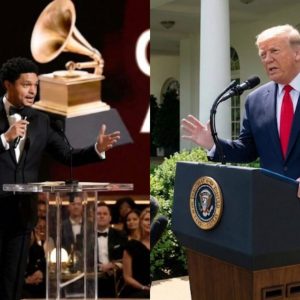
When Comedians Become Chroniclers of Power
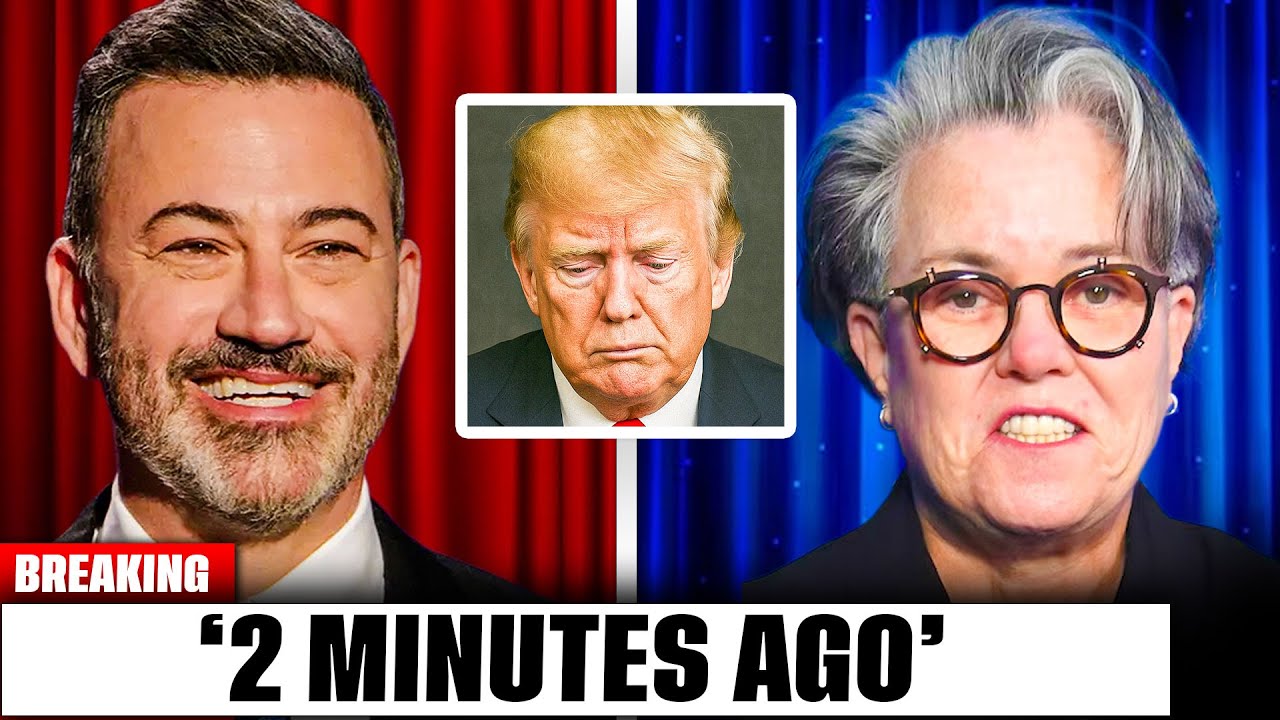
For much of the past two decades, Donald J. Trump has insisted that he is impervious to ridicule. Critics, he has argued, are motivated by jealousy, elitism, or partisan hatred. Yet time and again, it is not political rivals who appear to unsettle him most deeply, but comedians — figures who, armed with jokes and timing, have proven unusually effective at exposing his vulnerabilities.
Two names loom especially large in this long-running conflict: Jimmy Kimmel and Rosie O’Donnell.
To dismiss Trump’s fixation on them as celebrity drama would be to miss something more consequential. Their sustained criticism, spanning nearly 20 years, offers a revealing case study in how authoritarian-leaning leaders respond to public mockery — and why satire can become a perceived threat to power itself.
A Feud Older Than Trump’s Political Career
Trump’s hostility toward O’Donnell dates back to 2006, when she criticized his business record on The View, questioning his claims of financial success following a string of high-profile bankruptcies. Trump responded with a barrage of insults, beginning a feud that has never fully abated.
What was once a tabloid spectacle has since taken on constitutional implications. In recent months, Trump has publicly suggested that O’Donnell — an American-born citizen — should lose her citizenship because of her criticism of him, remarks that legal scholars across the political spectrum describe as incompatible with the First Amendment.
The comments were widely condemned by civil liberties advocates, who noted that threatening citizenship revocation as punishment for speech is a hallmark of authoritarian systems, not democratic ones.
O’Donnell’s response, posted on social media, was characteristically defiant. She reframed Trump’s attacks not as personal slights, but as evidence of obsession. “Eighteen years later,” she wrote, “I still live rent-free in that collapsing brain of yours.”
Jimmy Kimmel and the Power of Public Ridicule

Jimmy Kimmel’s role is different but no less consequential. Unlike O’Donnell, Kimmel commands a nightly audience of millions. His show has become one of the most consistent platforms for dismantling Trump’s claims, often using Trump’s own words as evidence.
Media analysts note that Kimmel’s effectiveness lies not in partisan outrage, but in ridicule. Trump’s grandiosity, his fixation on ratings, and his tendency to conflate personal grievance with public policy are rendered absurd when placed under the unforgiving spotlight of humor.
After Trump complained publicly about Kimmel’s ratings and accused networks of political bias, Kimmel responded with a segment that compared Trump’s obsession with audience size to a performer unable to accept rejection. The laughter that followed was not merely entertainment; it was delegitimization.
Political psychologists have long argued that ridicule can be more destabilizing to narcissistic leaders than criticism. While opposition validates a leader’s sense of importance, mockery denies it.
Shutting Out the Press
In recent weeks, Trump’s administration has taken steps that critics argue reflect growing sensitivity to public scrutiny. On multiple occasions, White House events were abruptly closed to the press, including scheduled appearances where executive actions were expected to be announced.
The cancellations drew attention not only from mainstream outlets like CNN and Reuters, but also from pro-Trump media organizations, some of which expressed confusion and frustration on air when access was denied.
Such actions fit a broader pattern, according to press freedom groups, in which Trump responds to negative coverage not by rebutting it, but by attempting to control or punish the messengers — whether journalists, comedians, or private citizens.
The Threats to Media Institutions
Trump’s rhetoric toward media companies has also intensified. He has repeatedly suggested using regulatory pressure against networks he accuses of unfavorable coverage, boasting publicly about previous legal settlements and implying that future ones could be even more lucrative.
Legal experts caution that even when such threats are not carried out, their cumulative effect can be chilling. “The danger isn’t just in what happens,” one former FCC official said, “but in what journalists and executives begin to fear might happen.”
This environment, critics argue, places comedians in an unusual position. Unlike traditional news organizations, they are less constrained by norms of neutrality and less vulnerable to regulatory retaliation — making them, paradoxically, more resilient truth-tellers.
Comedy as Historical Record
Late-night television has increasingly functioned as a parallel archive of the Trump era. Segments clip speeches, replay contradictions, and preserve moments that might otherwise fade into the churn of the news cycle.
“Kimmel isn’t just telling jokes,” said a media studies professor at NYU. “He’s creating a searchable, shareable record of behavior.”
This may explain why Trump appears more disturbed by comedians than by electoral defeats or judicial setbacks. A court ruling can be appealed. An election can be reframed as stolen. But a joke that lands, and spreads, is harder to undo.
A Nervous System Under Stress

Trump’s public behavior during periods of negative press — late-night social media posts, sudden policy reversals, canceled appearances — has fueled speculation about a presidency operating in a near-constant state of agitation.
Former aides have described a leader acutely sensitive to perceived humiliation, especially when it originates outside formal political channels. In that context, the enduring presence of Kimmel and O’Donnell represents not opposition, but exposure.
Their criticism does not argue that Trump is wrong; it suggests he is ridiculous. For a man who has spent a lifetime cultivating an image of dominance, that may be the most intolerable verdict of all.
Why It Matters
The conflict between Trump and his comic antagonists is not a sideshow. It is a window into how power reacts when confronted not with force, but with laughter.
History suggests that authoritarians fear satire because it strips away inevitability. It reminds audiences that leaders are human, fallible, and often absurd. And once that spell is broken, it is difficult to restore.
As Trump continues to frame comedians, journalists, and critics as enemies of the state, the lesson becomes clearer: in moments when institutions falter, humor can serve as resistance — not by shouting louder, but by refusing to take fear seriously.
Whether that will be enough remains uncertain. But for now, the jokes continue, the laughter spreads, and the record grows longer.
And that, perhaps more than any policy dispute, is what truly unnerves him.