WASHINGTON, Jan. 23, 2026 — Viral claims circulating on social media that the Supreme Court has rejected President Donald J. Trump’s effort to impose a nationwide voter ID mandate, delivering a “historic defeat” and prompting a furious reaction from the president, are unfounded. No such Supreme Court ruling exists, and the narrative appears to misrepresent a series of lower-court decisions blocking aspects of Mr. Trump’s March 2025 executive order on election integrity.
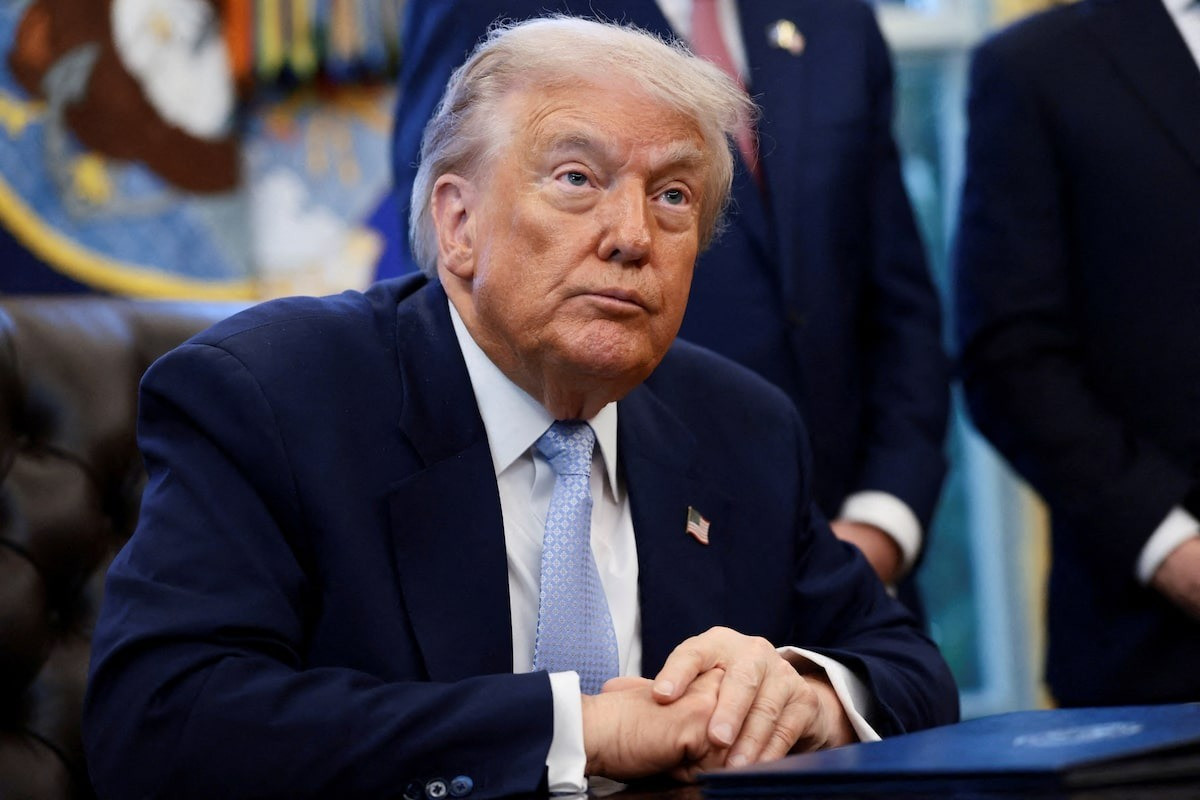
The executive order, titled “Preserving and Protecting the Integrity of American Elections,” directed federal agencies to enforce stricter voter verification rules, including requiring documentary proof of citizenship (such as a passport or birth certificate) for registration using the federal voter form. Mr. Trump framed the measure as essential to restoring confidence in elections, but critics argued it overstepped presidential authority, as the Constitution assigns election administration primarily to states and Congress.
Federal district judges in multiple states have issued injunctions against the proof-of-citizenship requirement, ruling that the president lacks the power to unilaterally alter voter registration processes. For instance:
- On Oct. 31, 2025, U.S. District Judge Colleen Kollar-Kotelly in Washington, D.C., permanently blocked the mandate, citing a violation of separation of powers. “Because our Constitution assigns responsibility for election regulation to the States and to Congress, this Court holds that the President lacks the authority to direct such changes,” she wrote.
- In January 2026, U.S. District Judge David O. Carter in California dismissed a Justice Department lawsuit seeking unredacted voter data, warning of a “chilling effect” on registration.
- A judge in Washington state blocked the administration from withholding election funding from non-compliant states on Jan. 9, 2026, marking at least the third such ruling.
These decisions emphasize that election laws fall under state and congressional jurisdiction, not executive fiat. Appeals are ongoing, and the cases could eventually reach the Supreme Court, but no ruling from the high court has been issued. The Supreme Court has addressed related voting issues recently, such as candidate standing to challenge state laws in a Jan. 14, 2026, decision, but not voter ID mandates.
Mr. Trump has advocated for national voter ID requirements, including urging Republicans to pass the SAVE Act — a bill that cleared the House in 2025 but stalled in the Senate. No verified reports confirm a “furious off-script threat” or “meltdown” in response to these court setbacks, though the president has publicly criticized judges and vowed to pursue election reforms.
The misinformation has trended on social media, with clips and posts amplifying the false Supreme Court angle. Fact-checkers note these stories often conflate district court injunctions with a nonexistent high court defeat, potentially to stoke partisan outrage.
The White House did not respond to requests for comment. Voting rights groups, such as the Brennan Center for Justice, have praised the lower-court rulings as safeguards against voter suppression. As midterm elections approach, the debate over election integrity continues to divide lawmakers, with no immediate path forward for a national mandate.