BREAKING — U.S. Military Action in Venezuela Sparks Historic Legal and Political Turmoil
In the wake of unprecedented U.S. military action that resulted in the assault on Nicolás Maduro’s stronghold in Venezuela and his removal from power, critics and legal experts are arguing that the operation raises profound constitutional and international legal questions — including whether Donald Trump could face impeachment or even criminal liability for violating domestic and global norms.
The U.S. intervention, which involved airstrikes in Caracas and the capture of Maduro and his wife, has been described by numerous legal scholars and international law specialists as a “crime of aggression.” According to a review by experts including professors of international law and United Nations rapporteurs, the action may have breached fundamental principles of the United Nations Charter — specifically Article 2(4), which prohibits the use of force against another state without Security Council authorization or a legitimate self-defense justification.
Under that framework, critics argue there was no imminent threat justifying the assault, and no U.N. backing to legitimize the invasion. That combination, they say, could constitute a violation of international law with potential consequences for global diplomatic norms.
Domestic Legal and Constitutional Concerns
Beyond questions of international legality, the U.S. Constitution assigns to Congress — not the President — the power to declare war. The president’s unilateral deployment of military force in Venezuela, without prior congressional authorization, has drawn fierce criticism on Capitol Hill and from legal experts. Analysts point to the War Powers Resolution of 1973, which was enacted to prevent exactly this kind of executive overreach by requiring congressional consultation and approval for offensive military actions.
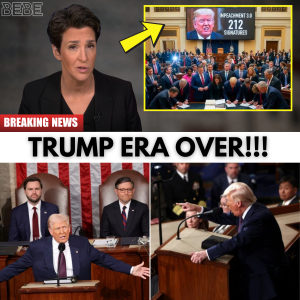
Some lawmakers and commentators have suggested that such actions could rise to the level of impeachable offenses, citing the president’s oath to “faithfully execute” the laws of the United States and uphold the Constitution. A statement from the New York City Bar Association argued that the U.S. military intrusion, absent congressional authorization or a valid claim of self-defense, violated both domestic law and the U.N. Charter, and encouraged Congress to consider its options — including potentially impeachment — to rein in perceived abuses of executive authority.
International Backlash and Global Response
The international repercussions of the Venezuela operation have been severe. From the United Nations to foreign capitals, world leaders have condemned the U.S.’s actions as a blatant breach of global legal norms. Russian officials denounced the seizure of Maduro as “theft” that could shatter established systems of international relations, highlighting the fracturing tensions between major powers over the legality of unilateral uses of force.
Human rights organizations have also voiced alarm, warning that ignoring international law opens the door to further violations and may endanger civilian lives. Amnesty International and other groups have urged Congress to impose oversight and limits on presidential power to prevent future actions that could undermine human rights or international stability.
A Divided America
At home, political reactions are sharply divided. Supporters of the intervention argue that it removed a corrupt regime and degraded drug-trafficking networks, portraying the action as a law-enforcement or national-security measure. Detractors counter that such justifications cannot override constitutional and international legal prohibitions against unilateral military invasions.
Whether Congress will pursue impeachment proceedings tied to the Venezuela operation remains uncertain. But the debate underscores a broader crisis over executive power, constitutional authority, and the rule of international law. As legal scholars and policymakers continue to dissect the operation’s legality, the fallout is likely to influence U.S. foreign policy and the limits of presidential authority for years to come.