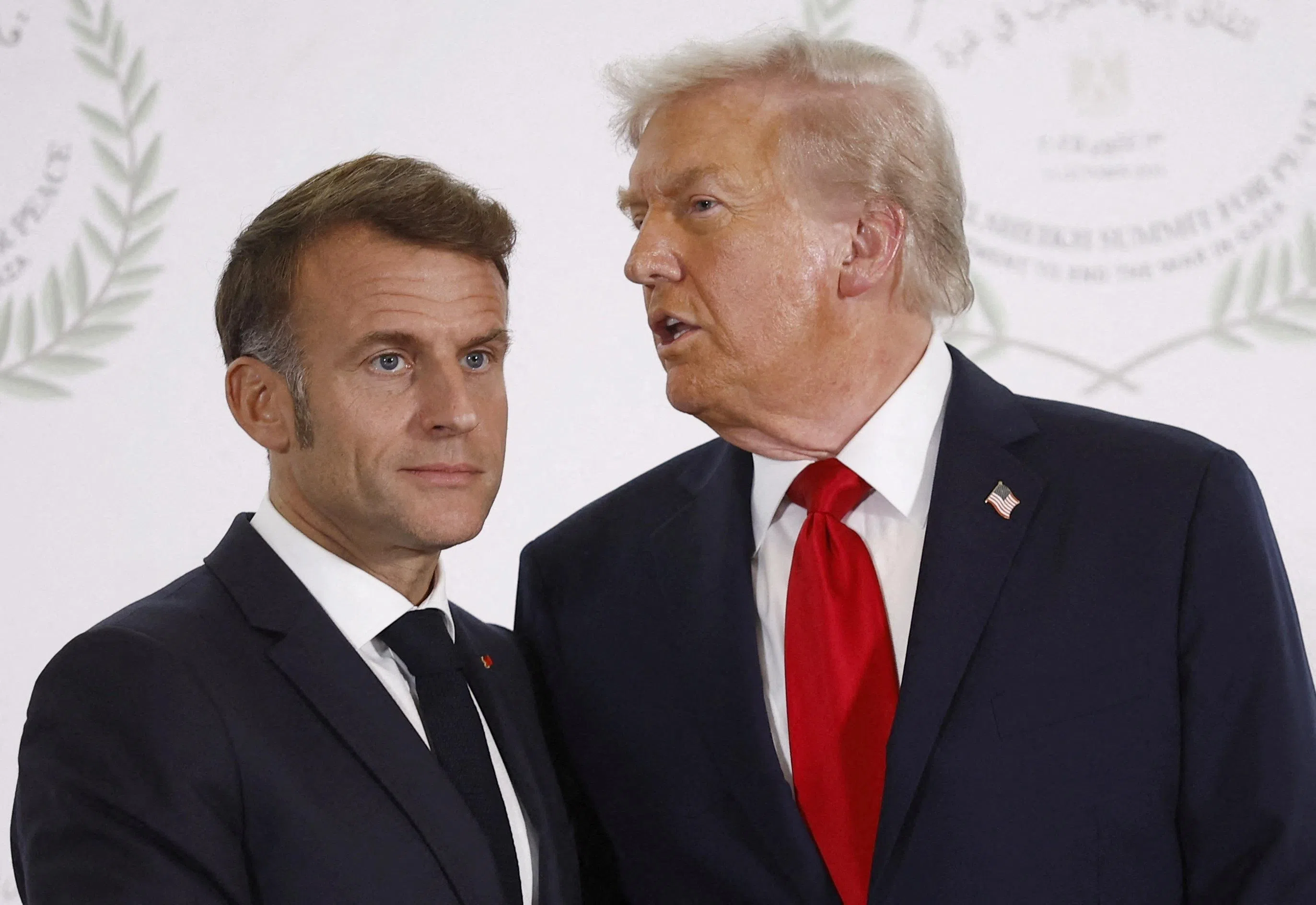
PARIS — French President Emmanuel Macron publicly denounced new tariff threats from U.S. President Donald Trump as “unacceptable” and warned that Europe will respond in a united and coordinated manner if the proposed duties are confirmed, escalating tensions in transatlantic relations.

In a social media post on X, Macron said that “no intimidation nor threat will influence us — neither in Ukraine, nor in Greenland, nor anywhere else in the world” in response to the United States’ trade pressure on European allies.
Macron: “Tariff Threats Are Unacceptable”
Macron’s comments follow an announcement by President Trump that the United States will impose new tariffs targeting eight European countries — including France, Germany, Sweden, and Denmark — in connection with a dispute over Greenland. The tariffs are set to begin at 10% on February 1, rising to 25% in June unless Washington’s demands are met.
Citing national security concerns related to Arctic geopolitics, the proposal has drawn sharp criticism from European capitals, which view it as an attempt to use trade policy to influence sovereign decisions about defense cooperation and territorial arrangements.
Macron emphasized that such tariff threats have no place in the current context and reaffirmed Europe’s commitment to defending its interests collectively.
European Leaders Unite in Response
Macron’s statement reflects a broader European reaction. Leaders from the European Union, including European Commission President Ursula von der Leyen and European Council President Antonio Costa, have vowed to stay united and coordinated in defending European sovereignty in the face of U.S. pressure.
Sweden’s Prime Minister Ulf Kristersson also weighed in, saying, “We won’t let ourselves be intimidated” and stressing that decisions about Greenland are for Denmark and Greenland to make, not external powers.
British Prime Minister Keir Starmer described the tariff threats as “completely wrong”, particularly regarding NATO allies supporting collective defense initiatives in the Arctic.
What This Means for Transatlantic Trade
The escalating dispute marks a rare moment of open tension between the EU and the United States — historically close trading partners and military allies. While both sides have engaged in trade disagreements in recent years, the linked tariff threat over strategic Arctic policy is seen as a significant departure from traditional diplomatic channels.
European officials have signaled that any measures imposed by Washington could trigger coordinated trade responses, potentially including retaliatory tariffs or legal action through the World Trade Organization (WTO).
A Test of European Unity
Macron’s strong stance underscores Paris’s intent to position the EU as a strategic geopolitical actor, capable of defending its interests and countering external economic coercion. His remarks stress that Europe will not be swayed by unilateral pressure tactics — whether in Greenland, Ukraine, or other sensitive geopolitical arenas.
Analysts say that unified European action in response to U.S. tariff threats could reshape future trade negotiations, forcing both sides to reconsider the balance between economic partnership and political leverage.
Looking Ahead
As diplomatic tension continues, the situation remains dynamic. European leaders are expected to convene in the coming weeks to coordinate a joint strategy that could include WTO filings, reciprocal tariffs, or strengthened defense and economic cooperation. How the U.S. administration will react to Europe’s unified stance remains a key question for international trade and transatlantic relations in 2026.
