In Washington, where spectacle and strategy increasingly blur, a new media clash has captured the capital’s attention. A select group of members of Congress has reportedly been granted access to unredacted files related to Jeffrey Epstein, documents that, according to one lawmaker, reference former President Donald Trump far more frequently than previously understood. The mere suggestion has reignited a political firestorm — and set off a familiar cycle of reaction, counterreaction and televised commentary.
At the center of the latest escalation is an unlikely antagonist: a late-night comedian.
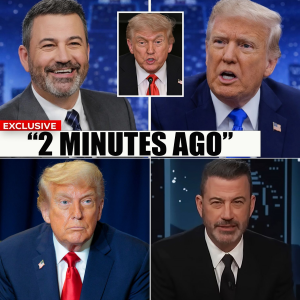
What began as a routine monologue by Jimmy Kimmel evolved into something more consequential. Kimmel, host of ABC’s “Jimmy Kimmel Live,” devoted a segment to the renewed scrutiny surrounding the Epstein files and to Trump’s broader pattern of public grievance. The jokes were sharp but measured. The audience laughed. The format felt familiar. But the subtext was not merely punchlines — it was pattern recognition.
Kimmel’s critique was less about policy than persona. He framed Trump’s public behavior as a predictable loop: outrage, amplification, escalation. Rather than debating facts line by line, he dissected the rhythm of Trump’s responses — the all-caps denunciations, the swift pivot to unrelated controversies, the habit of reframing every headline as a personal affront. The effect was not explosive. It was surgical.
Trump did not ignore the segment.
In posts and public remarks, he dismissed Kimmel as a “lousy host” and derided the coverage surrounding the Epstein files as politically motivated. At rallies and online, he shifted attention to familiar targets: Canada’s trade policies, elite universities, the news media. He threatened lawsuits. He criticized cultural events. He denounced perceived enemies. For supporters, the counterpunching signaled defiance. For critics, it appeared reactive.
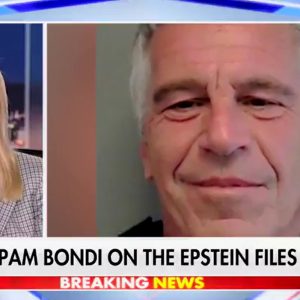
The substance of the Epstein documents remains largely shielded from public view. The Justice Department has released millions of pages in recent months, though additional material remains sealed or redacted. Representative Jamie Raskin, a Maryland Democrat who reviewed portions of the files, said Trump’s name appeared repeatedly — a claim that Trump and his allies reject as misleading and politically charged. The former president has denied wrongdoing and has not been charged in connection with Epstein’s crimes.
Yet in the modern media ecosystem, perception can rival substance.
Kimmel’s approach was notable not for outrage but for restraint. He did not present himself as a political adversary so much as an observer cataloging behavior. He treated Trump’s responses as the punchline itself. Each rebuttal, each online tirade, became further evidence in the comedic thesis that outrage had become routine.
The exchange quickly transcended late-night television. Clips circulated widely online. Commentators debated whether Trump’s engagement strengthened his image as a fighter or undermined it by amplifying satire. Media analysts questioned who, in this environment, truly controls the narrative: the political figure with a loyal base or the entertainer with a viral platform.
Trump’s political identity has long been intertwined with spectacle. From campaign rallies to social media, he has demonstrated an instinct for commanding attention. Controversy, for him, has often functioned as fuel. But attention is a double-edged sword. When one dominates headlines through provocation, one is also vulnerable to becoming the subject of someone else’s framing.
Kimmel, by contrast, operates in a medium designed for brevity and virality. A monologue can spark a news cycle. A joke can reorient conversation. By declining to escalate rhetorically, he created a contrast: one side appeared amused, the other indignant. In politics, optics matter.
The clash has also underscored a broader shift in American public life. The boundary between governance and entertainment grows thinner each election cycle. Politicians respond to comedians. Comedians influence polling conversations. Social media accelerates every exchange. What might once have been a fleeting late-night moment now reverberates across cable news and digital platforms.
For Trump, the dilemma is familiar. Ignoring criticism risks ceding narrative ground. Responding risks magnifying it. His supporters argue that refusal to remain silent is proof of strength. Critics contend that perpetual reaction erodes strategic discipline. Both interpretations can coexist in a polarized landscape.
Meanwhile, the underlying questions about the Epstein files remain unresolved. Transparency advocates demand fuller disclosure. Trump allies accuse opponents of weaponizing insinuation. The Justice Department, led by officials appointed during Trump’s presidency, continues to manage the release process amid legal constraints and political pressure.
In the end, the episode may say less about comedy or even about one set of documents than about the mechanics of modern power. In an era when attention is currency, whoever dictates tempo often shapes perception. For a brief stretch of headlines, it was not a rally or a policy speech driving the national conversation, but a monologue delivered behind a studio desk.
Whether that dynamic signals vulnerability or merely another chapter in an unconventional political career depends on perspective. What is clear is that the interplay between satire and strategy has become an enduring feature of American politics — one in which the punchline and the presidency share the same stage.