“More Questions Than Answers”: Senator Mark Kelly Warns of Performative Briefings and Vanishing Oversight
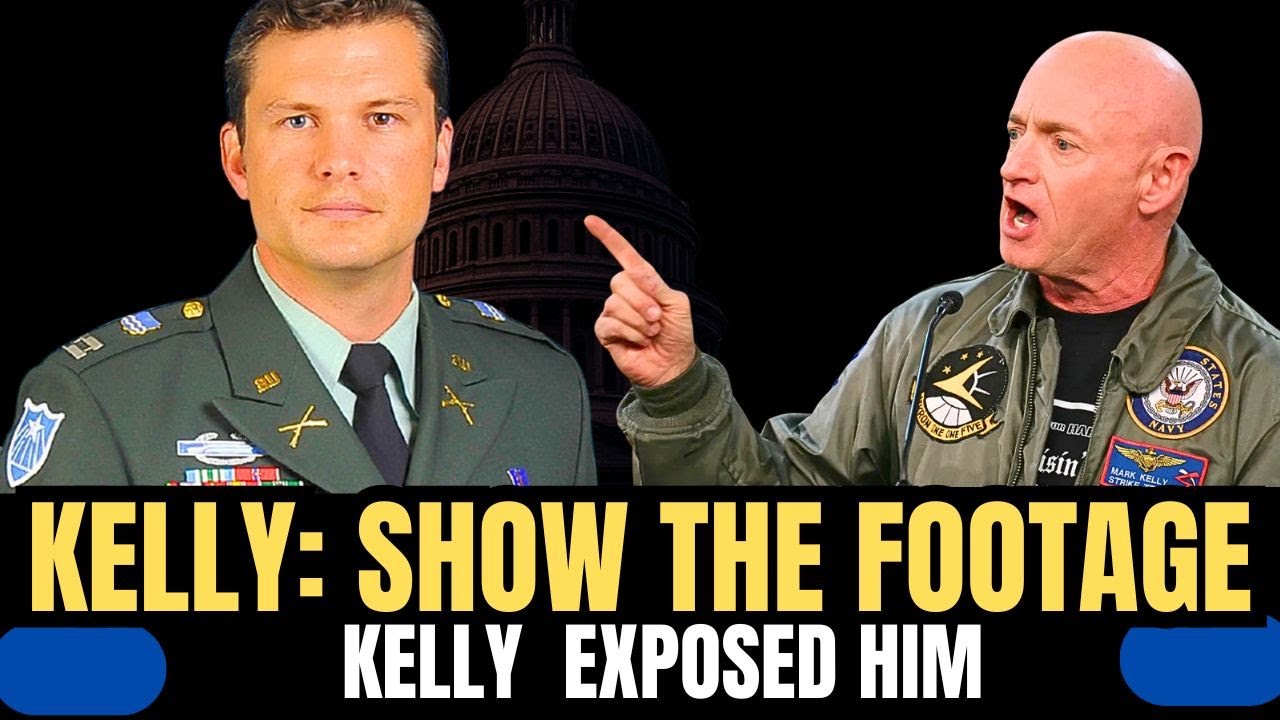
What Senator Mark Kelly described after a classified Pentagon briefing was not simply frustration. It was a warning about how military power is being exercised, scrutinized, and increasingly shielded from democratic accountability. The Arizona senator emerged from the briefing saying he had more questions than when he entered — a striking admission after an hour-long session meant to clarify a major U.S. military operation.
According to Kelly, six officials consumed roughly 35 to 40 minutes of the hour with prepared remarks, leaving just 20 minutes for questions. Out of nearly 100 senators present, only about six were able to ask anything before the briefing abruptly ended. For Kelly, the structure itself revealed the problem. Oversight, he argued, was being treated as an inconvenience rather than a constitutional obligation. “This felt very performative,” he said, even when officials were speaking directly to senators.

Kelly declined to disclose classified details but said comments made by Admiral Allen during the briefing only deepened his concerns. Rather than resolving doubts, the answers raised new questions about the legality, scope, and justification of the operation. When Kelly pressed for specifics — particularly about controversial boat strikes — he said officials avoided direct answers and fell back on familiar talking points he had already heard years earlier.
A central issue, Kelly emphasized, is transparency — or the lack of it. Some videos related to the operation have been released publicly and promoted aggressively by Pentagon leadership. But one specific video, which Kelly says raises serious problems for the administration’s narrative, has been withheld. Selective disclosure, he warned, is more dangerous than secrecy outright. When officials choose which evidence lawmakers and the public are allowed to see, they are shaping perception rather than submitting to independent judgment.
Kelly has called for the withheld footage to be shown to every U.S. senator, not just those serving on Armed Services or Intelligence committees. “We are all equal in this job,” he said. “We represent people across this country, and it’s all of our responsibility to hold this administration accountable.” He also argued the video should be released publicly, noting that transparency is essential precisely when information is uncomfortable or politically damaging.

Beyond transparency, Kelly raised fundamental legal concerns. Unlike previous military campaigns such as operations against al-Qaeda, this mission lacks explicit congressional authorization. To Kelly, it resembles law enforcement or drug interdiction more than a traditional military operation — a distinction with serious constitutional implications. The U.S. military is not meant to operate as a global police force without clear legal grounding, and blurring that line risks quietly rewriting long-standing norms.
Cost and effectiveness also loom large. Kelly noted that the operation is costing millions of dollars per day, while primarily targeting trafficking routes used to move cocaine toward Europe and Africa — not fentanyl, which continues to devastate American communities. Meanwhile, land ports of entry, where most fentanyl is intercepted, remain under-resourced. For Kelly, that mismatch reflects not just a policy disagreement, but a failure of strategic prioritization.
What troubles Kelly most is the broader pattern. Avoiding open hearings, limiting access to evidence, and framing legitimate questions as hostility sends a chilling message. It discourages scrutiny and normalizes secrecy. In a healthy democracy, questioning power is not disloyalty; it is the mechanism by which mistakes are exposed and corrected before they metastasize.
History offers sobering lessons. From Vietnam to Iraq, delayed transparency has eroded public trust and cost lives. Congressional oversight exists to prevent missions from expanding without clear goals and to ensure that military force is used lawfully, proportionally, and for necessary reasons. When oversight is reduced to a tightly managed presentation, accountability gives way to messaging.
Kelly’s remarks resonate because they articulate a concern many Americans feel but rarely hear stated so plainly by those inside the system. When leaders refuse to show the full picture, the issue stops being about a single video or operation. It becomes a question of whether the constitutional checks on power are still being honored. That, Kelly suggests, is why these hearings matter — and why the public should be paying close attention.