Bill Belichick, the Hall of Fame Debate, and the Shadow of Scandal Over an Unmatched Dynasty

The name Bill Belichick stands as one of the most dominant figures in the history of professional football. With six Super Bowl championships, nine appearances on the sport’s biggest stage, and two decades of sustained excellence with the New England Patriots, his résumé reads like a textbook case for immediate enshrinement into the Pro Football Hall of Fame.
And yet, as Belichick emerges as a finalist for the Hall of Fame Class of 2026, a fierce debate has erupted—sparked not by rival coaches or media critics, but by one of his own former players, Ted Johnson, a three-time Super Bowl champion linebacker. Johnson’s remarks have reignited old controversies and opened a national discussion about whether greatness alone guarantees first-ballot immortality.
We examine the full scope of Belichick’s legacy, the power of the scandals that continue to follow him, and why this moment may become one of the most polarizing Hall of Fame decisions in modern NFL history.
Ted Johnson’s Blunt Verdict: “Not First-Ballot”
Ted Johnson’s comments on WEEI Afternoons landed like a thunderclap across the NFL media landscape. In clear, unwavering terms, Johnson argued that despite Belichick’s historic success, the coach should not be inducted as a first-ballot Hall of Famer.
His reasoning was direct and unfiltered. Johnson placed the weight of multiple Patriots scandals squarely on Belichick’s shoulders, stating that no coach in NFL history has paired championships with as many damaging controversies. When later pressed to clarify whether Belichick deserved eventual induction at all, Johnson doubled down, responding with visible disbelief at the suggestion of immediate validation.
This was not a casual critique. It was a pointed accusation from inside the dynasty itself—one that demanded national attention.
The Scandals That Still Define the Debate
Belichick’s critics do not challenge his win-loss record or his mastery of game planning. They challenge the methods, the boundaries pushed, and the rules broken under his leadership. Three major controversies remain central to the Hall of Fame discussion.
Spygate 2007: The First Major Crack in the Dynasty’s Armor
In 2007, the Patriots were caught filming the New York Jets’ defensive coaches’ signals from an unauthorized location. The investigation concluded with:
-
$500,000 fine for Bill Belichick
-
$250,000 fine for the Patriots
-
Loss of a first-round draft pick
At the time, it was the largest fine ever levied against a coach. Though the Patriots went on to finish the season undefeated before falling in Super Bowl XLII, the stain of Spygate never disappeared. It permanently altered how rival teams viewed New England’s dominance.
Deflategate 2015: The Scandal That Split the NFL in Two
Eight years later, the Patriots were again at the center of controversy—this time surrounding underinflated footballs used during the AFC Championship Game. The league investigation concluded that team personnel had intentionally released air from game balls.
The consequences were staggering:
-
Four-game suspension for Tom Brady
-
$1 million fine for the Patriots
-
Loss of a first- and fourth-round draft pick
Belichick denied any involvement. Yet for millions of fans and analysts, the pattern of controversy had become impossible to ignore. Even as the Patriots went on to win Super Bowl XLIX, the victory was forever tethered to unresolved questions.
Spygate 2.0 in 2019: When History Repeated Itself
In 2019, a Patriots film crew violated league policy while recording sideline footage during a Cleveland Browns game for the team’s documentary series Do Your Job. The punishment was swift:
-
$1.1 million fine
-
Loss of a third-round draft pick
The optics were devastating. For critics, this was no longer coincidence—it was culture.
A Fractured Exit From New England and a New Chapter in College Football
Belichick’s departure from New England marked the end of an era—but it did not close the book on controversy. His fallout with owner Robert Kraft led to a very public deterioration in their relationship, culminating in reports of bitter disagreements over personnel control and legacy management.
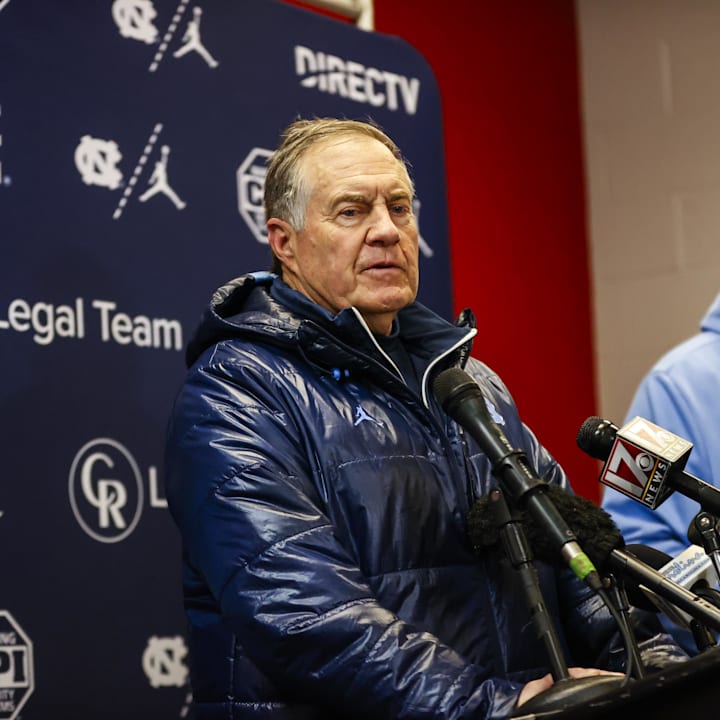
Now the head coach of the North Carolina Tar Heels, Belichick quickly made headlines again by banning Patriots scouts from his program’s facilities early in the season. The symbolic move signaled that the rift with his former franchise runs far deeper than most expected.
For Hall of Fame voters, character and leadership beyond the field often carry significant weight.
The Case for Belichick: A Dynasty Built on Sustained Dominance
Even amid controversy, Belichick’s football achievements remain unparalleled in the Super Bowl era.
-
Six Super Bowl titles
-
Nine Super Bowl appearances
-
17 AFC East division titles
-
Multiple defensive and coaching records
-
The architect of the league’s most durable modern dynasty
Under his guidance, the Patriots became the gold standard for organizational consistency. They dominated across two full decades, surviving rule changes, roster overhauls, cap fluctuations, and evolving offensive systems.
Belichick did not simply win games. He redefined how championship teams are constructed—through versatility, preparation, and opponent-specific strategy.
The First-Ballot Question: Legacy vs. Integrity
The Hall of Fame does not solely reflect championships. It is also a museum of integrity, leadership, and contribution to the game’s ideals. This reality places Belichick in a uniquely complicated position.
Supporters argue:
-
His on-field success is unmatched
-
Every dynasty in sports has controversy
-
The league benefitted enormously from the Patriots era
Critics counter:
-
Repeated violations undermine the purity of competition
-
Financial penalties and draft punishments were not symbolic—they were severe
-
Leadership means accountability when violations become systemic
This is the crux of Ted Johnson’s stance: Belichick belongs in the Hall—but not on the first ballot.
How Hall of Fame Voters Typically Approach Controversial Candidates
Historically, Hall of Fame voters do not operate solely on statistics. Figures like Pete Rose in baseball and Barry Bonds illustrate how controversy can delay or complicate induction, even when records demand recognition.
In football, the Hall has often allowed time to serve as a cooling period—giving voters space to reflect beyond the emotional immediacy of scandal.
Belichick’s candidacy now tests the limits of that philosophy.
The Patriots Dynasty Without Illusion
The truth remains difficult to reconcile: both narratives are accurate.
-
The Patriots built the most dominant run in modern NFL history
-
The Patriots were also associated with repeated league investigations under the same leadership
This duality may ultimately define Belichick’s historical placement more than any single Super Bowl victory.
Why This Debate Matters Beyond One Coach
Belichick’s Hall of Fame case reshapes the broader discussion about ethics versus achievement in professional sports. His legacy forces the NFL to confront an uncomfortable question:
Can greatness achieved amid controversy still be immortalized without hesitation?
The answer will ripple through future generations of candidates and redefine how football history itself is curated.
Final Outlook: A Lock for the Hall, But Not Without Delay
Looking forward, the consensus among analysts remains clear: Bill Belichick will be inducted into the Pro Football Hall of Fame. His impact on strategy, preparation, and organizational culture is simply too large to deny.
Yet growing momentum suggests that his first-ballot status is no longer guaranteed. The voice of Ted Johnson has amplified what many quietly believed—that scandal, when repeated and systemic, reshapes legacy even at the highest level.
Belichick may enter Canton not as an uncontested legend, but as one of the most debated figures ever to cross football’s ultimate threshold.