Clintons Call for Public Hearings in Epstein Inquiry, Shifting Pressure Back to Trump
WASHINGTON — A long-simmering political battle over the legacy of Jeffrey Epstein entered a new phase this week after Hillary Clinton publicly challenged House Republicans to put their investigation on camera, daring them to conduct open hearings rather than closed-door depositions.
In a post on social media, Clinton addressed James Comer directly, urging what she described as “real transparency.” If lawmakers were serious, she wrote, they should welcome public testimony. “Cameras on. We’ll be there,” she said.
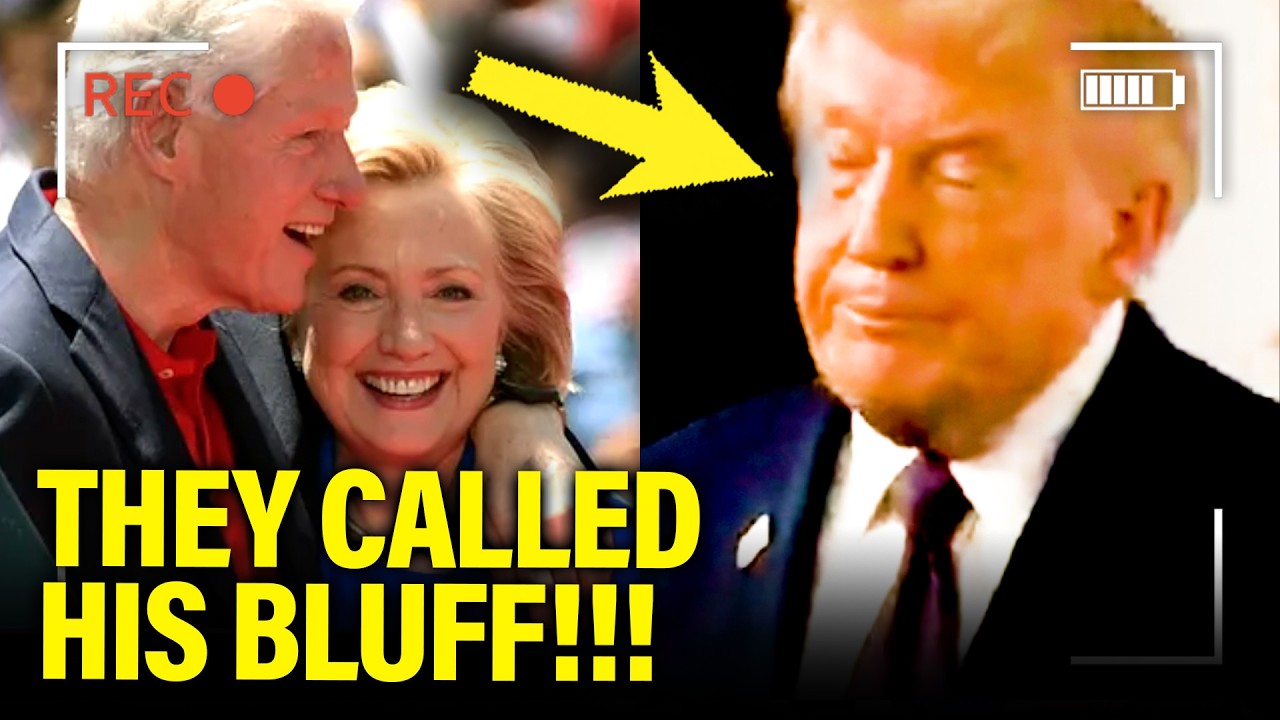
The message landed like a political gauntlet. For months, Republicans on the House Oversight Committee have framed their probe into Epstein and his network as an effort to expose elite wrongdoing. Democrats, in turn, have accused the committee of selectively wielding the investigation as a partisan weapon — particularly to shield Donald Trump, whose past social and business proximity to Epstein has drawn renewed scrutiny.
The Clintons’ response appears to complicate that strategy. Both Hillary Clinton and Bill Clinton have now agreed to appear for recorded depositions later this month. Hillary Clinton is scheduled for February 26, followed by Bill Clinton the next day. But rather than quietly complying, the former secretary of state is pressing for a public forum — a move that shifts the political spotlight back toward the committee and, by extension, toward Trump.
Legal analysts say the demand for cameras is significant. Closed-door depositions allow lawmakers to control what portions of testimony are released, sometimes selectively. Open hearings, by contrast, limit that discretion and place witnesses — and questioners — under direct public scrutiny.
“This is a classic transparency challenge,” said one former congressional investigator. “If you claim your goal is accountability, it becomes harder to justify secrecy when witnesses are openly asking to testify in public.”
Trump’s response to the Clintons’ decision was notably restrained. Asked by reporters about their forthcoming testimony, he offered a meandering answer that mixed praise, grievance, and self-exoneration. He described Hillary Clinton as “a very capable woman” and “smart,” before pivoting to his long-standing claim that he has been unfairly targeted by investigators and fully vindicated by past probes.
“They found absolutely nothing,” Trump said, citing years of investigations into his finances and tax returns. “Millions of pages. Nothing.”
The tone stood in contrast to Trump’s usual combative posture. Some political observers described it as preemptive softening — an attempt to defuse a storyline that increasingly places him on the defensive.
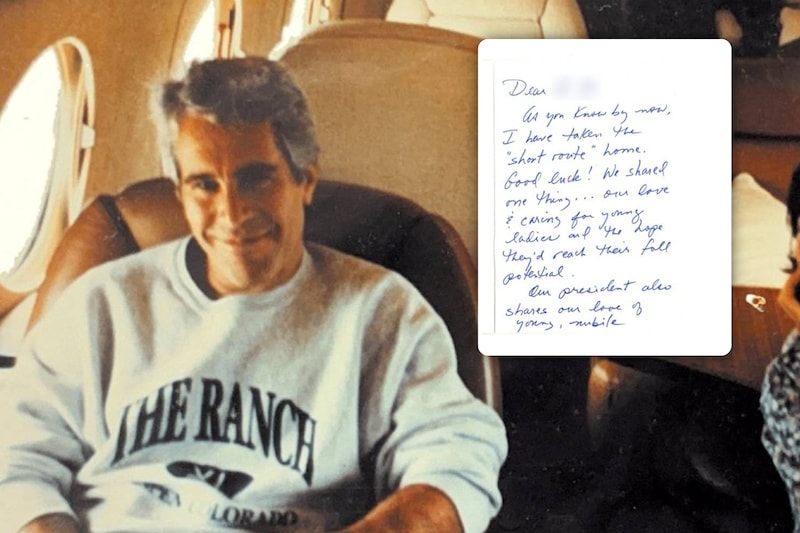
The Epstein inquiry has become politically volatile precisely because it cuts across party lines. Epstein’s crimes involved powerful figures from finance, politics, and entertainment. Survivors and advocates have repeatedly argued that accountability should not hinge on partisan allegiance.
Democrats emphasize that point while accusing Republicans of inconsistency. They note that Trump signed legislation aimed at increasing transparency around Epstein-related records, yet his administration has faced criticism for delays, redactions, and uneven document releases. Some survivors have expressed anger over what they describe as excessive blackouts in newly released materials, while privacy advocates have raised alarms about the handling of sensitive information involving victims.
Republicans counter that Democrats are deflecting and that Bill Clinton’s past association with Epstein — including documented travel on Epstein’s plane — warrants aggressive questioning. Clinton has acknowledged limited interactions with Epstein related to philanthropic work but has denied any knowledge of or involvement in Epstein’s crimes.

What complicates the narrative is Trump’s own documented social history with Epstein in the 1990s and early 2000s. While Trump has said he cut ties with Epstein before the financier’s legal downfall, his name appears in multiple records and testimonies connected to Epstein’s circle — a fact Democrats say Republicans have been reluctant to address with equal vigor.
In recent exchanges with reporters, Trump has urged the country to “move on” from the Epstein issue, suggesting Americans should focus on “something that people care about.” The comment drew backlash from advocates for survivors, who argue that justice delayed is justice denied.
His irritation has also been on display during confrontations with journalists, particularly women, who press him on the matter. In one widely circulated Oval Office exchange, Trump criticized a reporter’s demeanor rather than addressing her question, a response critics say reinforces perceptions of evasion.
The Clintons’ demand for public hearings now threatens to upend the political choreography. If Republicans refuse, they risk appearing less committed to transparency than their rhetoric suggests. If they agree, they open the door to a televised spectacle that could widen the scope of scrutiny — potentially back onto Trump and his allies.
“This is about who controls the narrative,” said a former congressional aide familiar with oversight investigations. “Once the cameras are on, no one gets to edit the tape.”
As the February testimony dates approach, both parties are maneuvering aggressively. Republicans insist their focus remains accountability. Democrats argue that accountability must be consistent — and public.
![Quốc tế nổi bật] Ông Trump tức giận với FBI trước "giờ G"](https://imgcdn.tapchicongthuong.vn/tcct-media/20/11/2/donald_trump.jpg)
At stake is not only political advantage but public trust. The Epstein case remains a symbol of institutional failure, where wealth and power appeared to shield criminal behavior for years. For survivors, the question is not which party scores points, but whether the truth is fully confronted.
By calling for open hearings, the Clintons have forced that question back into the center of the debate — and redirected it toward a president who has repeatedly insisted he has nothing to hide.
Whether Trump will ultimately submit to the same level of public scrutiny remains an open question. But as one Democratic strategist put it, “If you claim transparency is your cause, you can’t flinch when the lights come on