$150 Billion in Limbo: Over 1,500 Companies Sue for Tariff Refunds After Supreme Court Strikes Down Trump Duties
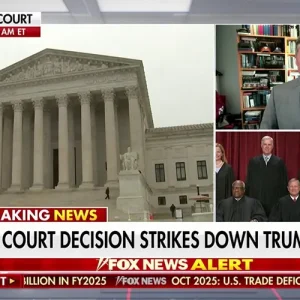
More than 1,500 companies have flooded the U.S. Court of International Trade with lawsuits seeking over $150 billion in tariff refunds, following the Supreme Court’s landmark decision striking down President Donald Trump’s sweeping duties imposed under the International Emergency Economic Powers Act .
The February 20 ruling, which found that IEEPA does not authorize the president to impose tariffs, has unleashed what trade experts are calling the largest customs refund operation in modern American history—and potentially the messiest .
The Scale of the Refund Fight
The U.S. Customs and Border Protection agency had collected approximately $133 billion to $175 billion in IEEPA tariffs as of mid-December 2025, according to government data . With interest, the total refund liability could approach or exceed $150 billion—a staggering sum that has major implications for the Treasury and businesses nationwide .
Even before the Supreme Court issued its decision, more than 1,500 importers filed protective lawsuits in the Court of International Trade to preserve their rights to refunds, seeking to get to the front of what promises to be a very long line . Major corporations including Costco, Revlon, Goodyear Tires, and Bumble Bee Foods have joined the legal fray, alongside a coalition of hundreds of small businesses organized under the banner “We Pay the Tariffs” .
The Court’s Silence on Refunds
The Supreme Court’s 6-3 majority opinion, authored by Chief Justice John Roberts, definitively rejected the administration’s argument that IEEPA’s authority to “regulate importation” permitted the imposition of tariffs. But the justices pointedly did not address whether—or how—the government must refund the billions already collected .
That silence has created a legal vacuum now being filled by the Court of International Trade, which must determine the scope of relief and the procedures for administering what could be millions of individual refund claims .
In a dissenting opinion, Justice Brett Kavanaugh warned of the practical consequences, noting that “the refund process is likely to be a ‘mess'”—borrowing language Justice Amy Coney Barrett had used during oral arguments . Kavanaugh observed that the government “may be required to refund billions of dollars to importers who paid the IEEPA tariffs,” even though many importers may have already passed costs to consumers .
The Administration’s Shifting Position
Perhaps the most contentious issue is whether the Trump administration will fight refunds despite prior assurances. In court filings last year, the Department of Justice explicitly stated that if the IEEPA tariffs were ruled unlawful, the government would “issue refunds to plaintiffs, including any post-judgment interest that accrues” and would “not object” to the court ordering reliquidation of entries .
Trade experts argue that these representations should judicially estop the government from now opposing refunds .
But the administration’s post-ruling posture has been decidedly less accommodating. Hours after the decision, President Trump called the ruling “deeply disappointing” and highlighted the court’s silence on refunds. “Wouldn’t you think they would have put one sentence in there saying that keep the money or don’t keep the money?” Trump told reporters. “I guess it has to get litigated for the next two years” .
Treasury Secretary Scott Bessent went further, describing the tariff revenue as “in dispute” and predicting that determining who gets refunds “could take weeks, months, or more.” He added pointedly: “I’ve got a feeling the American people won’t see it” .
The Logistics Nightmare
The practical challenges of processing refunds are daunting. More than 300,000 importers paid the contested tariffs, according to government filings . Unlike a class action, each importer may need to pursue its own claim—either through administrative protests with CBP or lawsuits in the Court of International Trade .
Small businesses face particular hurdles. “They lack the resources to litigate tariff refund claims,” said Scott Lincicome of the Cato Institute . Dan Anthony, executive director of the We Pay the Tariffs coalition, called for “full, fast, and automatic” refunds, noting that many small businesses “took out loans just to keep their doors open” and “watched their life savings drain away to pay tariff bills” .
Even if refunds are distributed, determining the rightful recipient can be complex. The refund goes to the “importer of record”—the entity that technically paid the duty—but that may not be the company that ultimately bore the economic burden. Contractual arrangements between importers and their customers will determine who ultimately benefits, potentially spawning additional litigation .
A Precedent for Mass Refunds
The Court of International Trade has managed large-scale refunds before. After the Supreme Court struck down a harbor maintenance tax on exports in 1998, the trade court oversaw a claims process involving more than 100,000 claimants and approximately $750 million in refunds .
But the current situation is orders of magnitude larger. “The amount of money is substantial,” said trade lawyer Joyce Adetutu. “The courts are going to have a hard time. Importers are going to have a hard time” .
What Importers Must Do Now
Legal experts are advising companies to act swiftly to preserve their rights. Key steps include downloading relevant entry data from CBP’s Automated Commercial Environment portal, filing protective protests within the 180-day liquidation period, and considering actions in the Court of International Trade .
“Importers who act swiftly will be best positioned to hold the government to its word,” wrote Ashley Akers, a former DOJ attorney now at Holland & Knight .
The Plan B Tariffs
Even as the refund fight unfolds, businesses face continued uncertainty from new tariffs. The administration has announced it will impose a temporary 10% global tariff under Section 122 of the Trade Act of 1974—authority limited to 150 days—while launching investigations under Section 301 and Section 232 to support longer-term measures .
“None of the alternative statutes afford the President the breadth of authority or flexibility available under IEEPA,” noted a legal analysis from Eversheds Sutherland . But for businesses already navigating the refund maze, any new tariffs add another layer of complexity.
The Human Toll
For some businesses, even a refund comes too late. Melkon Khosrovian, co-founder of Greenbar Distillery in Los Angeles, invested $400,000 in automation equipment last year to reduce payroll and offset rising tariff costs. “It was a huge investment, and we did it because we didn’t see a way out,” he said. Even with a refund, three staff positions won’t return. “It’s too late” .
Looking Ahead
The Court of International Trade is expected to move quickly to establish procedures for managing the caseload. The Justice Department and parties in the litigation have already requested the creation of a steering committee to coordinate the more than 1,000 pending cases .
But with the administration signaling resistance and the sheer scale of claims, the path to recovery remains uncertain. As one trade lawyer put it: “Just because the process is difficult to administer doesn’t mean the government has the right to hold on to fees that were collected unlawfully” .
For American businesses that paid billions under tariffs now declared illegal, the fight for refunds is just beginning.