In Washington, a slow-burning conflict over the federal government’s handling of Jeffrey Epstein–related records has erupted into an institutional confrontation, forcing the U.S. Congress to revisit one of its oldest and most controversial powers: its inherent authority to hold defiant officials in contempt. What began as a bipartisan mandate to release long-sealed files has transformed into a broader test of how the United States enforces the law when the alleged violator is the very agency responsible for upholding it.
The latest escalation came after the Justice Department failed to meet a congressionally imposed December 19 deadline to disclose unredacted material tied to decades-old investigations involving Epstein and his associates. Instead, lawmakers received selectively released tranches of documents, many of them heavily blacked out. Several legal analysts and victims’ advocates have noted that the redactions appear to obscure the identities of alleged perpetrators while fully exposing victims—an inversion of standard practice that has raised alarms inside both political parties.
The pressure intensified further when the department disclosed the existence of roughly one million additional records—files that, by the government’s own account, had not previously been cataloged. The revelation deepened suspicions of bureaucratic resistance and raised questions about how such a vast cache of documents could have remained undisclosed after years of public scrutiny.
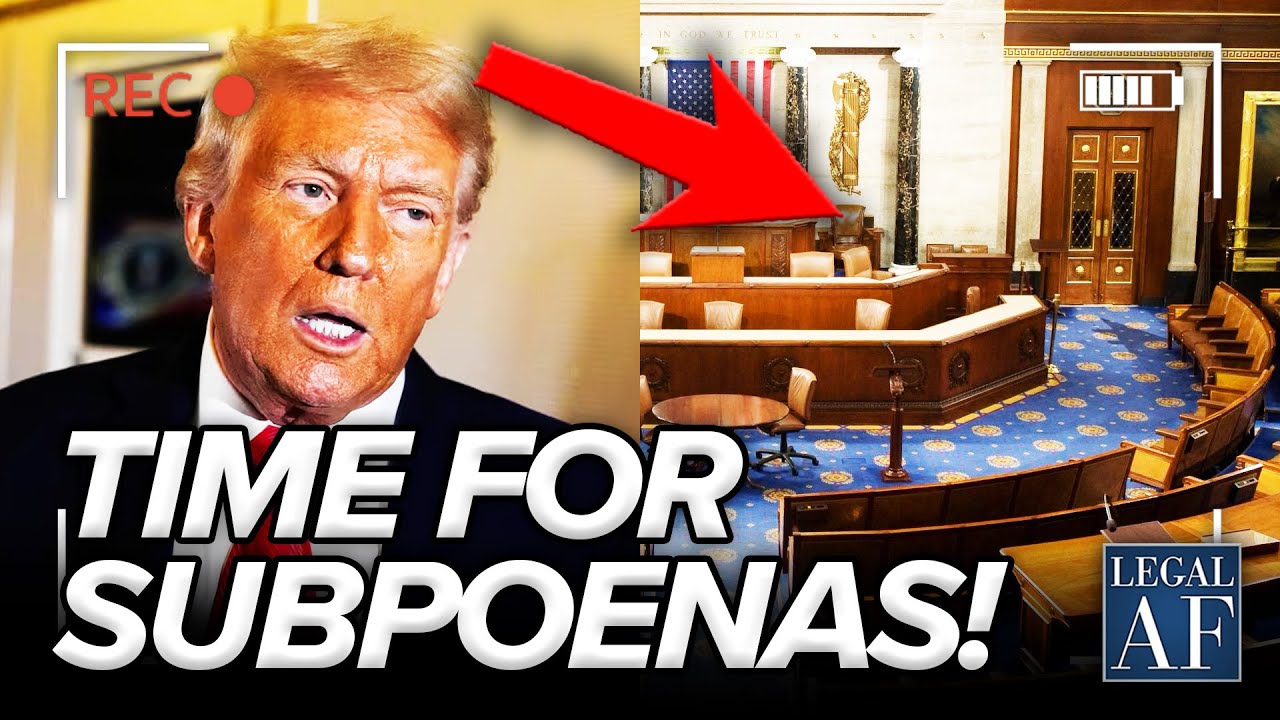
For many victims and their lawyers, the dispute is not procedural. It is a test of credibility. They recall that Donald Trump, during his 2024 presidential campaign, promised to release the Epstein files if elected. They recall that Attorney General Pam Bondi later assured the public that the “Epstein client list” was on her desk, ready for release—a statement that was subsequently walked back by administration spokesperson Caroline Levitt. Now, after the November passage of the bipartisan Epstein Files Transparency Act, victims argue the government has run out of excuses.
But the central problem Congress faces is one rarely encountered in modern governance: how to enforce the law when the alleged noncompliance stems from the Department of Justice itself.
Normally, when an individual or corporation defies lawful mandates, Congress can refer the case to the Justice Department for investigation and prosecution. Indeed, during the Biden administration, former Trump advisers Peter Navarro and Stephen Bannon were both prosecuted for contempt of Congress after refusing to comply with subpoenas related to the January 6 investigation. But in this case, the Justice Department is both the subject of the inquiry and the authority that would ordinarily pursue enforcement.
That dilemma has revived an old constitutional question—one that legal scholar Ray Brasha of Legal AF framed bluntly in a recent analysis: “Who guards the guardians?” If the Justice Department fails to comply with federal law, who possesses the legitimate power to compel action?

For Congress, the answer lies in a doctrine older than most federal statutes: inherent contempt. Since the late 18th century, Congress has asserted the power to detain, fine, and otherwise compel compliance from individuals who obstruct its constitutional functions. The Supreme Court has repeatedly upheld this authority, most notably in McGrain v. Daugherty (1927), a landmark decision arising from the Teapot Dome scandal. In that case, the Court affirmed Congress’s power to detain the attorney general’s brother—who defied a subpoena seeking information about whether the Justice Department was properly investigating high-level corruption.
The parallels today are difficult to ignore. Just as Congress in the 1920s sought to determine whether the Department of Justice had neglected its duty to pursue wrongdoing, Congress now must determine whether the department is complying with the Epstein Files Transparency Act—and whether its redactions and delays constitute unlawful obstruction.
The McGrain decision established that investigations into the internal functioning of the Justice Department squarely fall within Congress’s legislative authority. The Court held that inquiries into whether the attorney general is faithfully discharging statutory duties are not only permissible but sometimes essential to Congress’s ability to legislate, appropriate funds, and oversee federal agencies.
That precedent has gained renewed relevance. In recent years, it was cited during the dispute over Congress’s efforts to obtain Donald Trump’s tax returns, a reminder that subpoena power—and contempt for defying it—is legitimate when tied to a legislative purpose.
Still, political calculations complicate the present moment. While the House has demonstrated a willingness to deploy its contempt authority—voting in 2024 to hold Attorney General Merrick Garland in contempt and proposing a $10,000-per-day fine for failure to release audio of President Biden’s interview with a special counsel—it remains unclear whether lawmakers today will escalate their confrontation with Attorney General Bondi.
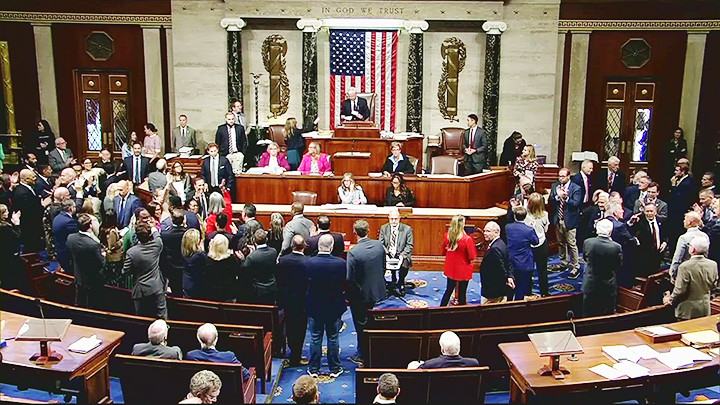
Historical examples suggest why Congress may hesitate. In the 19th century, the detention of activist Thaddeus Hyatt, arrested during an investigation into John Brown’s raid on Harpers Ferry, turned him into a political martyr and generated public backlash. Fines, while less dramatic, present their own legal uncertainties, though courts have upheld similar financial sanctions when imposed under the judiciary’s inherent authority.
Nevertheless, few issues in modern politics have mobilized bipartisan sentiment as forcefully as the demand for transparency surrounding the Epstein records. The near-unanimous passage of the transparency act underscores the unusual degree of cross-party alignment. With victims’ groups, legal commentators, and lawmakers unified in their impatience, Congress appears poised to consider measures it has rarely used in the modern era.
If the Justice Department continues to delay the release of documents or fails to provide legally required justifications for its redactions, Congress could revive inherent contempt—issuing fines, ordering detentions through the Sergeant-at-Arms, or even initiating impeachment proceedings against responsible officials. The constitutional foundation exists; the question is whether political will follows.
For now, the government’s long-buried files remain locked away, their contents largely unknown. But Congress’s next move may determine whether the United States is entering a new phase of institutional accountability—or repeating a familiar cycle in which power shields itself from scrutiny, and transparency is promised but never delivered.