When Senator John Fetterman spoke about terrorism, antisemitism, and national security in a recent televised interview, the reaction within his own party was swift and uneasy. The remarks, circulated widely online under headlines suggesting Democratic “horror,” did not introduce new policy proposals. Instead, they exposed a long-simmering tension inside the Democratic Party: how to condemn extremist violence with moral clarity while avoiding rhetoric that risks alienating minority communities or inflaming religious prejudice.

Mr. Fetterman’s comments followed a deadly attack at a Hanukkah-related event in Australia, an incident that reverberated internationally amid heightened sensitivity around antisemitism and political violence. In the interview, the Pennsylvania Democrat expressed frustration with what he described as a tendency among some Democrats to “deflect” rather than issue unified condemnations of terrorism. He argued that moral clarity should not be partisan and suggested that naming extremist organizations — including the Muslim Brotherhood — ought to be a bipartisan responsibility rather than a political liability.
That stance, while not unprecedented, placed Mr. Fetterman in open rhetorical conflict with segments of his own party that have emphasized careful language when addressing terrorism connected to religious identity. Since the post-9/11 era, Democratic leaders have generally sought to draw sharp distinctions between violent extremism and the broader Muslim population, fearing that sweeping language can fuel discrimination at home and undermine civil liberties.
The controversy intensified as conservative commentators juxtaposed Mr. Fetterman’s remarks with far more aggressive statements from Senator Tommy Tuberville of Alabama. Speaking on the Senate floor, Mr. Tuberville warned that “radical Islam” posed a fundamental threat to American values and called for shutting down the influence of Sharia law in the United States — language that civil rights groups have long criticized as misleading and inflammatory. While Mr. Fetterman did not endorse those claims, the contrast was used by critics to frame the debate as one between candor and denial.
The political dynamic at play is not new. Democratic leaders have repeatedly faced internal disagreements over how to balance national security concerns with protections against religious and ethnic stigmatization. After major terror attacks abroad or at home, party officials often emphasize unity and condemn violence in universal terms, wary of framing that could echo past eras of suspicion toward Muslim Americans.
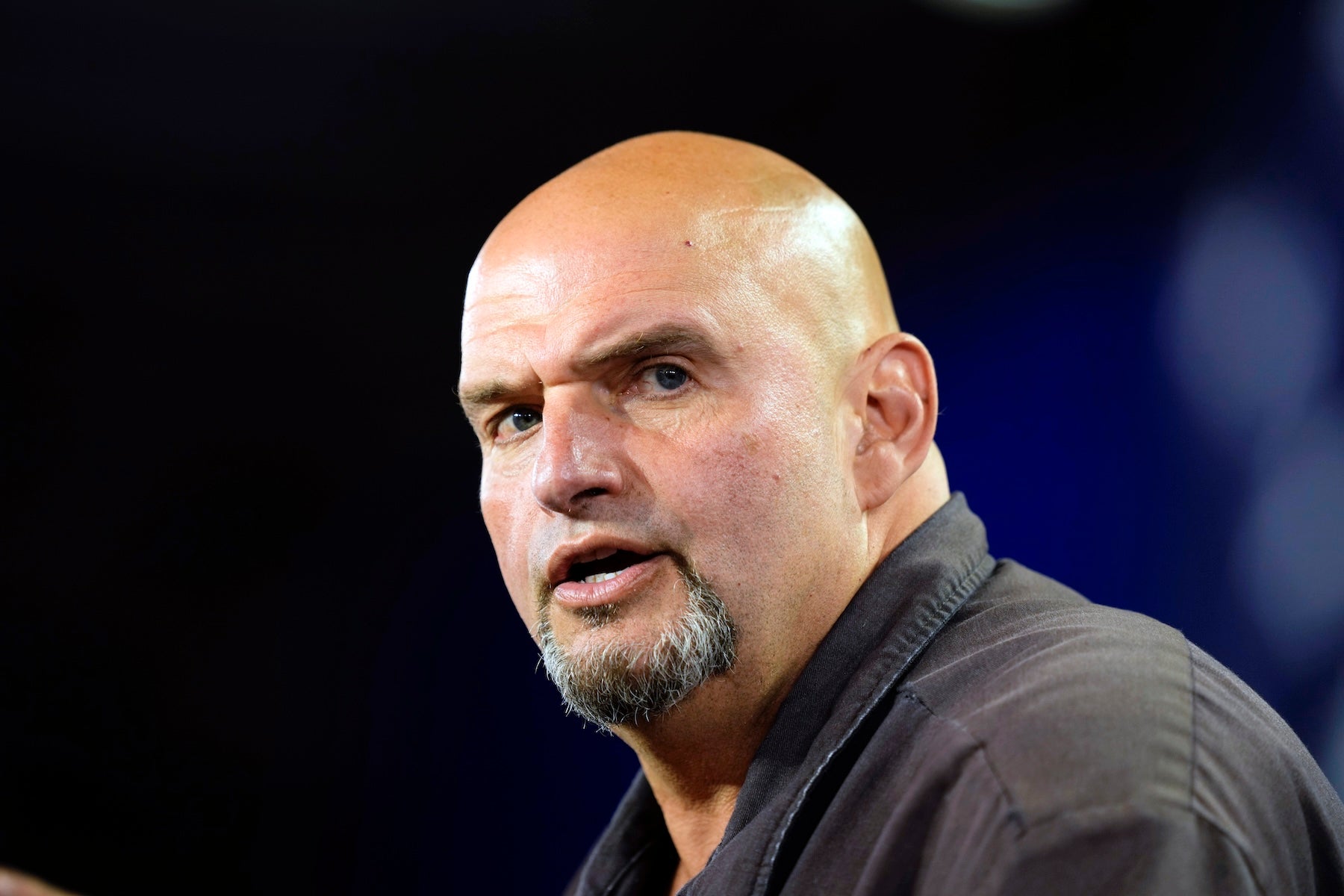
Mr. Fetterman’s intervention disrupted that pattern by suggesting that excessive caution risks moral ambiguity. He cited rising antisemitism, including attacks in the United States, and argued that the failure to speak plainly about extremist ideologies weakens public trust. In doing so, he aligned himself rhetorically with a small group of Democrats who have supported legislation aimed at formally designating certain Islamist organizations as terrorist-linked — a position that remains controversial within the party.
The broader media segment went further than Mr. Fetterman himself, incorporating commentary from conservative figures who framed the issue as evidence of Democratic fear — fear of being labeled Islamophobic, fear of confronting immigration failures, and fear of acknowledging security risks. Those claims, however, reflect partisan interpretation rather than consensus analysis. Immigration experts and counterterrorism officials continue to note that most domestic terror incidents in the United States originate from a range of ideological sources, including far-right extremism.
Still, the political resonance of Mr. Fetterman’s remarks lies in what they reveal about voter unease. Polling shows that many Americans, including Democrats, feel anxious about global instability, antisemitism, and domestic polarization. For some, calls for careful language can feel disconnected from visceral fears following violent attacks abroad. For others, history offers a warning about how quickly fear can harden into collective blame.
Party strategists say the challenge is less about policy than tone. “This is a messaging fault line,” said one Democratic adviser, speaking on background. “The party agrees on condemning terrorism. The disagreement is over whether blunt language reassures voters or creates new social fractures.”
Mr. Fetterman has built his political brand around defying expectations — breaking with party leadership on trade, Israel, and policing language — and this episode fits that pattern. Whether it signals a broader shift or remains an isolated flashpoint is unclear. What is evident is that moments of international violence continue to test the Democratic coalition’s ability to speak with unity without sacrificing its commitment to pluralism.
In an election cycle already defined by cultural anxiety and geopolitical unrest, the debate Mr. Fetterman reignited is unlikely to fade. The question facing Democrats is not whether to condemn extremism — but how to do so in a way that satisfies calls for moral clarity without repeating the mistakes of fear-driven politics.