“Do the Country a Service—Resign”: Thompson Unloads on Kristi Noem
WASHINGTON — A routine oversight hearing of the House Committee on Homeland Security erupted into one of the sharpest confrontations yet between congressional Democrats and the Trump administration, as Representative Bennie Thompson of Mississippi accused Homeland Security Secretary Kristi Noem of breaking the law, abusing her authority and endangering public safety, ending his remarks with a blunt demand: resign.
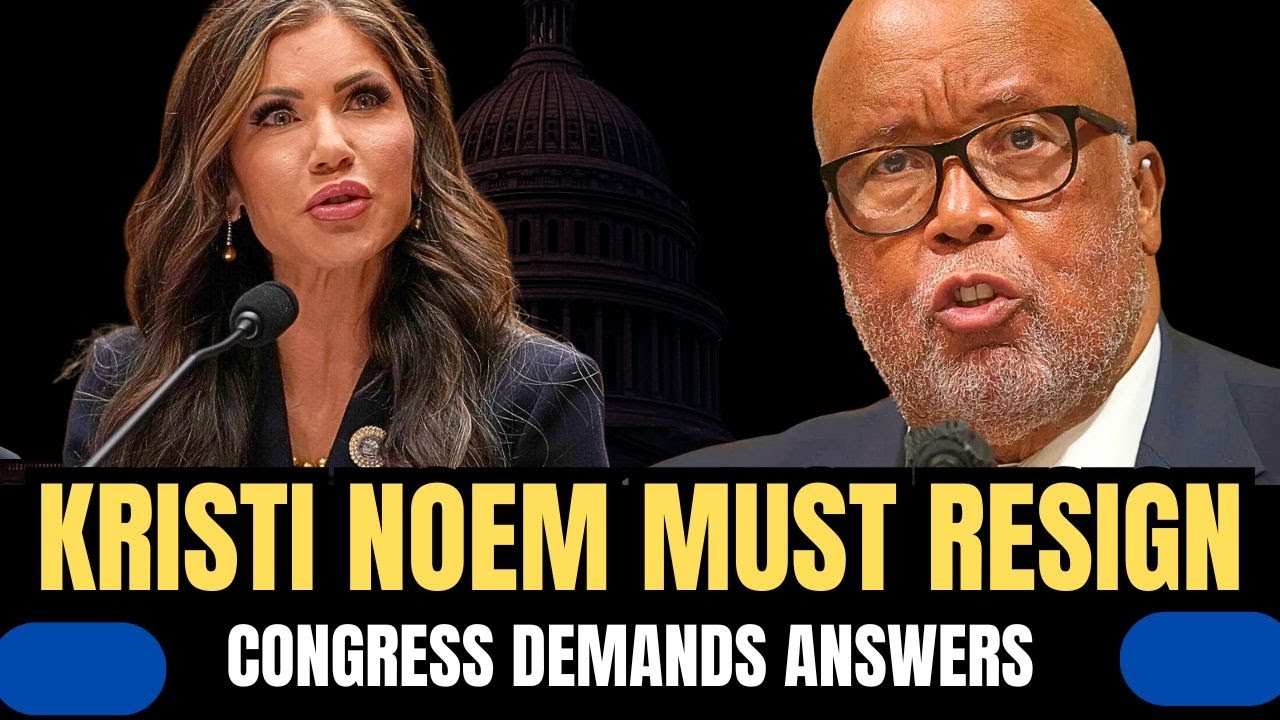
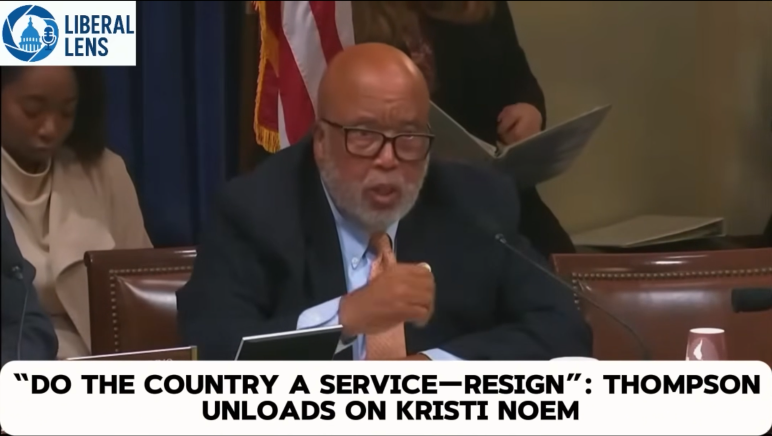
Mr. Thompson, the ranking Democrat on the committee and a former chairman, delivered a sweeping indictment of Ms. Noem’s tenure, accusing her of undermining constitutional limits on law enforcement, misusing taxpayer funds and systematically evading congressional oversight. His remarks reflected not only partisan anger but also a deeper institutional conflict over the balance of power between Congress and the executive branch.
“This hearing is supposed to be one of the most important exercises of this committee’s oversight jurisdiction,” Mr. Thompson said, noting that key officials — including the F.B.I. director — were absent. He suggested that the absence was emblematic of a broader pattern in which senior officials have shielded themselves from scrutiny.
Mr. Thompson argued that oversight itself had been degraded. He said lawmakers received the secretary’s testimony only shortly before the hearing, limiting their ability to review it — a departure, he said, from longstanding committee practice. Such actions, he warned, hollow out Congress’s constitutional role as a check on executive power.
At the heart of Mr. Thompson’s critique was an assertion that Ms. Noem had repeatedly violated the law while claiming to enforce it. He accused her of diverting congressionally appropriated funds away from counterterrorism, disaster preparedness and cybersecurity and toward projects that he characterized as self-serving.
Among the most pointed allegations were that the department spent hundreds of millions of dollars on private jets and lucrative media contracts tied to Ms. Noem’s public profile, rather than fully funding programs intended to protect houses of worship, hospitals, schools and critical infrastructure. Mr. Thompson described such spending not as a policy disagreement but as a failure of stewardship. “Every penny you spend on yourself,” he said, “comes from hardworking Americans who expect their tax dollars to be spent on Homeland Security.”
He also accused Ms. Noem of living rent-free in government-owned housing reserved for military leaders, further fueling claims that she had blurred the line between public service and personal benefit.
But Mr. Thompson reserved his most severe criticism for what he described as systemic violations of civil rights under Ms. Noem’s leadership. He said the Department of Homeland Security had weakened or dismantled internal safeguards, including the Office for Civil Rights and Civil Liberties, that exist to prevent abuses of power. He accused the department of retaliating against whistleblowers and illegally firing employees who raised concerns.
In a series of stark allegations, Mr. Thompson said that immigration enforcement under Ms. Noem had crossed from aggressive into unlawful. He accused the department of ignoring federal court orders, deporting individuals without due process and blocking members of Congress from legally mandated inspections of immigration detention facilities.
Most alarming, he said, were reports that American citizens — including children and elderly people — had been detained, injured or deported by immigration officers acting under the department’s direction. Mr. Thompson cited cases involving the use of force against U.S. citizens who asserted their citizenship, including allegations of pepper spraying, tasering and physical assault.
“You cannot enforce the law by breaking the law,” Mr. Thompson said. “That’s not how justice works. It’s un-American.”
He also criticized what he described as a climate of intimidation fueled by inflammatory rhetoric from the administration, arguing that it had damaged trust between law enforcement and the communities they serve. When leadership tolerates or directs unlawful conduct, he said, it places frontline officers at legal risk and undermines public cooperation, ultimately making the country less safe.
Beyond individual policies, Mr. Thompson framed the dispute as a constitutional crisis in slow motion. Congressional oversight, he said, is not optional. When cabinet officials ignore letters, delay testimony or obstruct lawful inquiries, they weaken one of the central mechanisms designed to prevent abuse of power.
He contrasted Ms. Noem’s limited appearances before the committee with those of her predecessors in both Democratic and Republican administrations, noting that Homeland Security officials had testified far less frequently under President Trump despite earlier Republican complaints about insufficient access.
Mr. Thompson concluded by saying that Ms. Noem had “systematically dismantled” the department, prioritized her own interests over public safety and violated the law. His call for her resignation was not, he said, political theater but a reflection of a collapse in confidence.
Whether the accusations lead to formal consequences remains uncertain. But the hearing underscored how deeply contested the boundaries of executive power have become — and how sharply divided Washington remains over whether the nation’s security is best served by maximal enforcement or by strict adherence to constitutional limits.