By XAMXAM
The story arrives the way these stories always do now: breathless, cinematic, prepackaged for outrage and relief. Secret Service agents sweep into a courthouse “like a military operation.” A towering teenager in a designer suit enters as if the law is a prop. A trembling schoolteacher sits alone, bruised, taped glasses in hand, the embodiment of ordinary life pressed under the thumb of power. Then comes the line meant to ignite the feed: Do you know who I am?
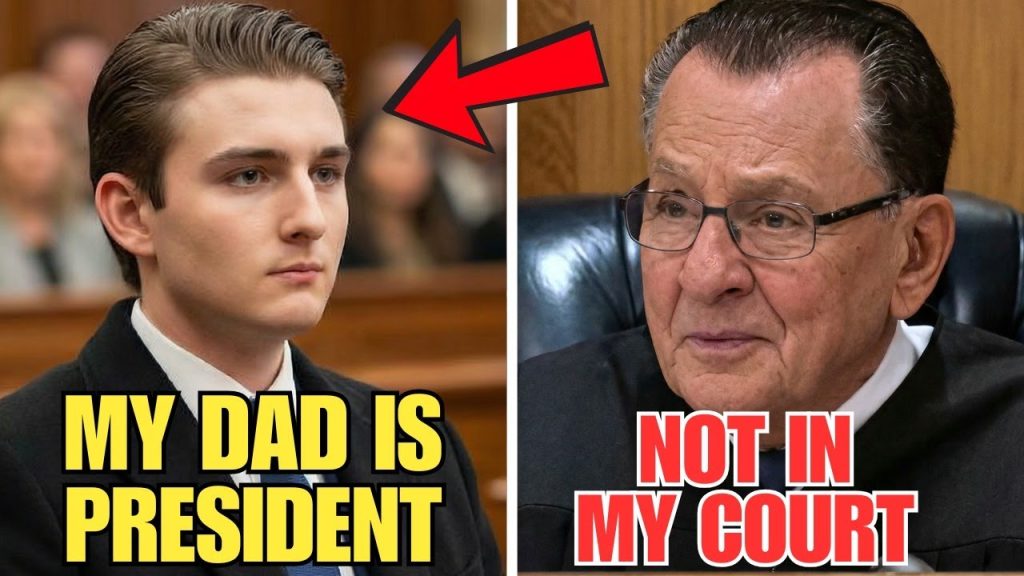
In the version circulating online, the teenager is Barron T.r.u.m.p, 19, newly in college, alleged to have used a fake ID, to have assaulted a 52-year-old teacher in a Providence nightclub, and to have threatened him with political retaliation. The judge is Frank Caprio, cast as the old-world jurist who refuses to be impressed, who believes that the American system works precisely when it dares to disappoint the powerful.
It is a story built to satisfy a hunger that spans ideologies: the fantasy that the system, at least once, will refuse to bend.
In the clip’s telling, the facts are clean, almost too clean. There is security footage from multiple angles. There is courtroom drama in neat blocks: an arrogant plea, a prosecutor with a tablet, a dramatic dimming of the lights, a gallery holding its breath. There are anonymous threatening phone calls — conveniently recorded — warning the victim to drop the case because “school boards are political” and “teachers are replaceable.” There is a defense attorney with a résumé engineered for credibility. There is a sentence designed for shock value: two years in prison, plus restitution, plus a protective order.
And there is, most seductively, a moral. In this courtroom, the narrator says, “we don’t have royalty.”
The appeal of the story is obvious. It is not just about a bar fight, or even about a famous last name. It is about the suspicion, widely held and rarely proven, that proximity to power functions like a separate citizenship. The tale asks a question Americans return to whenever privilege feels like gravity: If the rules are real, can they still apply to the people who believe they aren’t?
Yet the story also reads like something else: a parable engineered for virality, complete with the cadence of a motivational monologue and the visual cues of credibility. It borrows the language of the law — statutes, charges, “selective prosecution,” “witness intimidation” — to create the sensation of procedural authenticity. It borrows the imagery of modern political life — Secret Service, high-priced counsel, threats from anonymous numbers — to make the fear feel contemporary. It borrows the national mood — exhaustion with impunity — and offers a clean, gratifying release.
It is precisely that satisfaction that should give viewers pause.
In a real courtroom, legal outcomes rarely arrive as perfectly as they do in online morality plays. Criminal cases do not typically resolve in a single speech and a single sentencing flourish, especially cases involving high-profile defendants and alleged threats that would invite separate investigations. Appeals do not, as a rule, wrap up with unanimous affirmations delivered like storybook epilogues. And judges — particularly those with a public profile — do not tend to narrate their own heroism as if speaking directly to a subscriber count.
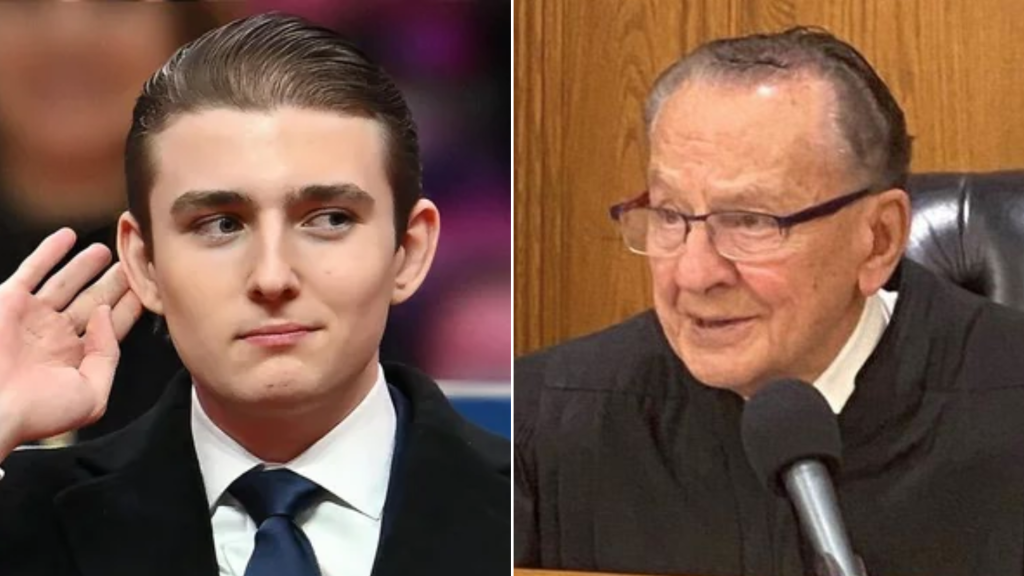
Which does not mean the underlying anxieties are imaginary. Quite the opposite. The clip succeeds because it taps into something true: many Americans worry that influence can launder misconduct, that intimidation can substitute for due process, and that institutions can be pressured into silence. The teacher character — the man who teaches checks and balances while living under their fragility — resonates because people recognize the vulnerability. They understand how quickly “the rule of law” can become “the rule of who can afford the fight.”
What the story ultimately sells is not just punishment. It sells reassurance. It offers the viewer a world in which power tries to cheat and the system, dramatically, refuses. It offers the fantasy of finality: the gavel falls, the lesson is learned, the republic is restored.
But democracy does not usually move in finales. It moves in tedious procedures, contested facts, messy timelines, and imperfect remedies. It moves in hearings and filings and decisions that do not fit inside a 20-minute arc. It moves in the slow work of proving — rather than proclaiming — that no one is above the law.
The viral courtroom tale, whether viewed as alleged truth or obvious fiction, functions as a kind of cultural Rorschach test. If you want to believe accountability is still possible, it will feel like proof. If you want to believe the whole thing is performance, it will feel like propaganda for the exhausted.
Either way, it reveals something sobering: Americans are no longer just debating what justice demands. They are debating what justice even looks like — and whether they can still recognize it when it isn’t edited for applause.