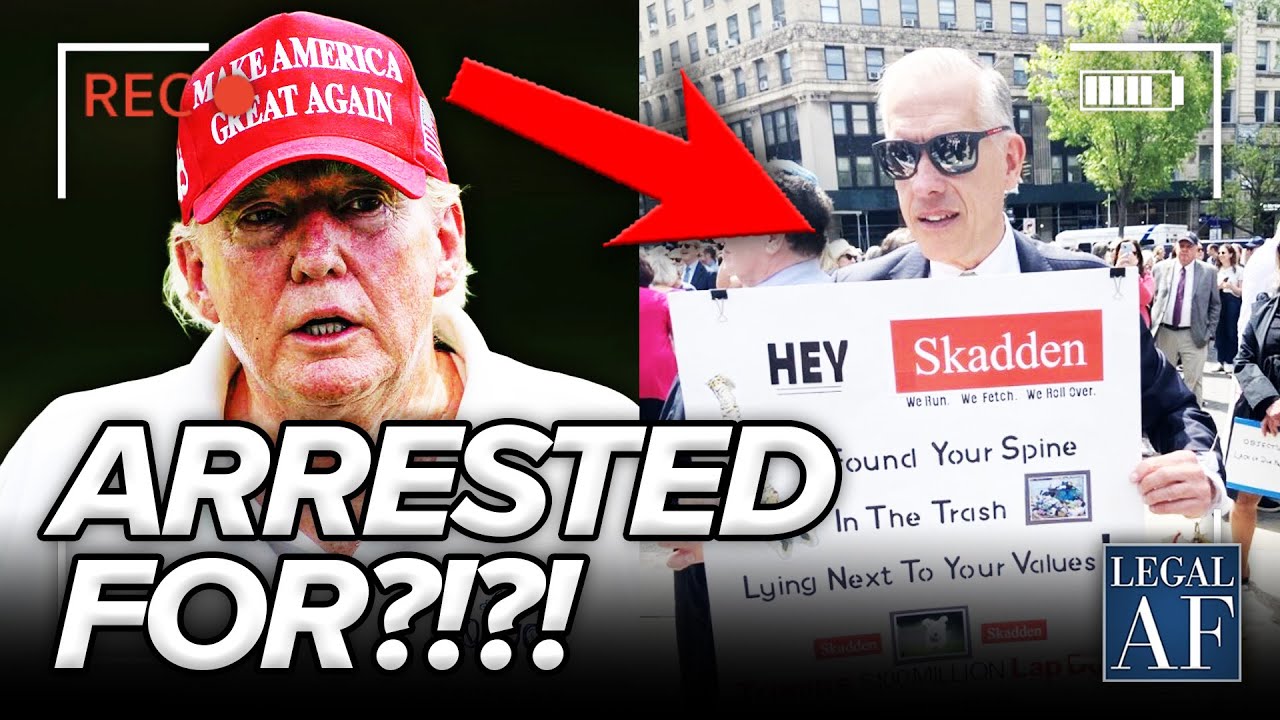
NEW YORK — The confrontation lasted only minutes, but its implications have stretched into months. On an early April morning, David O’Keefe — a former senior prosecutor in the Manhattan District Attorney’s Office — walked toward the polished stone plaza at Hudson Yards carrying a handmade protest sign. What happened next would set off a legal battle challenging one of New York City’s most obscure yet consequential urban structures: the privately owned public space.
O’Keefe, who spent nearly three decades as a prosecutor and helped pioneer data-driven crime reduction strategies later adopted nationwide, did not come to Hudson Yards as a public official or a political figure. He came alone, as a private citizen, responding to what he viewed as a quiet but dangerous capitulation by one of the country’s most prestigious law firms, Skadden, Arps, Slate, Meagher & Flom.
In late March, the firm offered the Trump administration an estimated $100 million in pro bono services, a gesture O’Keefe interpreted as not only political alignment with the former president but also a retreat from the pro bono and diversity commitments that once defined the firm’s reputation. To him, the gesture symbolized a deeper institutional collapse — the legal system, he feared, was bending to political power rather than upholding constitutional principles.
That personal alarm brought him to Hudson Yards, where he held a sign criticizing the firm’s leadership. The plaza in front of Skadden’s offices — though maintained by a private developer — is part of New York’s network of POPS, or privately owned public spaces, created decades ago in exchange for zoning benefits. These spaces, while privately controlled, must remain open to the public and are subject to constitutional protections.
Yet O’Keefe’s first encounter with a building security officer suggested otherwise. The guard insisted he was on private property and ordered him to leave. He refused.
The dismissal might have ended there. But O’Keefe returned the next day — partly, he said, because he could not allow a sign calling the firm “cowardly” to be the last word. This time he stood on the plaza designated as a public space, clearly marked in city records. Again, security approached. Again, he refused to leave.
An hour later, New York City police officers placed him in handcuffs and arrested him.
The arrest set off a string of questions that now sit at the center of a federal lawsuit filed by O’Keefe: Who controls speech in a public space that is owned privately? And when private entities take on responsibilities traditionally associated with government — such as regulating behavior in spaces designated for public use — what rules must they follow?

For O’Keefe, the answer is straightforward: constitutional protections apply. The lawsuit targets Brookfield Properties, the multinational real-estate developer responsible for maintaining the plaza. Though Skadden itself is not named as a defendant, O’Keefe alleges that Brookfield acted in a manner indistinguishable from a government authority, thus subject to First Amendment scrutiny.
The former prosecutor’s argument is not theoretical. Brookfield Properties has been at the center of similar disputes before, most notably during the Occupy Wall Street demonstrations at Zuccotti Park, another privately owned public space where questions of access, assembly, and authority forced courts and city officials to confront the limits of private control.
Brookfield, he argues, understands these obligations — and violated them anyway.
The facts surrounding O’Keefe’s arrest are largely uncontested. According to his account, the officers who detained him declined to consult the NYPD’s Legal Bureau despite his request. He spent several hours in custody before being released. But the confrontation did not dissuade him. Between April and late October, he returned to the site 34 more times, often met with quiet support from Skadden employees who confided their own discomfort with the firm’s posture.
In one instance, O’Keefe said, Skadden’s head of security intervened to prevent a second arrest, telling him the firm did not want further escalation and opposed the actions that had been taken against him. Whether that intervention reflected internal disagreement, reputational concern, or simple prudence remains unclear.

Still, the heart of the dispute sits squarely with Brookfield. The lawsuit, which O’Keefe and his legal team expect to advance next year, seeks not financial compensation but a judicial declaration affirming that the public has a right to speak freely in spaces the city has designated as public, regardless of private ownership. Such a ruling would reverberate across New York and beyond, affecting hundreds of plazas, walkways, atriums, and public corridors maintained by private developers as part of zoning deals.
In interviews, O’Keefe has emphasized that his protest was not a symbolic gesture but an attempt to resist what he sees as an accelerating slide toward political intimidation and institutional fragility. “People need to know they’re not alone,” he said. “If we become silent because a security guard says to move along, then we’ve already lost something essential.”
As political tensions rise nationally and institutions from law firms to courts face increasing scrutiny for their responses to shifting power, the battle unfolding in a corporate plaza on Manhattan’s West Side reflects a broader question: in an era of polarization, who gets to claim the public square?
For now, the sign O’Keefe carried — and the confrontation it triggered — has become part of a much larger test of whether free expression in New York can still rely on the protections the city has long promised, even when the property beneath one’s feet belongs to someone else.