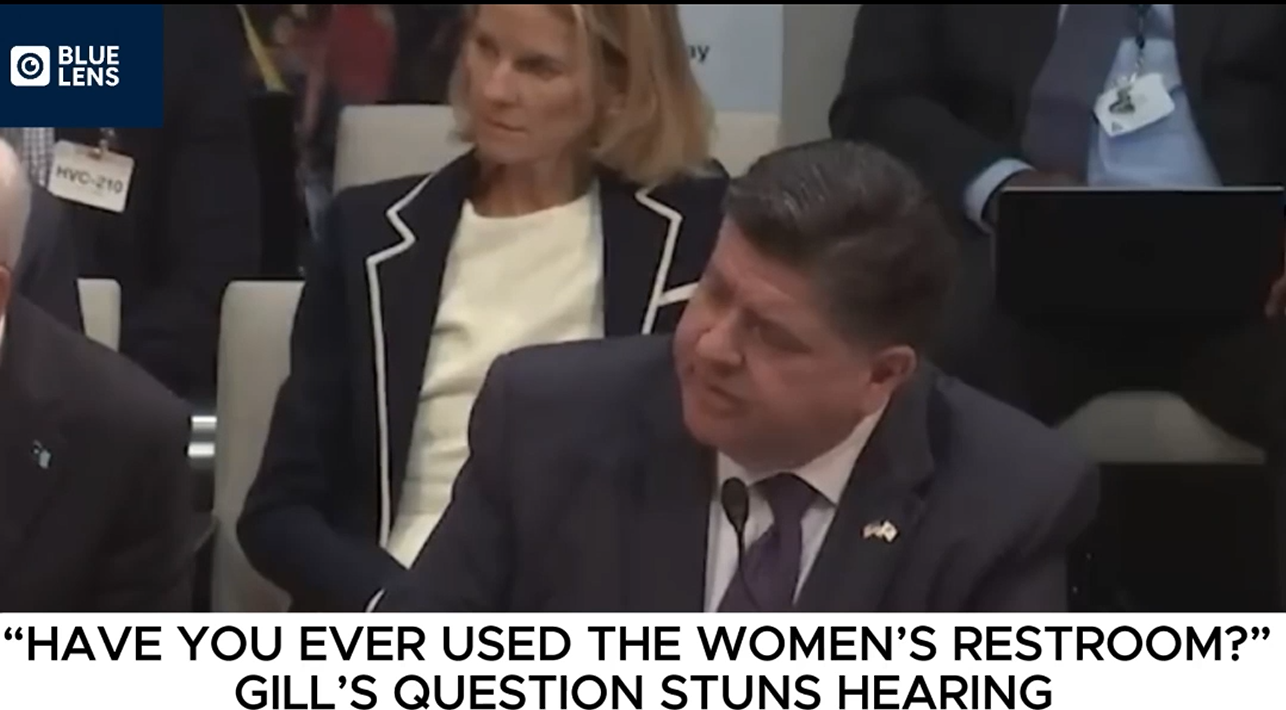
“Have You Ever Used the Women’s Restroom?” Gill’s Question Stuns Hearing
WASHINGTON — What began as a pointed exchange about immigration policy during a congressional hearing this week quickly devolved into a spectacle of cultural grievance, as Brandon Gill repeatedly shifted lines of questioning in ways that critics said appeared designed less to illuminate policy than to provoke viral moments.
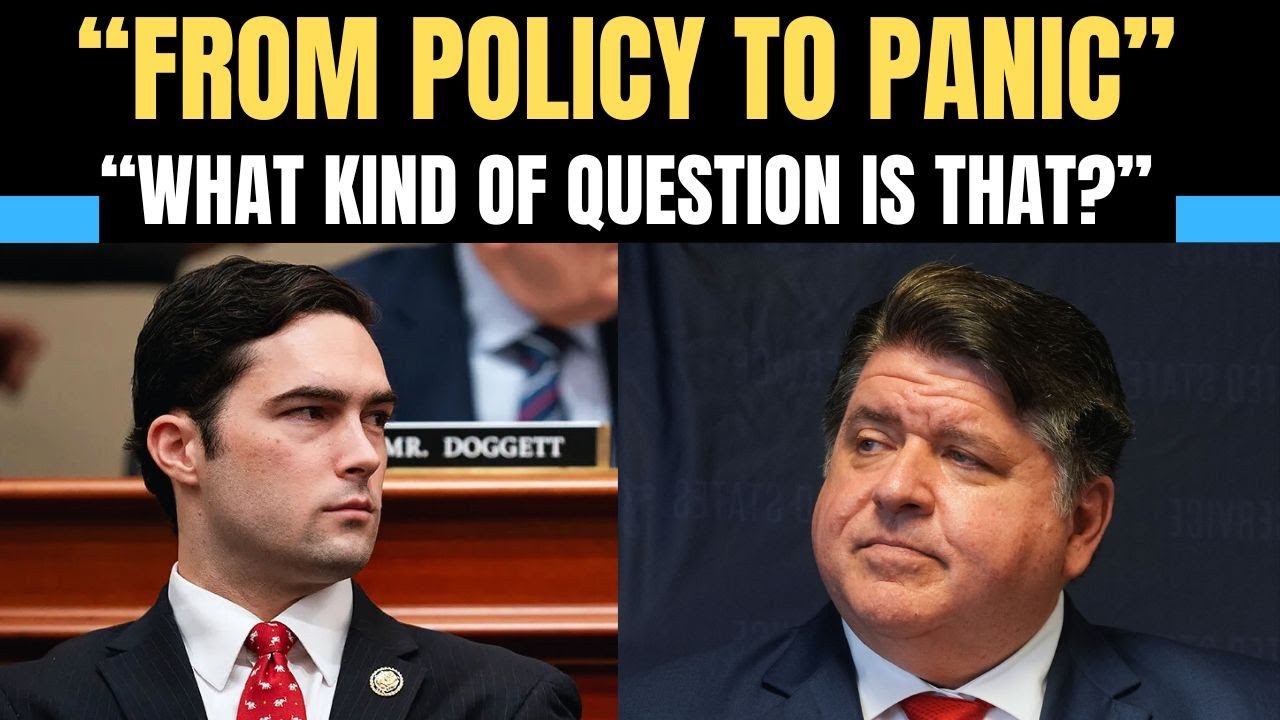
The witness was JB Pritzker, the Democratic governor of Illinois, who had come prepared to discuss the fiscal and humanitarian challenges states face amid ongoing strains on the immigration system. Instead, he found himself navigating a series of confrontational pivots — from violent crime to transgender bathroom politics to the Israel–Gaza war — with little connective tissue tying them together.
Mr. Gill opened by citing a figure he claimed represented the annual cost of undocumented immigration to Illinois, asserting that it amounted to more than $780 per family. When pressed by the governor for clarification — whether the number reflected federal expenditures, state services or some other calculation — Mr. Gill declined to elaborate, instead moving swiftly to reference two specific criminal cases involving undocumented migrants.
Those crimes, involving the rape and murder of a 12-year-old girl in Texas, are horrific and undisputed. But Mr. Pritzker challenged the premise of the questioning, noting that criminal responsibility lies with individuals and that no policymaker can predict future violence before it occurs.
“Someone who commits murder should be held accountable,” the governor said. “But there is no way to determine, before a crime is committed, who will do so.”
Rather than engage that distinction, Mr. Gill repeatedly framed the issue as a binary moral choice, pressing the governor to answer whether such individuals should ever have been “welcomed” into American communities. The exchange illustrated a recurring tension in immigration debates: the conflation of asylum seekers and undocumented migrants with violent offenders, despite data showing that most people crossing the border are not charged with serious crimes.
The hearing then took an abrupt turn. Mr. Gill asked whether Mr. Pritzker supported abolishing Immigration and Customs Enforcement, which the governor said he did not. Moments later, the congressman pivoted again, questioning the governor about a past protest tweet and asking whether “biological men” should be allowed to use women’s restrooms — and whether the governor himself had ever used one.
Mr. Pritzker visibly bristled, questioning the relevance of the inquiry to immigration oversight. “I’m not sure why this has come to this issue,” he said, declining to engage with what he described as an unrelated cultural provocation.
Observers of congressional hearings say such tactics are increasingly common. Lawmakers, particularly in high-profile committees, often use limited questioning time to generate clips for social media rather than pursue legislative clarity. Yes-or-no questions posed to complex issues can obscure nuance while creating moments ripe for partisan amplification.
When the restroom exchange failed to yield the confrontation Mr. Gill appeared to seek, the questioning veered once more — this time to foreign policy. The congressman accused the Illinois administration of indirectly supporting extremist rhetoric by funding civic groups that had criticized U.S. support for Israel following the Oct. 7 attacks.
Mr. Pritzker responded forcefully, stating unequivocally that Hamas is a terrorist organization and pointing to his long public record opposing antisemitism. He also defended the principle that protecting free speech does not constitute endorsement of every viewpoint expressed by grant recipients.
Throughout the exchange, one contrast remained consistent. The governor repeatedly attempted to redirect the conversation toward governance — immigration reform, due process and federal-state coordination — while the congressman shifted rapidly among emotionally charged topics.
What was largely absent was a discussion of policy solutions. There were no proposals advanced regarding asylum adjudication, border infrastructure, humanitarian processing or international cooperation. The hearing produced more heat than light, offering little insight into how Congress might address an immigration system broadly acknowledged to be under strain.
In the end, the moment illustrated a larger challenge facing congressional oversight. Hearings are meant to extract information, test assumptions and guide legislation. When they instead become stages for ideological confrontation, the public is left with spectacle rather than substance.
For voters watching from afar, the exchange offered a familiar tableau of modern politics: urgent problems refracted through partisan lenses, with clarity sacrificed to performance. Whether Congress can move beyond such theatrics to address immigration in a sustained and constructive way remains an open question — one that no amount of viral questioning can answer.