For years, the story of Sean McVay and Jared Goff lingered in the background of NFL discourse like unfinished business. It was a relationship defined publicly by success, privately by tension, and ultimately severed by one of the most franchise-altering trades of the modern era. When the Los Angeles Rams sent Goff to Detroit in March 2021 for Matthew Stafford, whispers of distrust and creative friction followed both men. Now, on the eve of a pivotal Week 15 matchup between McVay’s 10–3 Rams and Goff’s 8–5 Lions, that long-simmering narrative resurfaced — not with bitterness, but with something far more surprising: honesty.
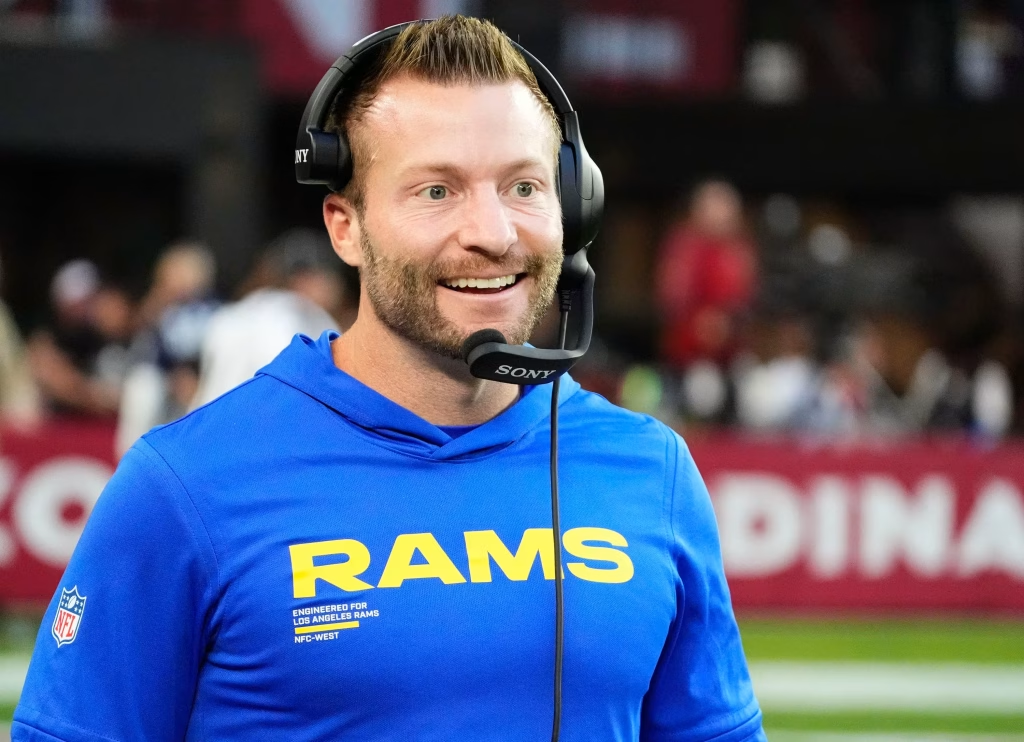
Speaking to reporters this week, McVay offered his most candid and reflective comments yet about the quarterback he once moved on from. Gone was the guarded coach-speak. In its place stood a head coach openly acknowledging growth — both Goff’s and his own. The timing couldn’t have been more striking. With Detroit fighting to stay alive in the NFC playoff race and Los Angeles holding the conference’s top seed, McVay chose this moment to publicly celebrate the player many once assumed he had lost faith in.
McVay’s praise was detailed, deliberate, and unmistakably sincere. He didn’t just compliment Goff’s box-score production; he highlighted the nuances that only a coach truly notices — command at the line of scrimmage, ownership of the offense, and the maturity to manage complex checks and protections. It was a sharp contrast to the version of Goff many remember from the final months of his Rams tenure, when confidence appeared shaken and trust seemed eroded.
“I see outstanding maturity,” McVay said, his tone noticeably reflective. “I see outstanding growth and ownership. You can see they give him a lot of things at the line of scrimmage — mike-point IDs, calling multiple plays, getting in and out of the right looks, whether that be in the run game or the pass game. Unbelievable accuracy and anticipation. Jared’s played really great.” The words landed with weight, not because they were flattering, but because of who was saying them — and what they implicitly acknowledged about the past.
That past is impossible to ignore. Stafford’s arrival brought the Rams a Super Bowl title in February 2022, seemingly validating the trade from Los Angeles’ perspective. But Detroit didn’t lose in the exchange. Goff rebuilt his career from the ground up, embracing a city that welcomed him without pretense and rewarded him with belief. In the spring of 2024, the Lions cemented that belief with a four-year extension reportedly guaranteeing $170 million and including a no-trade clause — a public declaration that Goff was no longer a placeholder, but the face of the franchise.
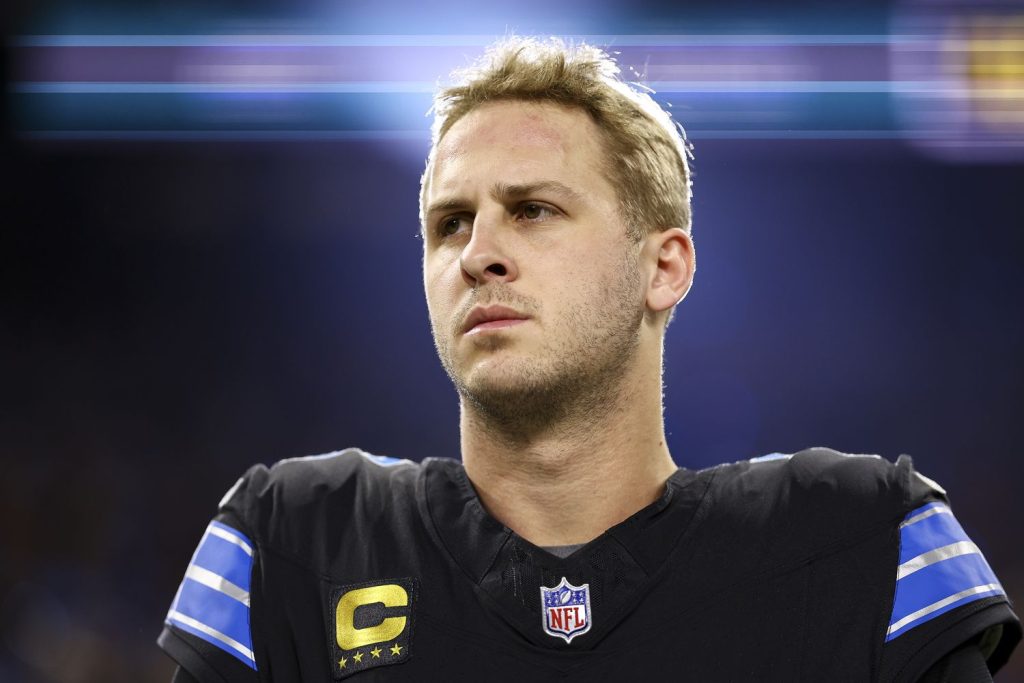
For Goff, the emotional arc has been just as significant as the professional one. He admitted in the past that the trade left him feeling “betrayed” and fueled him with a chip on his shoulder. This week, however, he struck a different tone, noting that the trade now feels like something that happened “a long time ago.” That perspective reflects a quarterback who has found stability, confidence, and identity — not just within an offense, but within a city that has embraced his resurgence.
McVay, for his part, didn’t shy away from accountability. He acknowledged that he wishes he had handled Goff’s departure differently, admitting that leadership growth often comes through uncomfortable lessons. His comments weren’t framed as regret over the trade itself, but over the human elements surrounding it — communication, empathy, and closure. In an NFL culture where coaches rarely revisit old decisions with vulnerability, McVay’s openness stood out.
What made the moment even more powerful was the personal note McVay added. He spoke warmly about Goff’s life beyond football — his marriage, his young daughter — and expressed genuine happiness for the man Goff has become. It was a reminder that the league’s most scrutinized figures are still human beings evolving alongside their careers. That sentiment resonated across both locker rooms and quickly spread throughout the NFL media ecosystem.
Now, all of that emotion funnels toward Sunday in Southern California. The Rams enter the game as six-point home favorites, confident, balanced, and playing championship-level football. The Lions arrive wounded but resilient, clinging to postseason hopes and led by a quarterback who once wore the same colors as his opponent’s head coach. This isn’t just a game with playoff implications — it’s a collision of past and present, of growth and reconciliation.
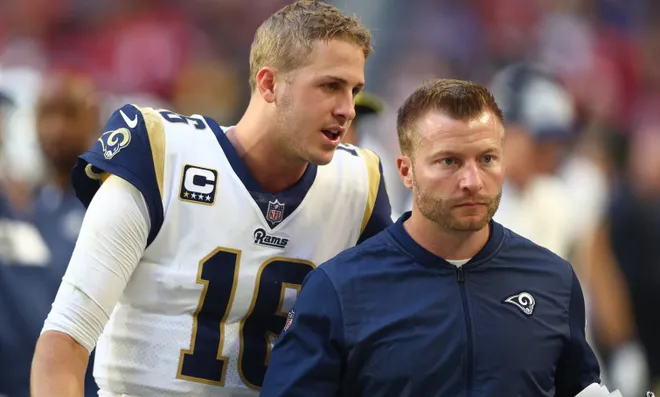
If the matchup was already compelling on paper, McVay’s words transformed it into something deeper. This is no longer just Jared Goff returning to Los Angeles. It’s a quarterback stepping into a stadium where his journey was interrupted, now armed with validation from the very coach who once moved on. Whatever happens on the field, one thing is clear: the silence between Sean McVay and Jared Goff is gone. And in breaking it, McVay may have added an emotional charge to Week 15 that the NFL won’t soon forget.