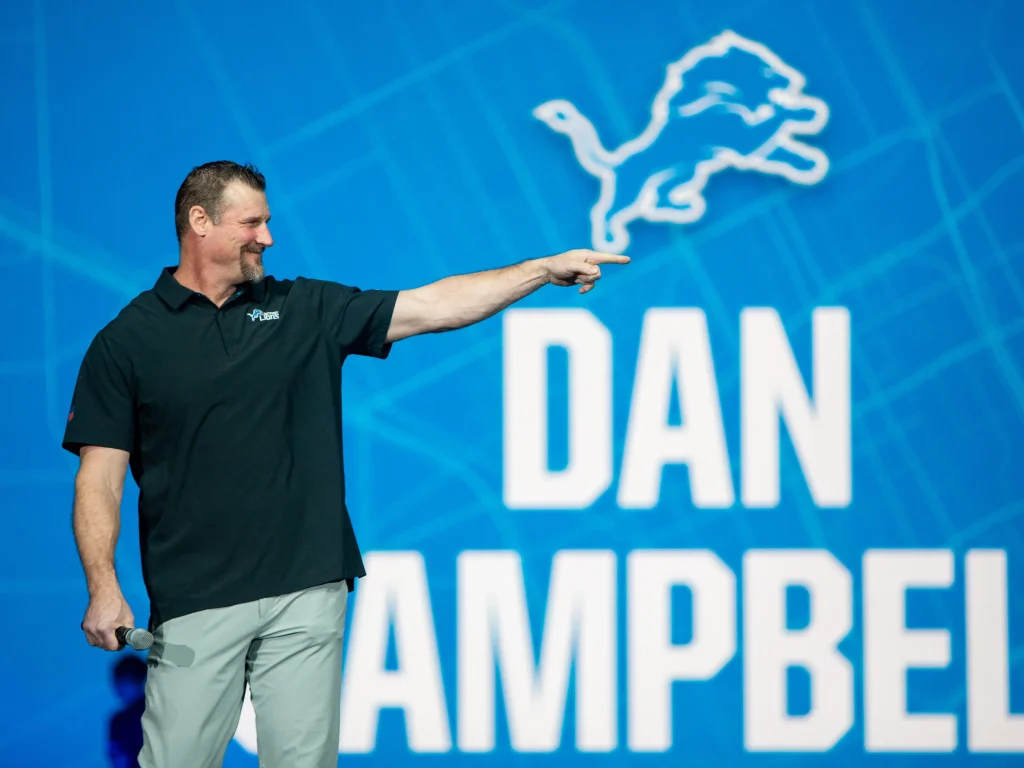
The Detroit Lions walked off the field on Thursday night with one of their most important wins of the season — a 44–30 statement over the Dallas Cowboys — but the moment that resonated long after the final whistle wasn’t a play, a statistic, or even a celebration. It was the tone in Dan Campbell’s voice. The Lions’ head coach didn’t deliver his message loudly, nor did he lean on theatrics. Instead, he offered something far more striking: a calm, unwavering warning to the rest of the league about his star running back, Jahmyr Gibbs.
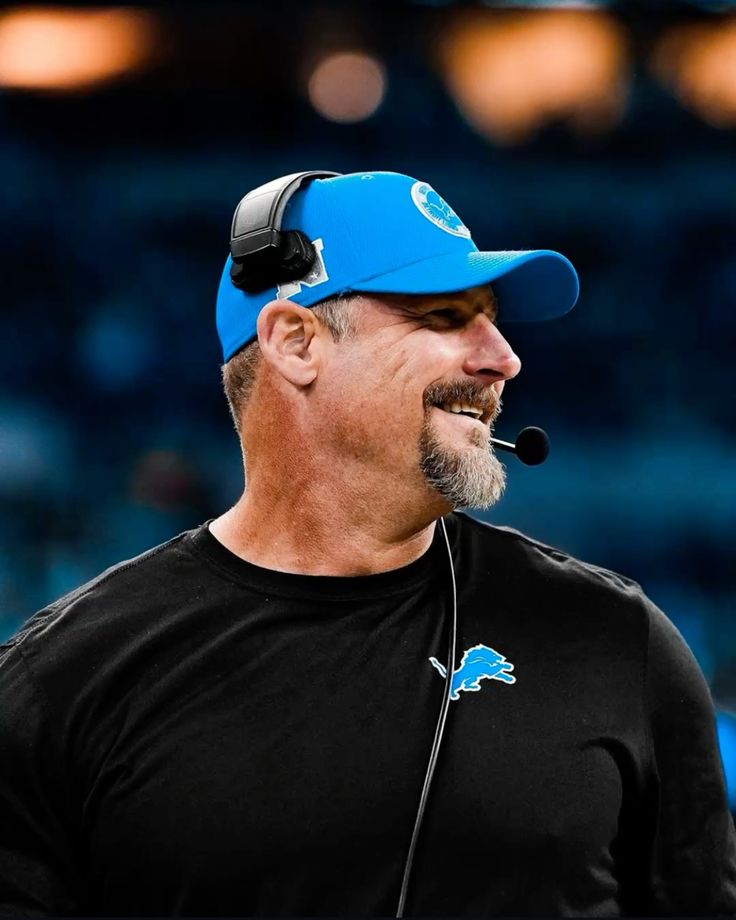
“He’s just getting started,” Campbell said, leaning into the podium with the confidence of a coach who knows he is witnessing the beginning of something special. And after Gibbs’ historic night — three touchdowns, 120 yards from scrimmage, and a milestone that tied him with Barry Sanders for the most career touchdowns before turning 24 — the NFL would be wise to pay attention.
Gibbs’ performance wasn’t simply explosive; it was emblematic of the evolution he has undergone in just under three seasons as a Lion. Drafted as a dynamic offensive weapon with speed to burn, he has since grown into a fully-formed game-changer — a runner who sees the field like a veteran, a receiver who runs routes like a slot specialist, and a competitor who elevates the entire offense when the game demands it most. Against Dallas, all of those traits surfaced again in a way that made the Lions’ offensive identity unmistakable: when Gibbs is rolling, so is Detroit.
Campbell was quick to highlight that growth. He noted Gibbs’ improved route discipline, his sharper reads in space, and an increasing command of pre-snap adjustments. Detroit has been deliberate in expanding his role, moving him into the slot, isolating him against linebackers, and designing packages that maximize his versatility. Those adjustments have paid off in sustained production and, perhaps more tellingly, in the trust Gibbs has earned from his coaches and teammates.
That trust is visible in critical situations. The Lions are undefeated this season in games where Gibbs scores a touchdown. His ability to flip field position, extend drives, and finish possessions has become the hinge on which Detroit’s offensive momentum swings. The late touchdown that sealed the win against Dallas — a burst through the middle of the defense where Gibbs outran angles that appeared structurally sound — felt like a snapshot of the Lions’ larger confidence in him. When Detroit needs a play, Gibbs is becoming the first answer rather than one of many options.
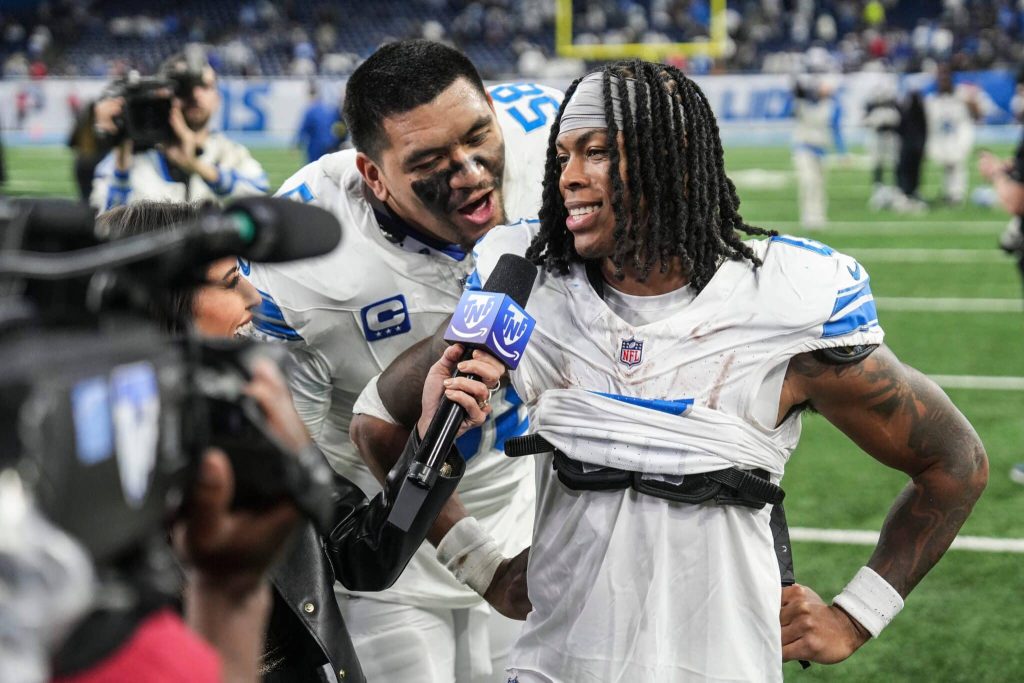
Yet Campbell’s most pointed message wasn’t about the player Gibbs is today. It was about who he is becoming. The comparison to Barry Sanders, while natural given the shared milestone, only scratches the surface of the impact Gibbs has made in such a short time. Sanders was a once-in-a-generation runner built on improvisation and unmatched quickness. Gibbs is carving his own distinct path — one that blends modern offensive versatility with the kind of explosiveness that changes defensive game-plans overnight.
Campbell emphasized that what separates Gibbs isn’t just athleticism but mentality. “He’s smart, he’s accountable, and he wants the burden,” Campbell explained. Those characteristics have allowed Detroit to increase his workload despite injuries to other offensive playmakers. With defensive attention rising week after week, Gibbs has adjusted rather than regressed, a sign of both maturity and untapped potential.
For a franchise fighting to sustain momentum in the NFC playoff race, that potential matters. Detroit’s offense has evolved dramatically since Campbell and general manager Brad Holmes took charge, shifting from a unit driven primarily by complementary parts to one featuring true centerpiece talent. Gibbs, alongside Amon-Ra St. Brown and Sam LaPorta, forms a young nucleus that is reshaping how the Lions attack defenses. Each brings a different dimension, but Gibbs is the one who redefines spacing whenever he touches the ball.
His growth also reflects Detroit’s broader offensive philosophy — one built on adaptability. The injuries that have tested the lineup over recent weeks have pushed the Lions to find creative solutions, and Gibbs’ versatility has been the most reliable bridge between those adjustments. Whether flexed out wide, motioning behind the formation, or taking handoffs from a shotgun look designed to freeze linebackers, he has become the Lions’ most unpredictable weapon.
The response across the NFL to Gibbs’ milestone was immediate and emphatic. Fans marveled at the pace of his early-career production. Analysts debated whether his trajectory placed him on a superstar path. Former players pointed out how difficult it is to sustain that level of scoring versatility before age 24. But inside Detroit’s locker room, the reaction was more measured. They’ve seen this rise happen step by step — in practices, in film study, in moments where Gibbs took on more responsibility without being asked.
For the Lions, Campbell’s statement was not hyperbole. It was an affirmation. A recognition that what Gibbs is doing now is only the beginning, and that as Detroit pushes toward another postseason run, their young star is not merely a contributor — he is the engine driving their identity.
If Thursday night was any indication, the NFL may have to prepare for an entirely new chapter in Detroit’s offensive history. And as Campbell made clear, Gibbs is only just getting started.