Back in early October, when he was torching secondaries and bailing out a battered San Francisco offense, any incentive tied to 500 receiving yards felt like a contractual formality — something his agent could mentally cash long before the year ended. Two monster weeks, 142 yards in back-to-back games, and a clear rapport with Mac Jones made the veteran wideout look like one of John Lynch’s smartest depth bets of 2025.
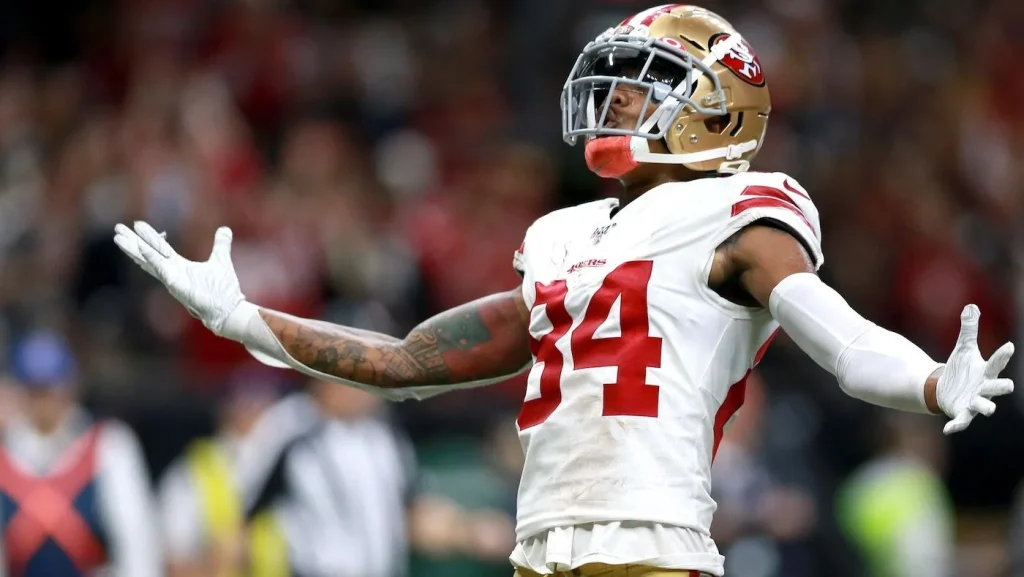
Now, with four games left and the 49ers in the thick of the NFC playoff hunt, Bourne finds himself in a strange, uneasy limbo. According to a recent report, he needs just 18 more yards to trigger a $500,000 bonus. On paper, that’s a single route, one well-timed slant, or a busted coverage away. In reality, his disappearing act in the passing game has turned that once-automatic threshold into a very real question: will he even get the chances to reach it?
The turning point coincided almost perfectly with the return of Brock Purdy. While Bourne feasted during the stretch when George Kittle was sidelined and both Ricky Pearsall and Jauan Jennings were nursing injuries, his role shrank as San Francisco’s preferred weapons came back online. What looked like a breakout suddenly started to resemble a bridge — a productive, necessary stretch that helped the 49ers survive, but not something the offense was ever going to be built around once its full cast returned.
Context matters here. Bourne’s surge wasn’t accidental. He arrived in Santa Clara already fluent in Kyle Shanahan’s system from his first stint with the team and carried built-in chemistry with Jones from their time together in New England. When injuries emptied the top of the depth chart, Shanahan leaned on familiarity and trust. Bourne rewarded that trust with production, timing, and veteran savvy that kept drives alive and an offense afloat. He looked like the classic 49ers role player who turns a short-term opportunity into a long-term foothold.
But the NFL rarely lets those stories stay tidy. As Purdy settled back in, the ball naturally gravitated toward the core the 49ers have developed around him: Jennings on the boundary, Kittle over the middle, Christian McCaffrey everywhere. Pearsall’s return from a knee injury added another priority target to the rotation, even if his impact has been slower to materialize. Suddenly, Bourne’s routes became more situational, his snaps more specialized, and his targets more sporadic. The same depth that once opened a lane for him has now narrowed it.
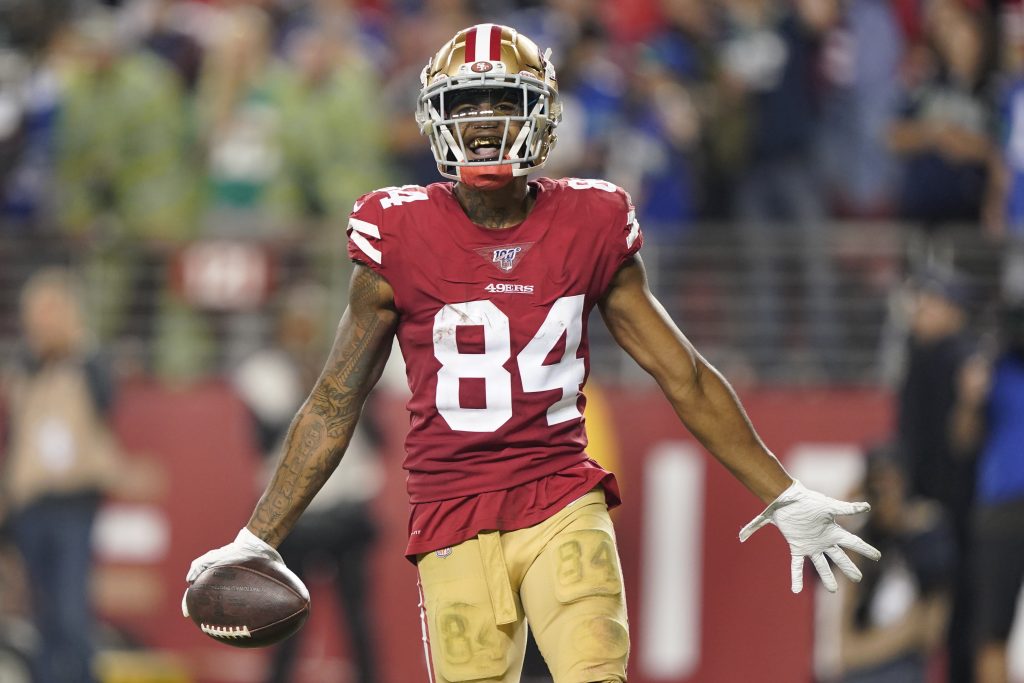
That’s where the financial layer adds tension to what might otherwise be written off as a normal depth-chart adjustment. Incentives are built into NFL contracts precisely for players like Bourne — experienced role players who can swing games when called upon and reward teams when usage and production align. In this case, the alignment is wobbling at the worst possible time for the player. Eighteen yards is a tiny number in football terms, but it represents a massive swing in personal stakes. Every passing game that flows through others first, every target that goes to a different jersey on third down, chips away at the inevitability that once surrounded that bonus.
From the 49ers’ perspective, this is the cost of having options. Jennings has reasserted himself as Purdy’s security blanket, the contested-catch specialist whose trust equity stretches back years. McCaffrey is the offensive axis, the first read and the emergency valve. Kittle remains the matchup nightmare defensive coordinators scheme around. If Pearsall ever truly recaptures his pre-injury explosiveness, San Francisco’s passing attack could evolve again, with Bourne falling even further into the margins. The calculus isn’t personal; it’s structural. In a win-now window, coaches feed the players they view as most indispensable.
For Bourne, the challenge now is to stay ready in a role that might not come with the volume he once enjoyed. The irony is that the best path to that half-million may not be lobbying for more targets, but leaning even harder into the traits that earned him the staff’s trust in the first place — precise routes, reliable hands, and an ability to execute on the handful of snaps he does get. In a Shanahan offense, one injury, one matchup wrinkle, or one hot hand can reshuffle the rotation in a week. If a game script forces the 49ers to lean deeper into their receiver room, Bourne’s next stretch of relevance could arrive without warning.
There is also the looming absence of Brandon Aiyuk, whose fractured relationship with the franchise all but guarantees he won’t reclaim a role in this offense. On one level, that long-term uncertainty should create opportunity for veterans like Bourne. On another, it underscores how fluid San Francisco’s receiver picture is — a unit likely to be reshaped again in the offseason through the draft, trades, or both. For a player sitting on 482 yards and a contract line item that now feels oddly suspenseful, the future is both promising and precarious.
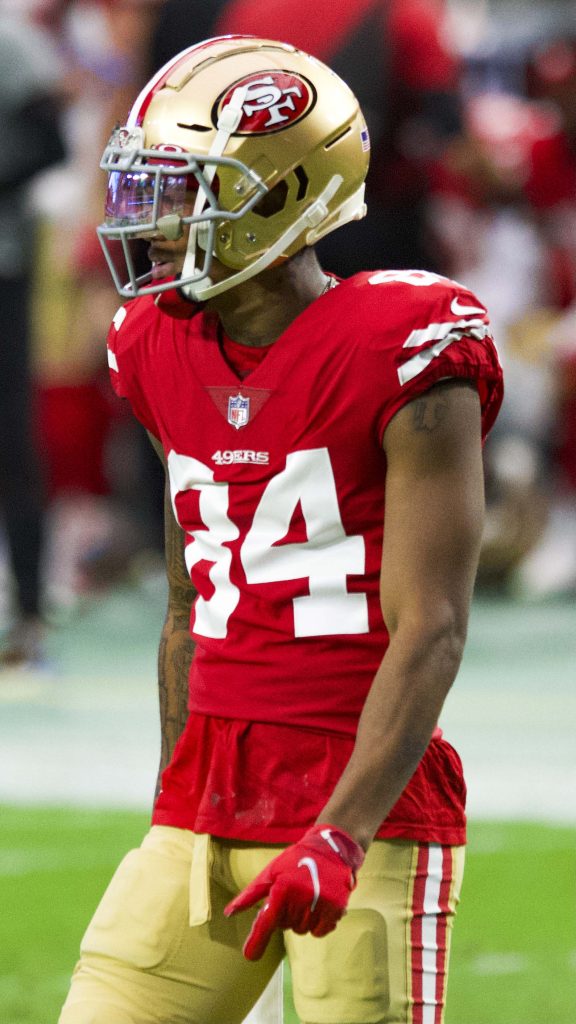
Four games is a long time in an NFL season, and the math still favors Bourne eventually crossing the 500-yard line. A single productive drive could erase the tension and turn the incentive back into a footnote. But until that happens, his season stands as a small but telling reminder of how quickly roles can shift on a contender — and how, for players on the fringe of the spotlight, every snap and every yard can carry stakes that go far beyond the box score.