Julie Johnson Accuses Noem of Breaking the Rule of Law
WASHINGTON — In a tense House committee hearing, Representative Julie Johnson, Democrat of Texas, delivered a sharp rebuke of Homeland Security Secretary Kristi Noem, accusing the department she leads of invoking the “rule of law” while, in practice, violating its most basic requirements.
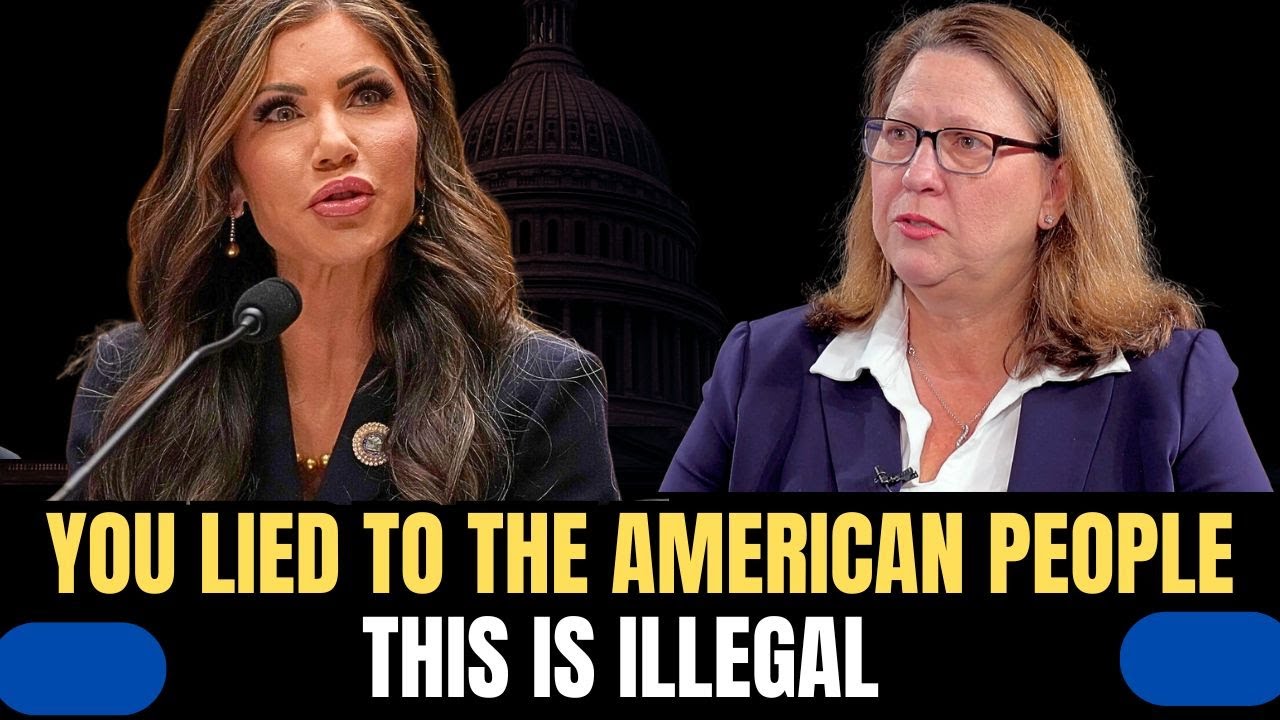
Ms. Johnson’s remarks, addressed to department officials testifying before Congress, were notable less for their volume than for their precision. She did not challenge immigration policy in the abstract. Instead, she framed her critique around constitutional standards, arguing that current enforcement practices are eroding probable cause and due process — principles that sit at the core of American law.
“What is happening in this country,” Ms. Johnson said, “is that fear is being driven from the very top.” She described rising anxiety among citizens, immigrants and even law enforcement officers, contending that heated rhetoric about immigration has filtered downward, shaping how laws are enforced on the ground.
At the center of her argument was a direct challenge to Secretary Noem’s assertion that the department is “restoring the rule of law.” Ms. Johnson said that claim was false. “The rule of law,” she said, “is founded on two fundamental principles: probable cause and due process. And neither is being respected.”
Probable cause, she noted, requires that law enforcement have a specific, articulable reason to believe a crime has been committed before detaining someone. Due process guarantees access to hearings, legal representation and procedural safeguards once a person is detained. These protections, Ms. Johnson emphasized, are constitutional obligations, not political preferences.
“You can’t just snatch somebody walking into a coffee shop because of the color of their skin,” she said, adding that detentions based on appearance rather than evidence would represent a clear violation of Fourth Amendment protections.
To support her claims, Ms. Johnson cited a recent visit to an Immigration and Customs Enforcement facility outside Dallas. There, she said, more than 70 percent of detainees were classified as posing the lowest threat level and had no criminal history. That observation directly contradicted repeated assertions by administration officials that enforcement efforts are narrowly focused on serious or dangerous offenders.
Ms. Johnson said she fully supported Homeland Security’s mission to counter terrorism, cyber threats and genuine risks to national security. “None of us want a recreation of 9/11,” she said. “But we also do not want, under any circumstances, the trampling of constitutional rights.”
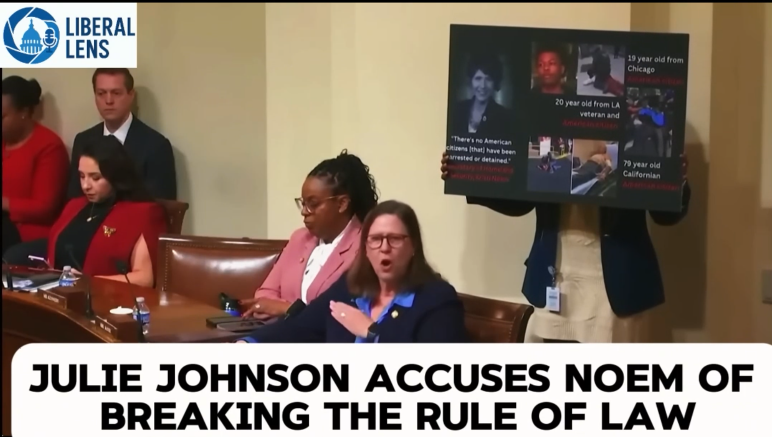
Her most serious allegations involved American citizens. Holding up a poster, she described three cases in which individuals who identified themselves as U.S. citizens were arrested by ICE. According to Ms. Johnson, one man — an older individual — suffered broken ribs and a brain injury after being knocked to the ground, despite repeatedly asserting his citizenship.
“When someone says, ‘I am an American citizen,’ and officers do not stop,” she said, “that is a huge problem.” Detaining a citizen without lawful cause, legal experts note, is not merely an administrative error but a constitutional violation. Continuing to use force or hold an individual after citizenship is asserted raises the stakes further, potentially implicating federal civil rights laws.
Ms. Johnson was careful to distinguish between individual misconduct and the broader workforce. Many ICE and Border Patrol agents, she said, are “doing their jobs professionally and lawfully.” Her concern, she emphasized, lay with “bad actors” — officers who exceed their authority — and what she described as a lack of meaningful oversight or discipline from agency leadership.
“When there’s no effort to rein them in,” she said, “power goes to their head.” Over time, she warned, unchecked behavior erodes public trust not only in immigration enforcement, but in law enforcement as a whole.
That erosion of trust, Ms. Johnson argued, has consequences beyond immigration. Fear and frustration, she said, can spill over into threats against officers and heightened tension in communities. In her telling, the administration’s response has not been to recalibrate, but to “double down” on rhetoric that further inflames divisions.
Ms. Johnson also criticized the department for failing to respond to repeated letters and inquiries from lawmakers. In the context of congressional oversight, such silence is significant. Oversight depends on transparency and engagement, and when agencies ignore formal requests, lawmakers say, they undermine accountability to the public.
Her remarks culminated in a broader warning. Constitutional rights, she argued, are not obstacles to public safety but its foundation. “You can protect the country and still follow the law,” she said. “Abandoning due process in the name of security weakens national security by undermining legitimacy.”
The exchange underscored a growing divide in Washington over immigration enforcement — not only over policy outcomes, but over the limits of governmental power. Ms. Johnson’s message was clear: once constitutional protections are treated as optional for one group, they become easier to ignore for everyone.