By XAMXAM
WASHINGTON — A question that has haunted the Jeffrey Epstein case for years returned to the Senate this week in the plainest possible terms: Who else, if anyone, benefited from the trafficking enterprise prosecutors said he built?
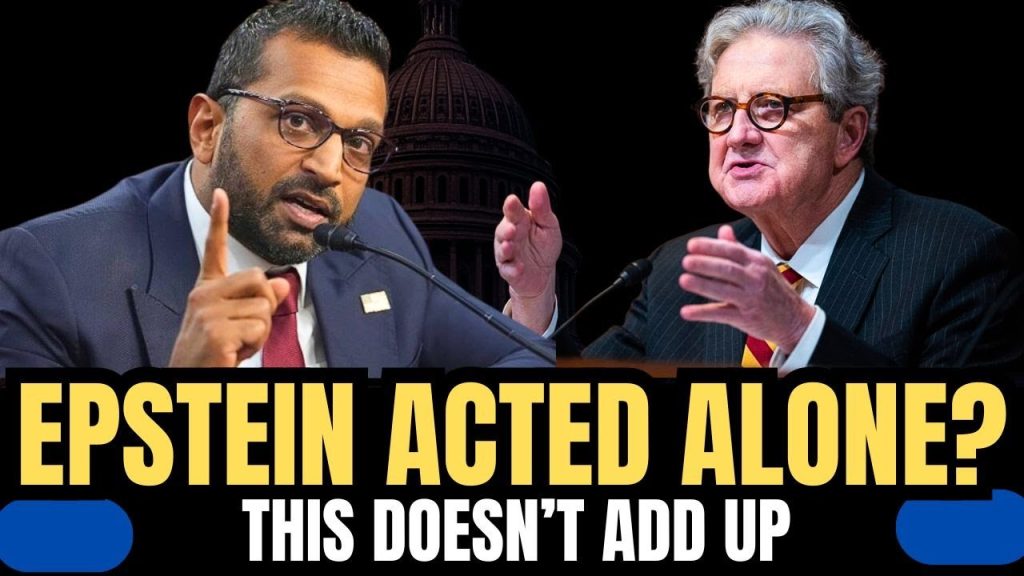
Kash Patel, the F.B.I. director, offered an answer that landed like a thud. “Himself,” he said, when asked who Epstein trafficked young women to besides Epstein. “There is no credible information, none.”
For survivors, investigators, lawmakers and a public conditioned by decades of insinuation and partial disclosure, Patel’s assertion did not close the file so much as deepen the unease around it. The exchange was striking not simply because of the conclusion Patel presented, but because of the way he presented it: as a matter of institutional certainty, constrained only by what he described as limited case files and court orders.
The hearing’s first minutes unfolded like a careful legal walk-through. A senator asked whether it was fair to say Epstein trafficked young women, including minors, for sex to himself — a reference to the allegations in the 2018 indictment in the Southern District of New York. Patel agreed that this was the allegation. Then came the sharper follow-up: who else?
Patel’s reply, repeated and emphatic, suggested that the F.B.I. possessed no credible information tying Epstein’s trafficking to other individuals. He added that if such information existed, he would have pursued it immediately. In the same breath, he pivoted to the record’s limitations: investigative constraints dating back to the mid-2000s, and a nonprosecution agreement that, he argued, narrowed what authorities could build later.
The clash at the center of the hearing was not simply partisan. It was structural: the public’s demand for clarity colliding with a system that often answers hard questions by reciting its own boundaries.
Patel described three different court orders that he said limited what could be released, and said the Department of Justice had sought to lift or waive them but had been turned down by judges. He promised to release “everything” the government is legally permitted to release, and said cooperation with a House subpoena was ongoing. The chairman, acknowledging that the issue “is not going to go away,” urged Patel to satisfy the country’s “understandable curiosity” about whether Epstein trafficked victims to anyone else.
Patel’s longer response blended two arguments that do not sit comfortably together. On one hand, he argued that the historic failure of the Epstein investigation — the narrow warrants, the deal that blunted accountability, the long period of permissive treatment — poisoned the evidentiary well. On the other, he treated the present absence of “credible information” as a definitive conclusion rather than a symptom of those earlier limits.
That distinction matters. An investigation that was constrained is not the same thing as a case that has been fully explored and found empty. The former suggests missing parts; the latter suggests the parts were never there.
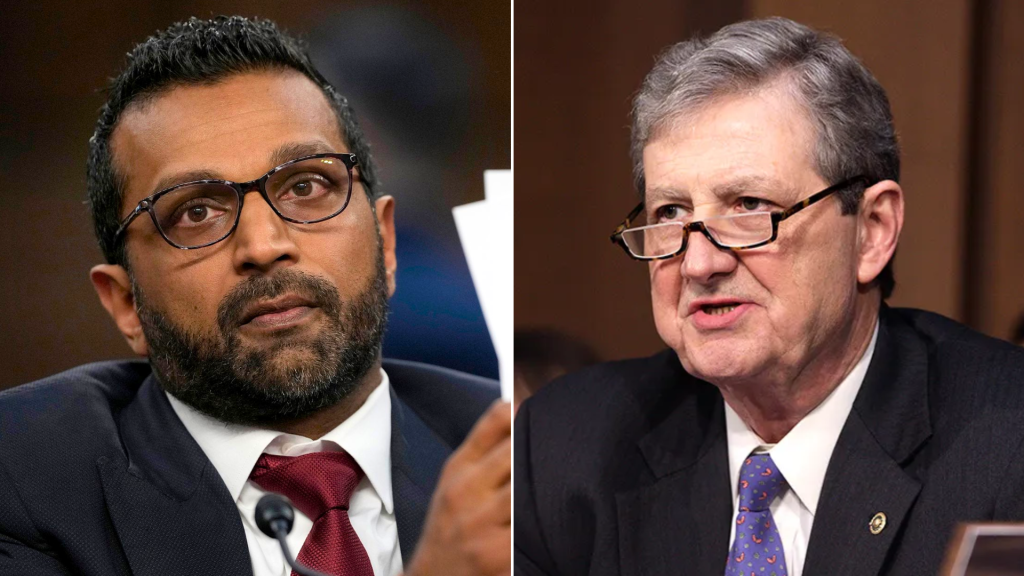
The hearing also highlighted how modern oversight can become a contest over who owns the record. Patel repeatedly gestured backward — to prosecutors, to prior administrations, to judges — as the sources of restriction. That may be historically accurate in part. But for lawmakers demanding answers now, it can sound like a bureaucratic relay race in which responsibility is always handed to someone no longer in the room.
The public has lived with that sensation for years. Epstein’s network, as described in court filings and survivor accounts, was never simply a story of one man acting alone; it was a story of recruitment, travel, access and protection — the kind of operation that, in ordinary life, does not function without enablers. Even the perception of enablers has been enough to fuel a bipartisan appetite for disclosure that has outlasted Epstein himself.
Patel tried to address that appetite by reframing what the government will not do. He said the F.B.I. and Justice Department do not release information tied to investigations deemed not credible, and do not release names of victims, credible or not, because of the law. He also said the agency had publicly asked the public to come forward with more information.
But that approach effectively shifts the burden outward. It asks citizens to supply what the state cannot or will not confirm — while the state maintains control over sealed records, investigative materials and the judgments about credibility that determine what counts. For skeptics, that can feel less like transparency than a managed narrowing of expectations.
The hearing’s intensity stemmed from the gap between what Patel said and what millions believe the Epstein saga represents: not just a crime, but a stress test for institutional courage when power and depravity overlap. Patel’s message was, in essence, that the files do not support the story many Americans think they know.
In Washington, credibility is often measured by what a witness refuses to say. In this case, the jolt came from what Patel was willing to say — a sweeping claim of “no credible information” beyond Epstein — and the certainty with which he said it.
If the F.B.I. hopes to quiet the questions, it may find that certainty is not enough. For a public that has watched the Epstein case repeatedly disappear behind legal walls and procedural caveats, the demand is not for a slogan about credibility. It is for a fuller accounting of what was investigated, what was not, and why the line between the two has been allowed to blur for so long.