In a move that has widened an already volatile legal dispute, Melania Trump has formally sought to relocate Michael Wolff’s anti-SLAPP action from New York State court to federal jurisdiction, escalating a conflict that blends defamation claims, First Amendment protections, and renewed public scrutiny of archival materials connected to the decades-old social orbit of Jeffrey Epstein. The decision, filed abruptly but strategically, signals a broader effort by the former First Lady’s legal team to reframe the fight on terrain where federal rules, federal discovery standards, and federal timelines may tilt the balance in her favor.
The dispute originates from references made by Wolff, the veteran journalist and author whose reporting has often drawn the ire of the Trump family. In a recent interview, Wolff alluded to documents housed within federal archives—materials he did not claim to have seen directly but described as potentially revealing, incomplete, or redacted in ways that continue to feed speculation surrounding Epstein’s network. Although Wolff maintained that his commentary fell squarely within the bounds of opinion and protected speech, representatives for Melania Trump responded with a sharply worded legal threat, framing the remarks as defamatory insinuation.
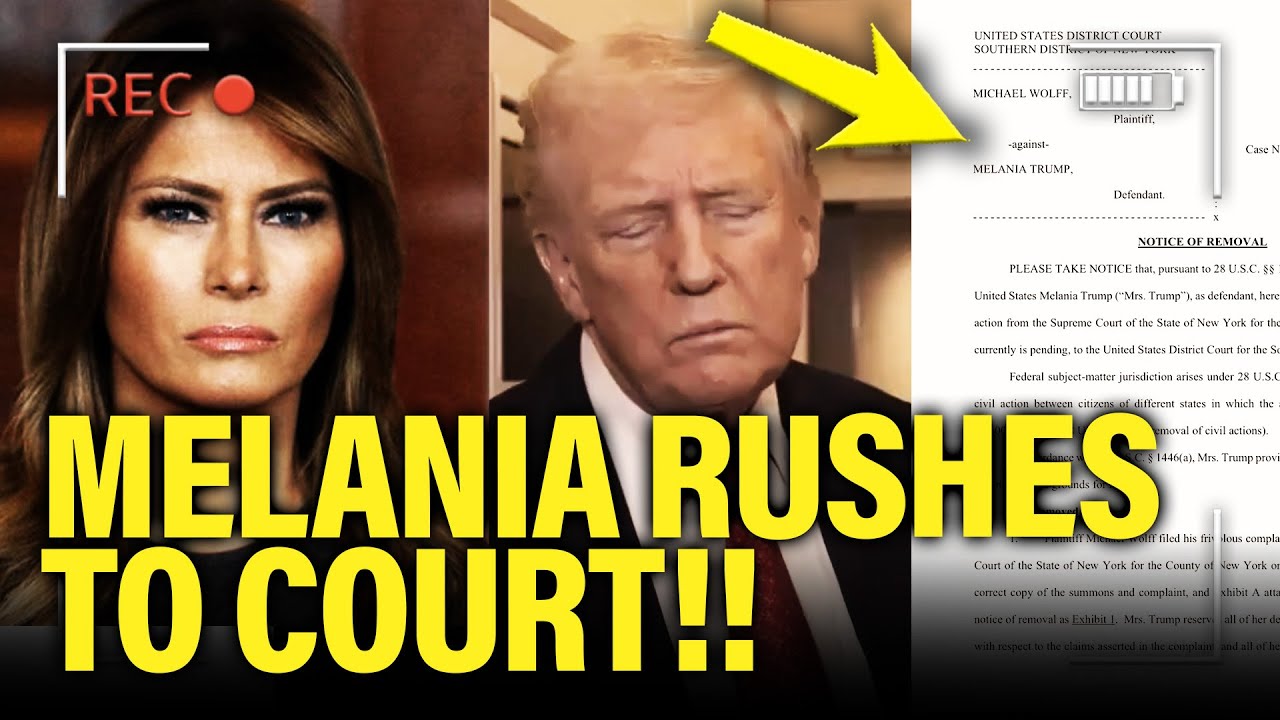
Wolff countered with an anti-SLAPP filing, asserting that the former First Lady’s legal maneuver amounted to an effort to silence protected commentary on matters involving public figures. Under New York’s anti-SLAPP statute, defendants can seek early dismissal of lawsuits that appear intended to chill speech on issues of public interest. It is exactly this procedural structure that Melania Trump’s attorneys now aim to evade by shifting the venue to federal court, where anti-SLAPP statutes are applied differently—and often more narrowly.
Legal experts describe the shift as a calculated attempt to neutralize Wolff’s most powerful defense. Federal courts have historically been divided on whether state-level anti-SLAPP laws apply with full force in federal proceedings. The move could therefore blunt Wolff’s ability to seek dismissal at an early stage or recover attorney’s fees if he prevails, placing significantly more pressure on the journalist to defend his statements through prolonged litigation.
The political dimensions are equally fraught. Although Melania Trump has generally maintained a distance from the more aggressive political battles surrounding her husband and the 2024–2025 electoral cycle, her entry into a contentious public dispute involving Epstein-adjacent references has revived a delicate chapter in the political memory of Washington and New York. While no wrongdoing has ever been attributed to her, the mere invocation of materials associated with Epstein’s decades of influence has repeatedly proven combustible in the public arena. Wolff’s commentary did not accuse her directly, but her legal team argued that by suggesting that federal archives contain documents relevant to her past, the journalist crossed a line into reputational harm.
The Trump legal operation appears intent on occupying a dual posture—showing a public willingness to confront its critics while quietly acknowledging that the federal setting may offer a more shielded arena in which to litigate discovery requests, redactions, or evidentiary thresholds. Several attorneys familiar with federal archival disputes note that federal courts have historically taken a cautious approach to releasing or compelling production of sensitive archived materials, especially those connected to sealed investigations, intelligence handling, or deceased individuals whose files remain under federal control.
For Wolff, the stakes extend beyond the immediate confrontation. Anti-SLAPP protections have become a central legal tool for journalists, authors, and commentators who face legal challenges from public figures. Should the case proceed in federal court and restrict his ability to leverage those protections, it could set a precedent with broader implications. Media law analysts have warned that a chilling effect could emerge if prominent political families successfully steer defamation-adjacent disputes into jurisdictions with narrower protections for expressive work.
Yet analysts also describe Melania Trump’s filing as a signal of the evolving post-White House legal strategy of the Trump family. While Donald Trump faces an array of criminal, civil, and electoral challenges, the former First Lady has pursued a different path—assertive, controlled, and highly selective. Her choice to intervene forcefully here suggests that she views the implications of Wolff’s remarks not as another passing media controversy but as an issue that cuts directly to personal reputation, historical legacy, and the narratives that will be written in the years ahead.

The federal judiciary will now determine whether the shift in venue is appropriate and whether Wolff’s anti-SLAPP motion can proceed with its full intended force. The process may unfold slowly, with procedural battles likely preceding any substantive examination of the claims.
In the meantime, the dispute underscores a broader reality of modern political life: even a single comment, framed cautiously and caveated extensively, can trigger a wide-ranging clash involving free-speech norms, defamation boundaries, federal records, and the lingering shadows of past associations. As the case advances—quietly in court filings, loudly in public interpretation—the gulf between legal strategy and political consequence will continue to widen.