By XAMXAM
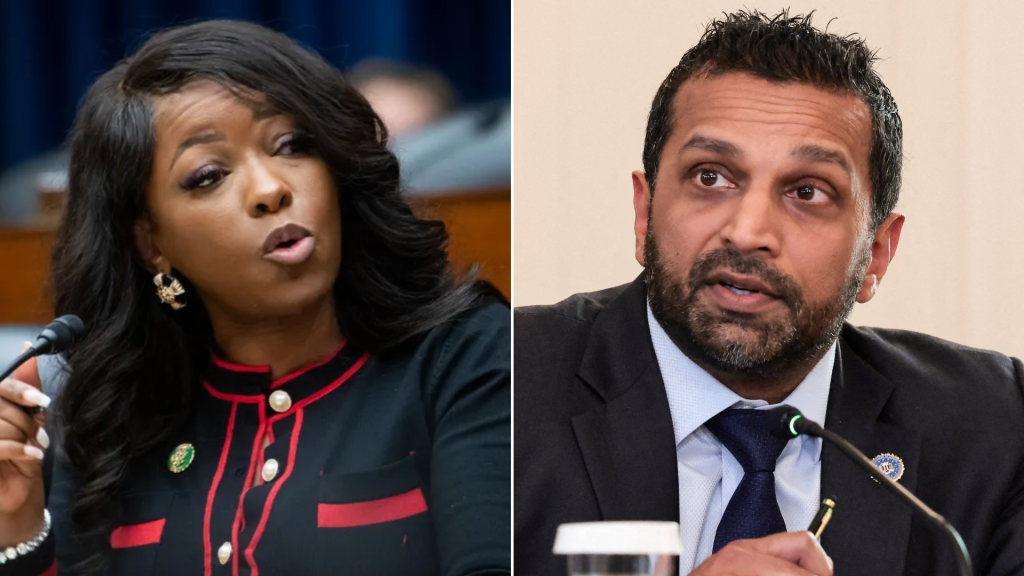
The exchange unfolded with unusual intensity for a congressional hearing, less an exercise in procedural oversight than a blunt reckoning over power, protection, and trust. Representative Jasmine Crockett did not ease into her critique of FBI Director Kash Patel. She confronted him directly, challenging not only his qualifications to lead the bureau but the consequences of his leadership for lawmakers, communities, and the credibility of federal law enforcement itself.
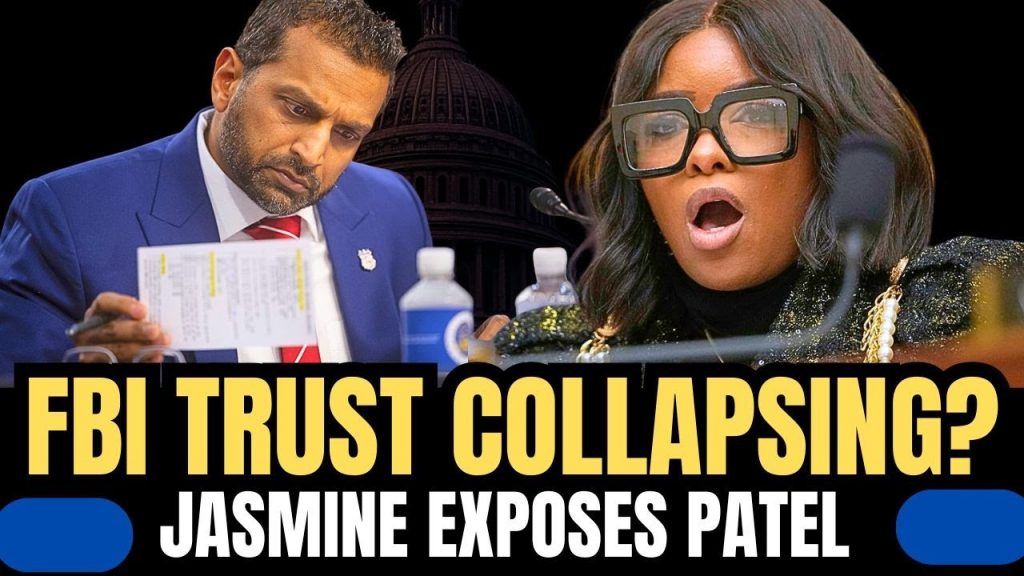
Crockett’s opening salvo went to a sensitive but verifiable fact: Patel is the first FBI director in modern history who never previously served within the bureau before taking its helm. Her point was not merely about résumé lines or professional pedigree. Experience inside an institution, she argued, shapes how leaders understand its mission, culture, and limits. In an agency tasked with confronting evolving threats while maintaining public trust, that internal grounding matters.
From there, the hearing shifted quickly from credentials to safety. Crockett cited documented death threats against members of Congress, including Republicans, for defying party leadership. These were not abstract concerns. Lawmakers have altered their daily routines, armed themselves, and, in some cases, chosen to leave public service altogether because of credible threats to their families. Crockett questioned whether the FBI under Patel’s leadership was responding to those dangers with the urgency they demand.
Her frustration centered on what she described as a reluctance by Patel to clearly acknowledge a conclusion that has been repeatedly affirmed across administrations of both parties: that the most persistent domestic terrorism threat in the United States comes from right-wing extremism. To Crockett, hesitation in naming that reality is not a semantic issue. When law enforcement avoids plainly identifying a threat, it weakens its ability to counter it—and signals to vulnerable communities that their fears may not be fully recognized.
Crockett spoke not only as a legislator but as a Black woman, linking policy decisions to lived experience. She said she did not feel safe and questioned who, exactly, benefits when federal law enforcement appears more attuned to political optics than to patterns of violence that disproportionately affect certain communities. She referenced attacks and threats targeting Black institutions, including historically Black colleges and universities, and asked why the bureau’s public posture seemed muted in response.
The critique widened to staffing and priorities. Patel has acknowledged that it could take more than a decade to fully staff the FBI at current trajectories. At the same time, resources have been redirected toward immigration enforcement roles traditionally handled by other agencies. Crockett argued that this reallocation comes at a cost. When experienced agents leave and remaining personnel are stretched thin, investigations into violent extremism, organized crime, and public corruption risk falling by the wayside.
She also challenged Patel over what she characterized as performative leadership—public statements and celebratory posts that, in her telling, overstated the bureau’s role in certain arrests while downplaying failures or missed warnings. Leadership, Crockett suggested, is not about taking victory laps but about owning outcomes, especially when those outcomes involve lives at risk.
Patel’s defenders have pointed to his prior roles in national security and intelligence, arguing that leadership does not require a traditional career path within the FBI. They contend that the bureau faces unprecedented challenges and that difficult trade-offs are unavoidable. But Crockett’s critique was not about ideology or partisanship. It was about results. Who feels protected? Who feels ignored? And who pays the price when federal law enforcement loses focus?
The broader political context loomed over the hearing. Patel’s appointment, like that of his predecessor Christopher Wray, traces back to Donald Trump, whose reshaping of federal institutions continues to reverberate. Crockett made clear that her concerns were not confined to one individual, but to a system in which loyalty to political power can appear to outweigh institutional independence.
What made the moment resonate was not the sharpness of Crockett’s language, but its clarity. She connected abstract debates about staffing levels, threat assessments, and jurisdictional boundaries to tangible fear—fear felt by lawmakers receiving death threats, by families forced to change their lives, and by communities wondering whether the federal government sees their safety as a priority.
In congressional hearings, criticism often dissolves into talking points. This exchange did not. It exposed a deeper tension facing American institutions: authority without confidence. Titles and formal powers can compel compliance, but they do not guarantee trust. And trust, once eroded, is difficult to rebuild.
The hearing did not resolve questions about the FBI’s direction, nor was it likely to. But it did illuminate why those questions persist. When leadership appears detached from the consequences of its choices, skepticism fills the gap. Crockett’s confrontation was not simply about Kash Patel. It was about whether the nation’s premier law enforcement agency can convince Americans—especially those who feel most vulnerable—that it is focused on the threats that matter most.
In that sense, the exchange was less a personal indictment than an institutional warning. Federal law enforcement derives its legitimacy not only from law and authority, but from public belief that it serves everyone equally. When that belief falters, no amount of organizational power can fully compensate.