DOJ Faces One-Week Deadline on Epstein Files as Massie Warns: “This Isn’t Politics — It’s a Crime”
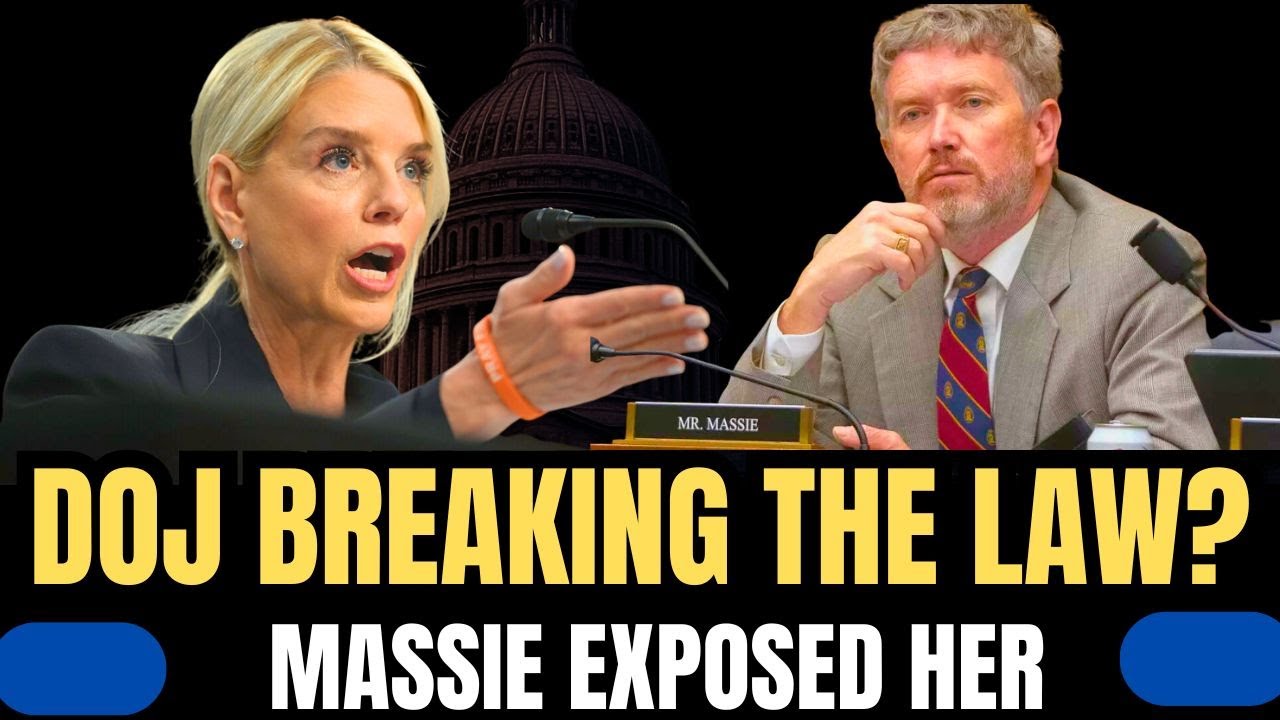
The Department of Justice is running out of time. With just one week left to comply with the Epstein Files Transparency Act, Congressman Thomas Massie has issued a stark warning: failure to release the required records would not be a political dispute, but a violation of federal law.
Speaking amid renewed public scrutiny following the release of Epstein estate photos by House Oversight Democrats, Massie made clear that the focus should not be on optics, but on legal obligation. Congress passed the law. The president signed it. And the DOJ is now bound by a statutory deadline.
Massie said he has been encouraged by recent developments, noting that the DOJ returned to three federal judges to request the release of sealed grand jury materials. All three judges reversed their previous positions, explicitly citing the Epstein Files Transparency Act as justification. Those materials, redacted to protect victims, are now set to be turned over to the DOJ.

But Massie stressed that grand jury records alone are not enough. Grand juries only see what prosecutors choose to present. That typically includes evidence sufficient to indict specific defendants — in this case, Jeffrey Epstein and Ghislaine Maxwell — not the full universe of evidence gathered by investigators.
According to Massie, the most sensitive material often never reaches a grand jury at all. FBI interview summaries, internal memoranda, investigative leads, and evidence implicating individuals beyond Epstein and Maxwell may remain buried in DOJ and FBI files. Under the law, that material must also be disclosed.
This distinction undercuts a key DOJ talking point. Releasing grand jury records is not full compliance — it is only partial disclosure. Transparency, Massie argues, means releasing what investigators had, not just what they chose to prosecute.
Importantly, Massie framed this moment as a test of institutional accountability. The DOJ’s ability to swiftly petition judges for grand jury releases proves its hands are not tied. If the department can act decisively in one lane, critics ask, why is it slow-walking the rest?
The broader stakes extend far beyond the Epstein case. If the executive branch can delay or fragment compliance with a disclosure law simply because it is uncomfortable, it sets a dangerous precedent. Oversight weakens. Trust erodes. And laws designed to expose abuse of power lose their force.
Massie’s warning cuts through the noise. The Epstein Files Transparency Act does not offer discretion, convenience, or political cover. It offers a deadline. If the DOJ misses it, the issue will no longer be about Epstein alone — it will be about whether the rule of law applies to powerful institutions when compliance becomes inconvenient.