By XAMXAM
Washington has seen no shortage of unusual presidential priorities, but even by recent standards, the latest initiative tied to Donald Trump has landed with a thud. What the administration described as a routine management decision involving the District’s public golf courses has instead ignited ridicule, resistance, and a deeper debate about legacy, power, and the thin line between public office and personal obsession.
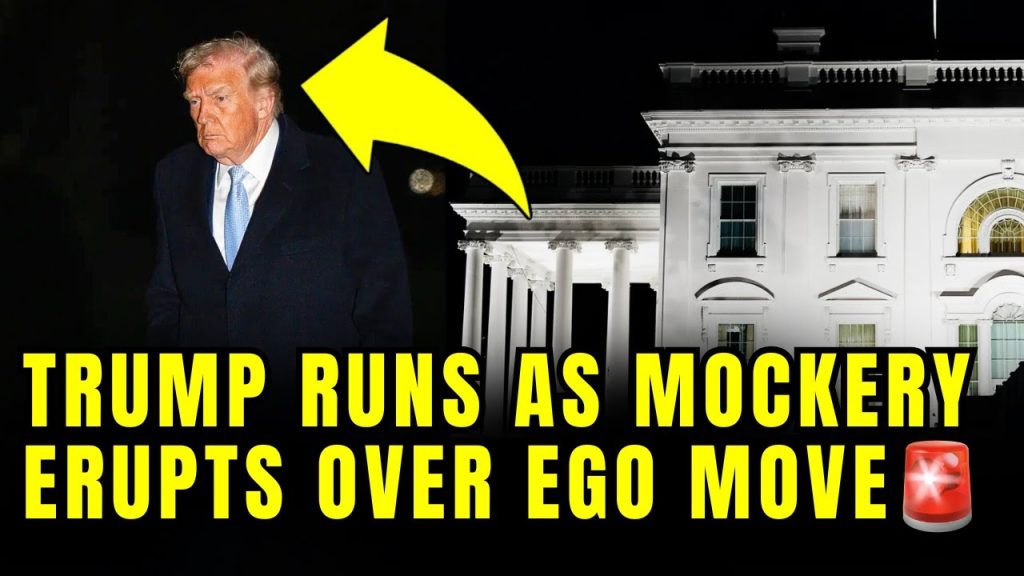
At issue is the abrupt move by the Department of the Interior to revoke the lease of National Links Trust, the nonprofit that has overseen the renovation and operation of several of Washington’s municipal golf courses. For years, the organization promoted affordable access, youth programs, and environmental restoration—hardly a flashpoint in national politics. Yet within hours of the announcement, the decision was widely interpreted as something else entirely: a prelude to presidential control.
The backlash was swift. Golf advocates, city officials, and community leaders questioned why a functioning nonprofit was being displaced with little warning. Critics noted that National Links Trust had invested millions of dollars into course improvements and job programs, particularly for local high school students. The administration countered that lease terms had been violated, but documentation remained murky, and the explanation did little to quiet skepticism.
What amplified the controversy was context. The golf course decision did not emerge in isolation. It followed a string of highly publicized projects tied to Trump’s fascination with physical legacy in Washington—plans to place his name above the John F. Kennedy Center for the Performing Arts, proposals for a triumphal arch inspired by Paris, and early groundwork for a grand ballroom attached to the White House complex. Together, the moves created a narrative difficult to ignore: a presidency increasingly defined by monuments rather than governance.
To Trump’s critics, the golf course takeover felt like another entry in a familiar ledger. As president, Trump spent an extraordinary amount of time at golf resorts he owned or favored, often at considerable public expense. Defenders dismissed those figures as distractions, but the optics have always mattered. Now, with policy disputes ranging from the economy to global alliances unresolved, the optics are back—this time centered not on travel logs but on control of public land.
Even within Washington’s famously thick-skinned political culture, the reaction stood out. Commentators joked that the capital had become a sandbox for presidential hobbies. Others were less amused, warning that public spaces were being treated as extensions of a personal brand. One city official described the situation bluntly: “This isn’t about golf. It’s about priorities.”

The irony is that municipal golf courses are, by nature, democratic spaces—designed to offer access to a sport often associated with exclusivity. National Links Trust emphasized that mission repeatedly, arguing that golf should not be reserved for those who can afford private club memberships. The administration’s move raised fears that affordability and community access could be sacrificed in favor of prestige or spectacle.
From a broader perspective, the episode reflects a pattern that has defined Trump’s relationship with power. His background as a real estate developer has always shaped his instincts: think in structures, names, and visible markers. In business, that approach built a brand. In government, it has produced friction. The presidency, after all, is less about construction than coordination—less about monuments than management.
There is also a quieter undercurrent running through the debate. Some observers see the proliferation of vanity projects as a symptom of distraction at a moment when focus is most needed. Others interpret it as something more deliberate: an attempt to cement a tangible legacy amid legal, political, and historical uncertainty. Physical changes to the capital, unlike policies, cannot be easily undone.
For now, the future of Washington’s public golf courses remains unclear. No replacement operator has been announced, and community groups are pressing for transparency. Lawsuits have been hinted at. Congressional Democrats have called for oversight. Republicans, for the most part, have remained muted, wary of wading into what many view as a self-inflicted controversy.
What is clear is that the episode has reinforced an image that even some allies find uncomfortable. At a time when presidents are often judged on crisis management and institutional stability, this story is about turf—quite literally. And in Washington, where symbolism carries extraordinary weight, turf matters.
In the end, Trump’s latest project may say less about golf than about governance. It underscores a tension between personal legacy and public responsibility, between spectacle and substance. Whether the decision is reversed or proceeds quietly, the laughter it provoked across the capital has already left its mark—turning what might have been an obscure administrative change into another emblem of a presidency defined by distraction.
