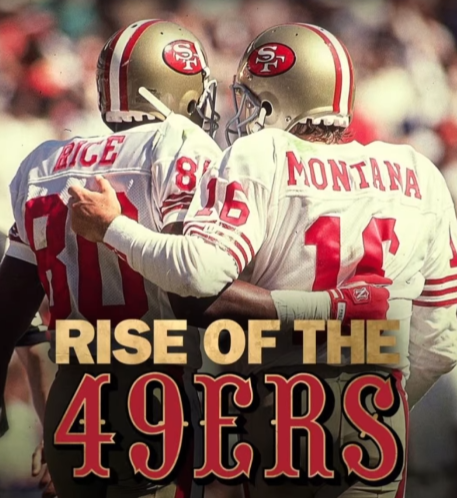
San Francisco’s football heritage is built on the iconic foundation of its 1980s dynasty—an era that continues to shape the identity of the franchise and the culture of the Bay Area. Now, that era is receiving a modern retelling in AMC’s upcoming documentary series Rise of the 49ers, arriving this February. The series promises to revisit the legendary careers of Bill Walsh, Joe Montana, Jerry Rice, and Steve Young, the figures who elevated the 49ers from a regional team into one of the most influential dynasties in American sports. But the biggest surprise came when AMC revealed that the narrator behind the project is none other than Tom Brady, the quarterback whose own legacy might only be rivaled by the 49ers greats he grew up idolizing.
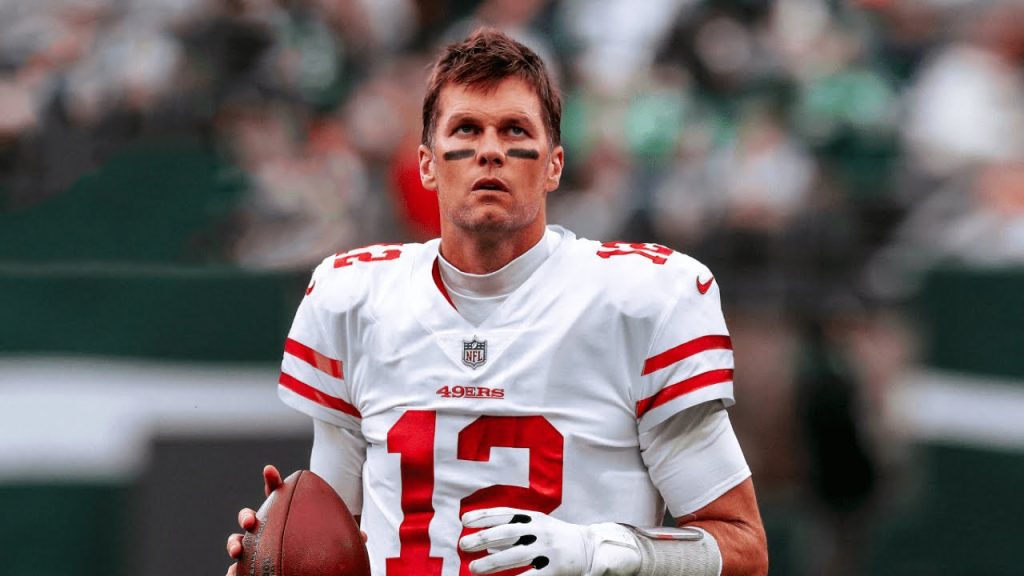
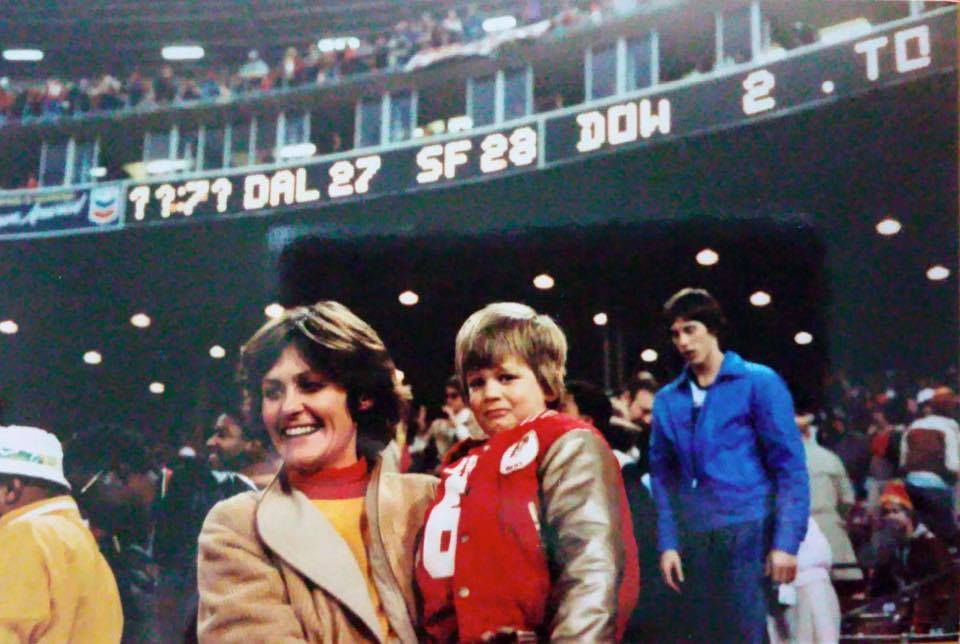
For older fans, Brady’s connection to the 49ers is well documented. Long before he became the face of the Patriots’ dynasty, he was a Bay Area kid from San Mateo, sitting in the stands at Candlestick Park with dreams of wearing red and gold himself one day. He admired Montana’s calm precision and Rice’s unmatched discipline. He often spoke about how those childhood Sundays shaped not only his love for football but his understanding of what greatness looked like. The documentary’s trailer hints at an emotional tone: Brady recalling the atmosphere at Candlestick, the sensation of watching his heroes, and the longing to someday take the field as part of the 49ers lineage.
But that dream never materialized. In the 2000 NFL Draft, the 49ers passed on Brady and selected Giovanni Carmazzi instead—a decision that would become infamous in league history. Brady was taken 199th by New England, a team that had no idea it had just drafted the player who would redefine the position. Brady himself never forgot the slight. He has noted, with equal parts candor and humor, that the choice placed a permanent chip on his shoulder. Throughout his career, whenever he faced San Francisco, he was reminded that the team representing his childhood home had not believed in him. That emotional distance lingered even as his résumé grew to seven championships and countless records.
The docuseries arrives at a fascinating intersection in that history. Despite the years of separation, Brady’s involvement in Rise of the 49ers is more than a professional collaboration; it represents a reconnection with the team that shaped his earliest football identity. As an executive producer through his Religion of Sports company, Brady isn’t merely lending his voice—he is helping shape the narrative of the dynasty that inspired him. His reflections in the trailer convey an unmistakable affection for Walsh’s brilliance and the elegance of the West Coast offense, a system that influenced multiple generations of quarterbacks, including Brady himself.
The missed opportunities between Brady and the 49ers deepen the emotional layers of his involvement. In 2017, San Francisco briefly explored quarterback options before acquiring Jimmy Garoppolo, and reports later indicated that Brady’s camp hoped the 49ers might inquire about the Patriots star. In 2020, before Brady left New England, rumors swirled that he had serious interest in joining the 49ers—but the team opted to stay with Garoppolo. Even in 2023, with Brock Purdy recovering from elbow surgery, head coach Kyle Shanahan openly admitted the team would have pursued Brady if he had decided to return from retirement. The opportunity never aligned, but the mutual intrigue persisted.
Yet for all the near intersections, the documentary marks the closest Brady has come to fully immersing himself in the 49ers’ world. His narration appears to spotlight not only the brilliance of Montana and Rice but the transformation of the Bay Area itself during the 1980s—a region undergoing social, economic, and cultural shifts while finding unity through football. Brady’s voice lends a generational bridge to that story. His reverence signals admiration rather than nostalgia, and his tone in the trailer suggests a personal investment rather than professional detachment.
The series is also expected to deliver unprecedented archival material and deep storytelling, blending NFL Films’ historical precision with AMC Studios’ cinematic approach. Montana’s leadership, Rice’s evolution into the greatest receiver of all time, Young’s ascent from backup to icon, and Walsh’s innovations in strategy will be central pillars of the narrative. Even without Walsh’s direct presence, his influence will be felt throughout the project. Brady’s role adds a unique dimension: a living legend acknowledging the giants who helped pave the path he ultimately dominated.
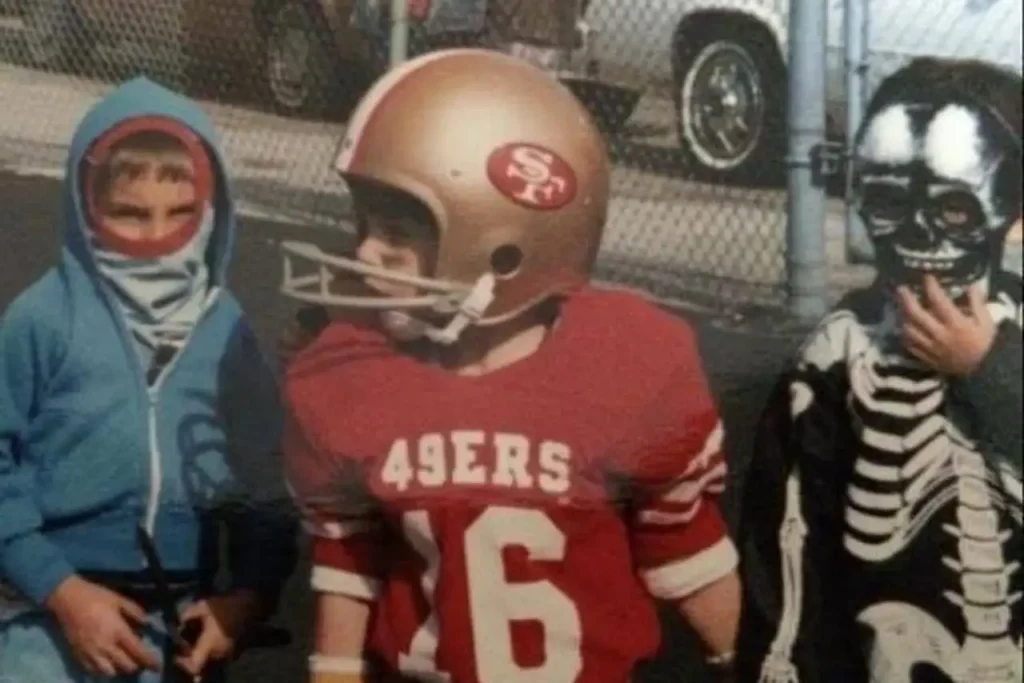
For the 49ers community, Brady’s involvement feels symbolic. It represents a bridge between generations, a recognition from the greatest quarterback in NFL history that the team he once hoped to join still occupies a deeply personal space in his story. Whether or not the 49ers were ever destined to be Brady’s professional home, they remain his spiritual origin—his first football love, his earliest blueprint for greatness.
And now, as Rise of the 49ers prepares to premiere, Brady finally steps into the role he once imagined for himself—not as the quarterback of San Francisco, but as the voice telling the story of the dynasty that shaped him.