In the days following the latest document release connected to the long-running investigation into Jeffrey Epstein’s network, the Department of Justice has found itself confronting an intensifying storm of criticism. What began as a narrow dispute over a single document — an alleged letter from Epstein to disgraced sports physician Larry Nassar — has widened into a broader debate over the integrity of the government’s disclosure process and its treatment of survivors awaiting clarity.
The controversy emerged shortly after the Midas Touch Network reported on a document included in the latest batch of Epstein files. The document, identified as having been submitted years earlier for forensic handwriting analysis, appeared to show Epstein communicating with Nassar around the time of Epstein’s death. Its contents, described as referencing “young nubile girls” and alluding to the preferences of a sitting president, drew immediate attention. The document’s provenance, however, was contested from the outset.
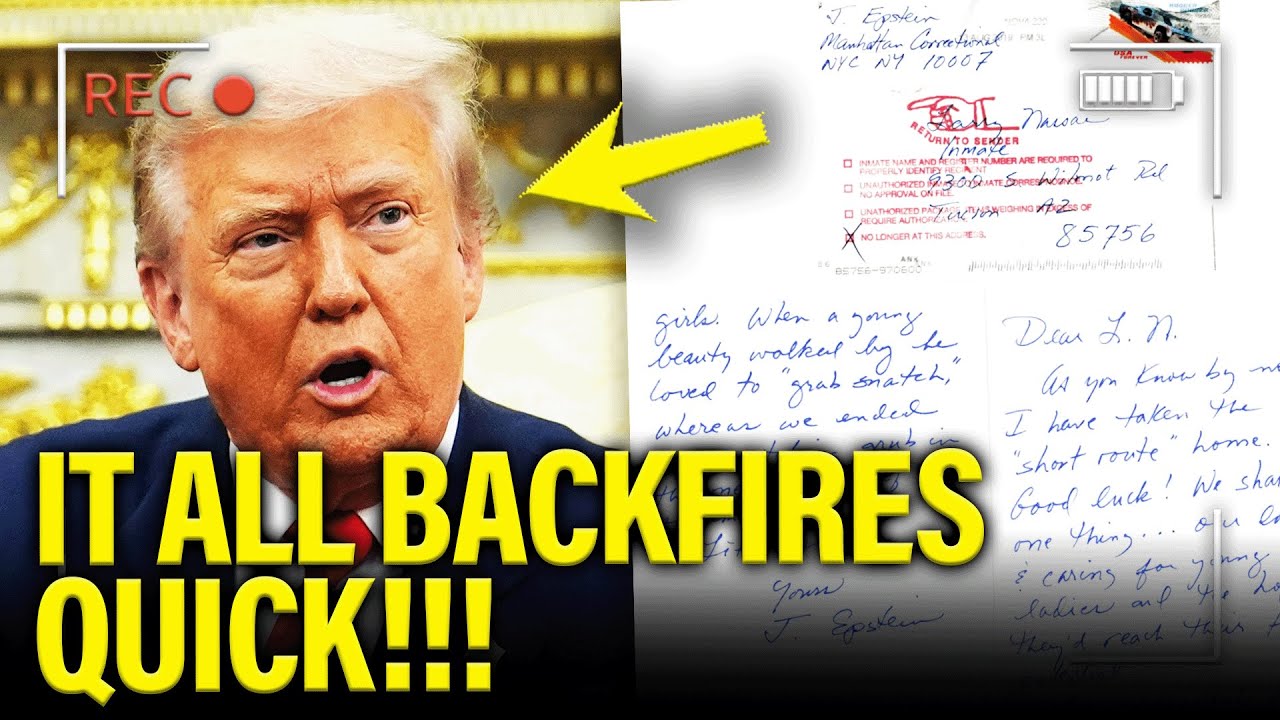
According to journalists who reviewed the material, the letter was found among files at the Metropolitan Correctional Center where Epstein was held prior to his death. Postal records included with the document showed a Virginia postmark dated days after Epstein reportedly died by suicide — a detail some experts say can be explained by the delayed routing of prison mail through centralized processing centers. Nevertheless, the unusual timing contributed to early doubts about authenticity and raised questions about whether the document was generated inside the facility by another individual.
Despite the uncertainties, what has drawn the sharpest criticism is not the document itself, but the government’s handling of it. Reporters who contacted the Justice Department seeking clarification received an initial statement indicating that officials were “looking into” the matter. Only hours later, the DOJ relayed that the FBI had determined the letter was “fake,” citing discrepancies in return address details and mailing information. The abrupt shift fueled suspicion among commentators who had already expressed doubts about the consistency of the department’s approach.
Critics argue that if the government had known the document was false, it should never have been included in a public release of thousands of files without proper annotation. Legal analysts note that the DOJ’s obligation is not merely to disclose records, but to contextualize those with questionable origins — particularly in a case as fraught and sensitive as Epstein’s. As one observer put it, the decision to release the letter “without clarification” risked undermining confidence in the entire disclosure process, especially among survivors who have waited years for reliable information.
Ashley Rubit, an Epstein survivor, issued one of the most forceful responses. In a public statement, she condemned the presence of “fake documents” within case materials involving “the sexual abuse of children,” calling it a breach of trust with those harmed. Rubit demanded transparency regarding who generated the document, how it entered official files, and why it was treated as legitimate long enough to be included in a sweeping release of records. Her remarks underscored a growing frustration among victims who perceive the government’s actions as careless at best and obstructive at worst.
For some legal commentators, the issue has highlighted long-standing concerns about the Department of Justice’s posture toward the Epstein case. Harry Litman, a former federal prosecutor and host of the Talking Feds program, argued that the DOJ’s pattern of inconsistent explanations, delayed disclosures and insufficient redaction justifications suggests systemic flaws rather than isolated missteps. Litman noted that the department had a full team of lawyers assigned to review Epstein-related documents for months, and yet still managed to release materials whose authenticity had not been confirmed.
Litman questioned why a handwriting analysis, apparently requested years earlier, had not been completed or made available before the latest release. Such an omission, he suggested, undermines the credibility of the department’s broader review process and makes it more difficult for the public to separate legitimate records from erroneous or misleading ones. The government’s failure to provide a clear timeline for verifying documents, he argued, contributes to a perception that its disclosures are reactive rather than responsible.

The episode has also reignited political tensions. Critics of the administration argue that the mishandling of the disputed letter reinforces concerns about selective disclosure — particularly given the distribution of documents related to prominent figures. Some point to the numerical imbalance between files mentioning former President Bill Clinton and the relative scarcity of materials referencing former President Donald Trump as a statistical anomaly requiring explanation. While there is no evidence that political considerations guided the release, the appearance of asymmetry has nonetheless shaped public conversation.
What remains clear is that the fallout from the disputed letter extends beyond the document itself. For survivors, journalists and legal experts, the incident has heightened doubts about the DOJ’s capacity to manage one of the most sensitive investigative archives in recent memory. Even if the letter is conclusively determined to be fabricated, the government’s process for identifying and categorizing such documents remains opaque, complicating efforts to build public confidence.
As the department faces renewed calls for transparency, the central question is no longer whether a single document was fake, but whether the systems designed to safeguard truth in a case defined by secrecy and misconduct are functioning as intended. For many observers, the answer remains uncertain — and the consequences of that uncertainty continue to reverberate.