President Donald Trump’s latest burst of foreign-policy brinkmanship — a U.S. military raid in Venezuela followed by fresh threats of tariffs tied to Greenland — has triggered a wave of condemnation abroad and set the stage for a high-stakes confrontation with allies at the World Economic Forum in Davos.
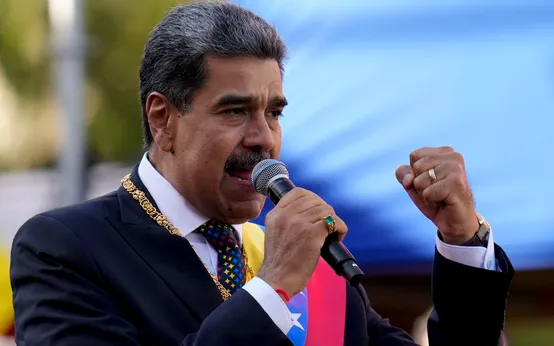
Late on January 3, the White House announced that U.S. forces had carried out what it described as an “extraordinary” operation in Caracas, seizing Venezuela’s president, Nicolás Maduro, and transferring him out of the country. The administration framed the action as a law-enforcement and national-security measure, pointing to longstanding U.S. accusations of narcotics trafficking and “narco-terrorism” against senior Venezuelan officials.
But within hours, the operation had reignited some of the deepest anxieties in Latin America about sovereignty and U.S. intervention. Leaders across the region — including governments that have openly criticized Maduro’s record — warned that the raid set a dangerous precedent: that Washington could claim the authority to remove foreign leaders by force, absent regional consensus or international authorization.
At the United Nations, Secretary-General António Guterres condemned the use of force and urged member states to adhere to international law, as the Security Council convened an emergency discussion on the crisis. Diplomats described a tense session in which the United States faced sharp questioning not only from rivals but also from countries typically cautious about direct confrontation with Washington.
The backlash has been amplified by a second, simultaneous dispute: Trump’s renewed pressure campaign to obtain control of Greenland. The island, an autonomous territory within the Kingdom of Denmark, sits at the center of growing Arctic competition for resources and strategic access. Trump has argued that Greenland is essential to U.S. security; Denmark has repeatedly insisted it is not for sale.
In recent days, European officials say the administration has escalated its demands by threatening tariffs on Denmark and other European countries unless negotiations begin — a move European leaders have characterized as economic coercion rather than diplomacy. The European Commission president, Ursula von der Leyen, said the bloc was weighing a response, describing Europe’s posture as “unflinching” and “proportional” in the face of U.S. pressure.
The dispute has now spilled into personal and political territory. Al Jazeera reported that Norway’s prime minister, Jonas Gahr Støre, made public a message from Trump linking his tougher posture to resentment over not receiving the Nobel Peace Prize — an episode European officials privately described as unsettling because it suggests major decisions could be driven by grievance as much as strategy.
Analysts say the two crises, taken together, risk isolating the United States at a moment when it relies on coalitions to manage security, trade and climate priorities. Chatham House warned that unilateral action in Latin America and coercive tactics toward Europe could hand an opening to Russia and China by fraying partnerships that have long underpinned U.S. influence.
In Davos, European leaders are expected to press Trump to retreat from tariff threats and to clarify Washington’s endgame in Venezuela. The larger question is whether the administration’s show of force will translate into leverage — or whether it will harden resistance, leaving the United States facing a world newly unified, not around a rival power, but around unease with America’s methods.