WATCH! Senator Kennedy TORCHES Witness After Reading Her Wild Tweets Out Loud To Her Face
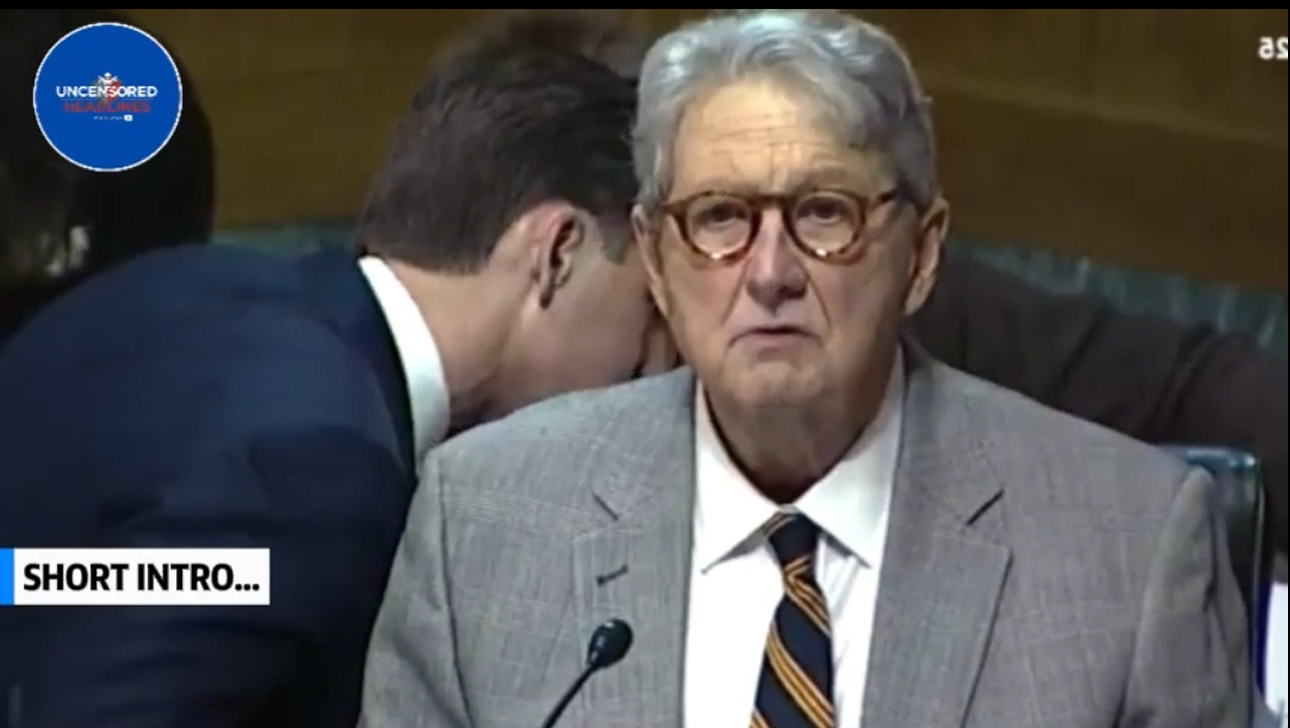
WASHINGTON — A Senate hearing intended to examine questions of free speech and government influence veered sharply into confrontation this week, as Senator John Kennedy of Louisiana used a witness’s past academic writings and social media posts to challenge her credibility and impartiality, producing a moment that quickly spread far beyond the committee room.
The witness, Professor Mary Anne Franks, a law professor and legal commentator, appeared before the committee to testify on whether recent administrations had improperly pressured private companies to censor speech. Professor Franks argued that claims of widespread coercion by the Biden administration were overstated, while warning that actions taken during the Trump administration posed greater constitutional concerns.
Senator Kennedy, a Republican known for his theatrical questioning style, focused less on the substance of those claims and more on whether Professor Franks’s prior statements revealed political bias that, in his view, undermined her testimony.
Reading directly from her published work, Kennedy cited a 2023 law review article in which Professor Franks described recent Supreme Court decisions as using the Constitution “as a tool of racial patriarchy” and accused the Court of promoting a culture that “privileges white men’s ability to terrorize and kill” through expanded gun rights. Kennedy asked repeatedly whether she stood by those words. Professor Franks confirmed that she did.
The exchange grew sharper when Kennedy turned to Professor Franks’s social media activity. He read aloud a post from November 2024 in which she wrote that “the majority of Americans hate women … more than they love anything, including democracy.” Asked whether she had written the statement, Professor Franks said she did not have the exact wording in front of her but acknowledged that she had likely expressed a similar sentiment.
Kennedy pressed the point, questioning how someone who had publicly made such sweeping claims about Americans — and about the Supreme Court — could present herself as an objective witness. Professor Franks responded that her testimony was guided by Supreme Court precedent, not personal feelings toward political figures or institutions.
The back-and-forth, at times tense and sarcastic, highlighted a broader dynamic that has become increasingly common in congressional hearings: lawmakers using a witness’s online footprint as a proxy for character and credibility. In recent years, tweets, opinion essays and academic language have frequently been pulled into hearings, often shifting the focus away from policy disputes toward questions of tone, rhetoric and ideology.
To supporters of Senator Kennedy, the exchange demonstrated what they see as a necessary scrutiny of expert witnesses whose academic language, they argue, crosses into political activism. In their view, Professor Franks’s framing of the Constitution and the Supreme Court reflected ideological commitments that should be openly acknowledged when she offers testimony to Congress.
Critics, however, said the questioning sidestepped the central issues before the committee. They argued that Kennedy’s approach was designed less to interrogate the substance of Professor Franks’s arguments than to discredit her through selective quotations, turning a policy hearing into a spectacle.
“This is part of a larger pattern,” said a former congressional staffer familiar with judicial hearings. “Rather than debating whether government pressure on speech violates the First Amendment, hearings increasingly become about cultural battles — who said what online, who used which words, and whether those words can be weaponized.”

The episode also underscored the growing tension between academic discourse and political settings. Language that is common in scholarly debates — particularly around race, gender and power — can sound incendiary when read aloud in a hearing room, stripped of context and framed as evidence of extremism.
Professor Franks attempted to redirect the discussion to constitutional principles, repeatedly emphasizing the First Amendment’s limits on government power over speech. But Kennedy returned to her past statements, asking whether she truly believed the Supreme Court was motivated by “white male supremacy.” When she declined to engage the characterization on his terms, the senator expressed open frustration before yielding his time.
By the end of the exchange, the hearing had produced more viral clips than policy clarity. Yet it also revealed something deeper about the current state of congressional oversight. As political polarization intensifies, expert witnesses are increasingly treated not as neutral sources of information but as ideological actors whose past words are fair game for partisan confrontation.
Whether that trend strengthens accountability or undermines serious debate remains an open question. What is clear is that, in today’s Washington, testimony does not end at the witness table. In an era when nearly every public statement is archived online, a hearing can quickly become a referendum not just on ideas, but on identity, rhetoric and the politics embedded in language itself.