Whitehouse Exposes Bessent on the Coming Insurance-Driven Collapse
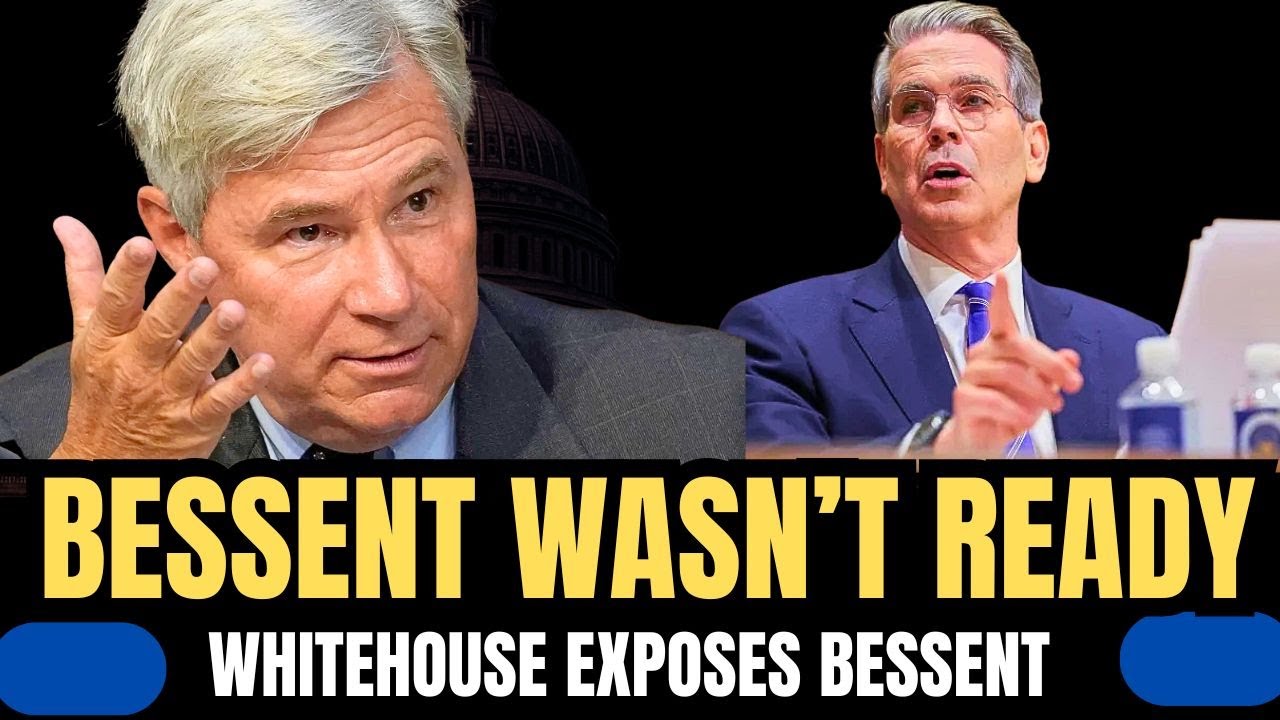
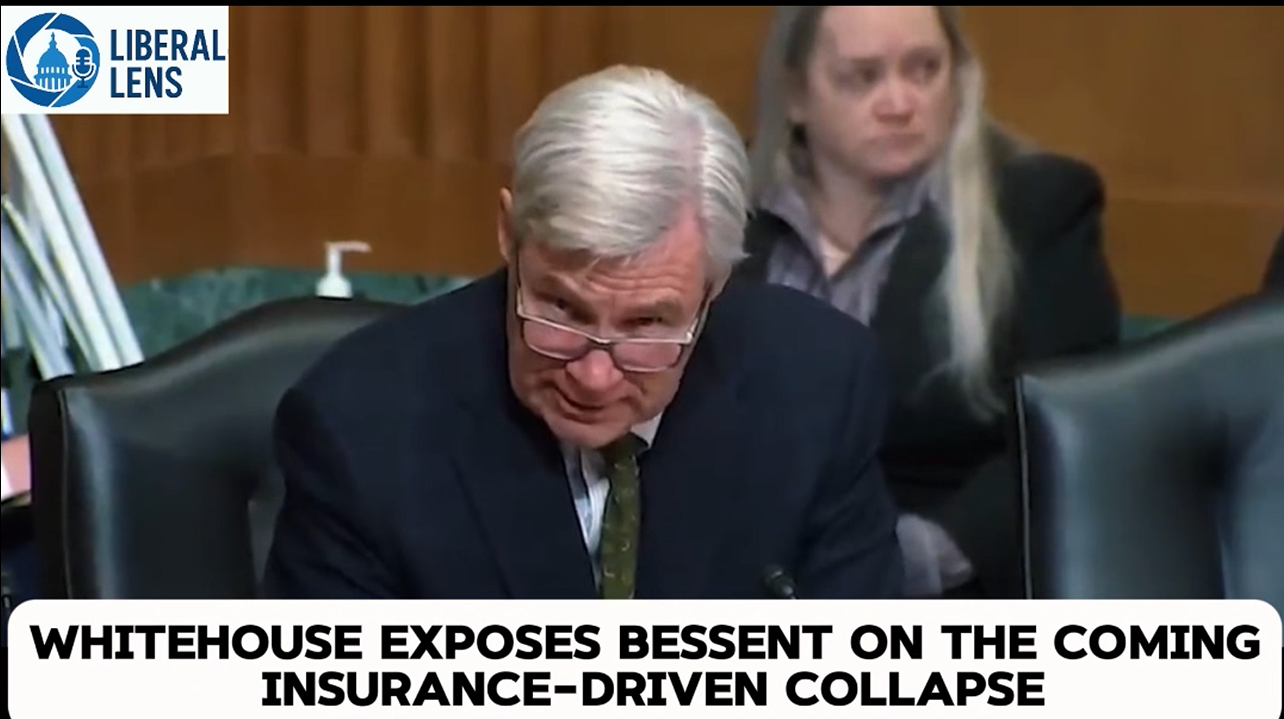
In a Senate hearing that unfolded without raised voices or partisan theatrics, Senator Sheldon Whitehouse of Rhode Island offered a sobering forecast: the next major economic crisis may not begin on Wall Street, but in the increasingly fragile world of property insurance. His warning, delivered to Scott Bessent, a Treasury nominee, outlined a chain reaction driven by climate change that could ripple through housing markets, mortgage lending and, ultimately, the broader economy.
Mr. Whitehouse’s argument was direct and unsettling. As climate-related disasters intensify — from hurricanes and flooding to wildfires — insurance companies are reassessing their exposure. In many regions, particularly Florida and California, insurers have raised premiums sharply, refused to renew policies, or withdrawn from markets altogether. The consequences, he said, extend far beyond higher household bills.
“Where you can’t get insurance, you can’t get mortgages,” Mr. Whitehouse noted. Without insurance, lenders will not finance home purchases. Without financing, properties cannot sell at market value. According to the chief economist of Freddie Mac, he added, this cascade could resemble the conditions that precipitated the 2008 financial crisis.
The warning was not new to economists or regulators, but it is rarely stated so plainly in a public forum. What made the exchange notable was its tone. Mr. Whitehouse was not accusing or interrogating. Instead, he pressed for attention and preparation, asking that the nominee and his team study a Senate Budget Committee report mapping insurance nonrenewals and price increases county by county, as well as a widely circulated article from The Economist detailing the systemic risk.
Mr. Bessent responded that he had already read the material — a small acknowledgment that carried weight in a city where warnings are often politely received and quietly shelved. Mr. Whitehouse thanked him and observed, half in jest, that it was the first time in a nominations hearing he could recall a witness having completed the suggested reading.
The exchange underscored a growing consensus across disciplines that climate risk is no longer an abstract environmental concern but a financial one. Peer-reviewed studies in economics, finance and environmental science increasingly converge on the same conclusion: as extreme weather becomes more frequent and severe, the institutions that price and spread risk are under strain. Insurance, a largely invisible backbone of the modern economy, is emerging as a critical pressure point.
Mr. Whitehouse invoked Ernest Hemingway’s famous description of bankruptcy — that it happens “gradually, then suddenly.” The senator argued that the United States is now in the “gradually” phase of a climate-driven insurance crisis. The danger lies not in a single dramatic collapse, but in a slow erosion of coverage that leaves households, lenders and local governments exposed.
In Florida, insurers have pulled back from coastal and inland markets alike, citing mounting losses from storms and flooding. In California, wildfires have driven similar retrenchment. As private insurers exit, state-backed insurers of last resort have absorbed growing numbers of policyholders, concentrating risk and raising concerns about their own solvency in the event of a major disaster.
The implications extend beyond homeowners. Property taxes fund local governments, schools and public services. If property values fall because homes become uninsurable or unmortgageable, municipal finances weaken. Banks face higher risks, and mortgage-backed securities — long considered stable — could be undermined by geographic concentrations of climate exposure.
Mr. Whitehouse emphasized that this was not a partisan critique but a preventative appeal. He was not accusing regulators of negligence, he said, but insisting that the warning be placed firmly on the record. “I don’t want anybody to say that they weren’t warned about it,” he said.
The moment highlighted a broader challenge for policymakers: climate risks unfold unevenly and quietly, often outside the glare of daily headlines. By the time they register as a national emergency, the options for intervention are narrower and more costly. Insurance markets, precisely because they operate in the background, may signal distress before the public fully recognizes its significance.
For viewers accustomed to confrontational hearings, the exchange offered a different model of oversight — one grounded in foresight rather than outrage. It suggested that some of the most consequential debates in Washington are not about immediate scandals, but about slow-moving threats whose impacts, once fully realized, are difficult to reverse.
Whether the warning prompts meaningful action remains uncertain. But the message was unmistakable: the economic consequences of climate change are no longer theoretical. They are already being priced into policies, withdrawn from markets and felt by homeowners. The question, as Mr. Whitehouse implied, is whether the country chooses to prepare while the crisis is still gradual — or waits until it becomes sudden.