In a closely watched oversight hearing, Senator Sheldon Whitehouse pressed a senior federal official, Patel, on two issues that have become central to congressional scrutiny of executive power: whether a pattern of retaliation exists inside the Federal Bureau of Investigation, and whether Congress has been misled about legal limits on testimony. The exchange did not hinge on accusations or rhetoric, but on numbers, timelines, and the consistency of official explanations.
Whitehouse began with a simple observation. During Patel’s confirmation process, a document circulated that listed roughly 60 individuals whom Patel described as critics or adversaries. Patel now rejects the term “enemies list,” but the existence of the list itself has not been disputed. What concerned Whitehouse was not the label, but what followed. Approximately 20 of the individuals named on that list have since faced adverse actions, including dismissals, demotions, or other professional consequences.
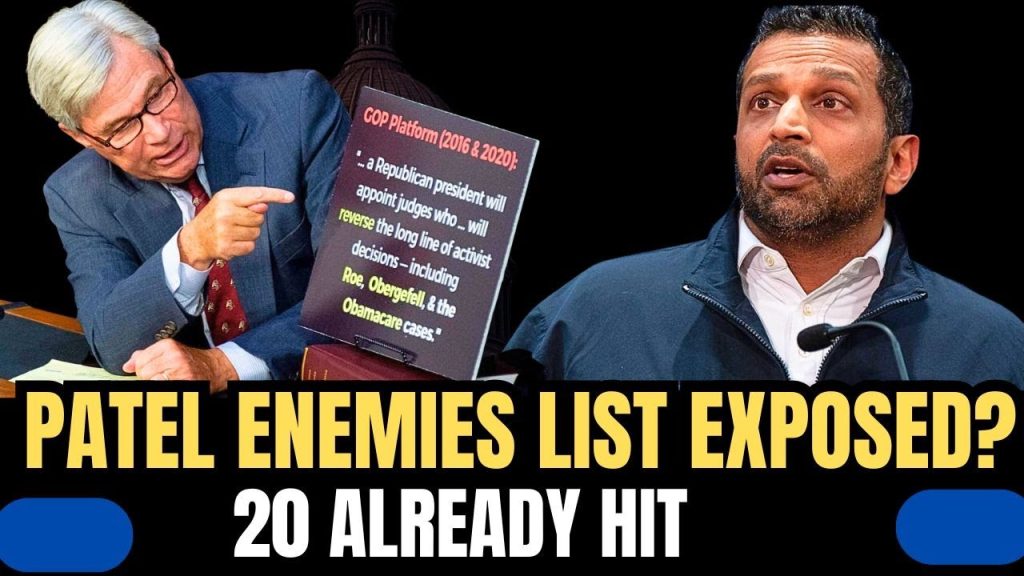
Seven months into Patel’s tenure, Whitehouse noted, that ratio alone raises questions worthy of oversight. “At that rate,” he remarked, “you’ve got 14 months until you’ve hit all 60.” The comment was pointed but procedural. Whitehouse did not accuse Patel of orchestrating retaliation. Instead, he asked whether Patel could explain why so many individuals associated with the list had encountered negative outcomes in such a short period of time.
Patel rejected the premise outright. He insisted there is no enemies list and argued that all personnel actions within the FBI are based solely on merit, qualifications, and adherence to constitutional duties. Officials who fall short, he said, are removed for legitimate reasons, not personal or political ones.
That explanation reflects a familiar institutional defense, particularly in cases where retaliation is alleged. Whitehouse responded by narrowing the focus. Changing terminology, he suggested, does not alter the underlying facts. If a list existed and a substantial portion of those named later faced consequences, Congress has an obligation to examine whether the outcomes were coincidental or part of a broader pattern.
Oversight experts note that retaliation cases are rarely established through a single document or admission. Instead, they are evaluated through timing, correlation, and cumulative outcomes. Whitehouse’s line of questioning reflected that approach. He was not asking Patel to concede motive, but to account for observable results.
The hearing then turned to a second issue, one that shifted the focus from outcomes to credibility. Whitehouse revisited Patel’s earlier statements regarding his grand jury testimony. During prior appearances, Patel had suggested that court orders prevented him from discussing the substance of that testimony with Congress. He specifically referenced the chief judge of the District of Columbia as the source of that restriction.
Since then, however, the same judge publicly clarified that federal rules explicitly allow grand jury witnesses to discuss their own testimony. Under Rule 6(e) of the Federal Rules of Criminal Procedure, witnesses are not bound by secrecy obligations once they leave the grand jury room. In other words, there was no court order preventing Patel from answering congressional questions at the time he claimed there was.
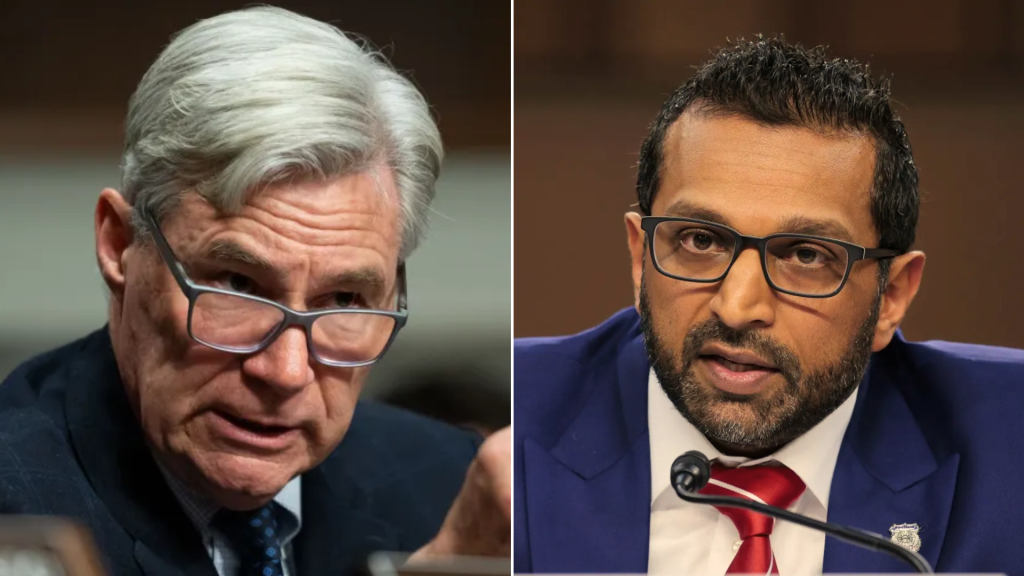
Whitehouse asked Patel directly whether any legal restriction had ever limited his ability to discuss his testimony. Patel responded that the grand jury transcript had since been released. Whitehouse immediately followed up, asking where and how that release occurred, underscoring a key oversight principle: releasing information later does not excuse providing inaccurate explanations earlier.
The distinction matters because congressional oversight depends on officials accurately describing what they can and cannot disclose. When an official invokes non-existent legal barriers, it obstructs oversight as effectively as an outright refusal. Whitehouse framed the issue not as a technical misunderstanding, but as a matter of trust between Congress and the executive branch.
Taken together, the two lines of questioning painted a broader picture. On one side was a list of critics followed by a notable number of adverse personnel actions. On the other was a misleading account of legal constraints that limited Congress’s ability to scrutinize those actions in real time. Whitehouse did not allege criminal conduct. He emphasized instead that patterns left unexplained can erode institutional credibility.
Oversight hearings, he suggested implicitly, are not about partisan conflict but about preserving norms. Institutions rarely lose public confidence all at once. They lose it when inconsistencies accumulate, explanations shift, and accountability is delayed.
Whether Patel’s actions were justified or coincidental remains unresolved. But the exchange underscored why congressional oversight exists: to create a public record, test official explanations, and ensure that power is exercised transparently. In that sense, the hearing was less about one official and more about whether mechanisms designed to check authority are still functioning as intended.